

Experiencing sore hips in pregnancy while sleeping is extremely common, especially as your body adapts to rapid physical and hormonal changes. Many expectant mothers find that hip discomfort worsens at night, disrupting sleep and making it difficult to find a comfortable position.
Fortunately, proper sleep support can make a significant difference. Using a well-designed pregnancy pillow helps improve alignment, reduce pressure on the hips, and promote deeper, more restorative rest throughout pregnancy.
Understanding the Cause: Hormonal and Postural Changes Leading to Hip Pain
Hip pain during pregnancy rarely has a single cause. Instead, it usually results from multiple overlapping factors affecting the musculoskeletal system.
As pregnancy progresses, your center of gravity shifts forward due to your growing uterus. This alters posture, increases pressure on the hips, and changes how weight is distributed during sleep. Side sleeping—while recommended—can further compress one hip for extended periods, leading to soreness and stiffness.
Other contributing factors include:
- Increased body weight
- Altered walking patterns
- Muscle fatigue
- Reduced core stability
Together, these changes make nighttime hip discomfort more likely, particularly during the second and third trimesters.
The Relaxin Factor: How Pregnancy Hormones Loosen Pelvic Joints and Ligaments
One of the biggest contributors to sore hips in pregnancy while sleeping is the hormone relaxin. Relaxin plays an essential role in pregnancy by loosening ligaments and joints in preparation for childbirth.
However, this loosening also reduces joint stability—especially in the pelvis and hips.
How relaxin affects hip pain:
- Pelvic joints become more mobile
- Hip ligaments stretch beyond their usual range
- Muscles work harder to stabilize joints
- Side sleeping places uneven strain on relaxed joints
Because ligaments provide less support, hips may shift slightly out of optimal alignment during sleep, leading to pain that’s most noticeable when lying still for long periods.
Optimizing Side Sleeping: The Importance of Proper Alignment and Support
Side sleeping is medically recommended during pregnancy, particularly on the left side, as it improves circulation to the placenta. However, poor alignment can worsen hip pain.
Common alignment issues include:
- Knees collapsing inward
- Top leg pulling the pelvis forward
- Lower hip bearing excessive pressure
- Spine twisting during sleep
To reduce discomfort:
- Keep hips stacked directly on top of each other
- Ensure knees are level and supported
- Maintain a neutral spine position
Without support, your body naturally sinks into poor posture, increasing strain on already-sensitive hip joints.
The Pregnancy Pillow Solution: Strategic Placement to Relieve Hip Pressure
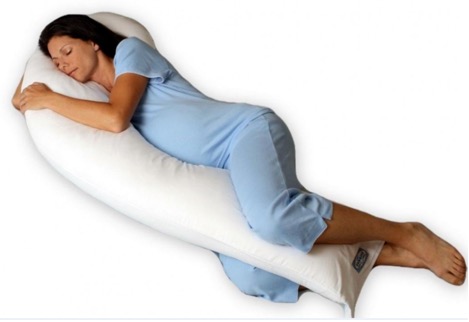
A high-quality pregnancy pillow is one of the most effective tools for relieving hip pain during sleep.
How pregnancy pillows help:
- Keep hips properly aligned
- Reduce pressure on the lower hip
- Prevent rolling onto the back
- Support the belly and lower back simultaneously
Best pillow placement for hip pain:
- Place the pillow between your knees to prevent inward collapse
- Tuck part of the pillow under your belly for abdominal support
- Rest the pillow against your lower back to prevent twisting
This full-body support minimizes joint strain and allows muscles to relax, significantly reducing nighttime soreness.
Mattress Quality and Firmness: Assessing Your Bed’s Role in Nighttime Discomfort
Even with proper pillows, your mattress can either help or worsen hip pain.
Mattress issues that increase hip soreness:
- Too firm → pressure points on hips
- Too soft → excessive sinking and poor alignment
- Worn-out areas → uneven support
What works best during pregnancy:
- Medium-firm mattresses
- Pressure-relieving materials
- Even surface without sagging
If replacing your mattress isn’t an option, adding a supportive mattress topper can help distribute weight more evenly and reduce pressure on the hips.
Daytime Management: Gentle Exercises and Stretches to Prepare for Sleep
Managing hip pain doesn’t start at bedtime. Daytime movement plays a crucial role in nighttime comfort.
Helpful pregnancy-safe activities:
- Prenatal yoga
- Gentle walking
- Pelvic tilts
- Hip circles
- Stretching the glutes and hip flexors
Simple stretch before bed:
- Sit cross-legged on the floor or bed
- Gently lean forward while keeping your back straight
- Hold for 20–30 seconds
These movements improve circulation, reduce stiffness, and help prevent hips from tightening during sleep.
The Benefits of Movement: Changing Positions Through the Night to Ease Soreness
Remaining in one position for extended periods is a major contributor to hip discomfort during pregnancy. Even with excellent pillow support, constant pressure on one hip can restrict blood flow, irritate softened joints, and lead to stiffness or aching that worsens as the night goes on.
Pregnant bodies are not meant to stay completely still. Gentle movement throughout the night helps redistribute weight, relieve pressure points, and keep muscles and ligaments from tightening around already-loosened joints.
Why Movement Helps Reduce Hip Pain
- Improves circulation to compressed muscles and joints
- Prevents inflammation from sustained pressure
- Allows hips and pelvis to realign naturally
- Reduces stiffness when waking or standing
Practical Tips to Reduce Overnight Stiffness
- Switch sides periodically to avoid prolonged compression on one hip
- Use pillows to assist repositioning, especially between the knees and under the belly, to move without strain
- Sit briefly at the edge of the bed if pain builds up, allowing joints to reset before lying back down
- Perform gentle ankle circles or knee bends before rolling to reduce tension and ease transitions
When to Seek Professional Help: Distinguishing Normal Pain from Pelvic Girdle Dysfunction (PGD)
While mild to moderate hip pain is common, certain symptoms may indicate pelvic girdle dysfunction (PGD) or symphysis pubis dysfunction (SPD).
Warning signs include:
- Sharp or stabbing pelvic pain
- Pain when walking or climbing stairs
- Clicking or grinding sensations
- Pain that worsens with movement
- Difficulty standing on one leg
If these symptoms occur, consult your healthcare provider or a prenatal physical therapist. Early intervention can prevent worsening discomfort and improve mobility.
Conclusion
Experiencing sore hips in pregnancy while sleeping can be frustrating, exhausting, and emotionally draining—especially when quality rest is already hard to achieve. Fortunately, understanding the root causes, improving sleep alignment, and making simple adjustments can dramatically reduce nighttime discomfort.
Supportive tools like a properly positioned pregnancy pillow, combined with gentle movement and mindful sleeping habits, can help protect your hips, promote better alignment, and restore more restful sleep. With the right support, most pregnancy-related hip pain is manageable—and often significantly improved—allowing you to wake up feeling more comfortable and refreshed.


