

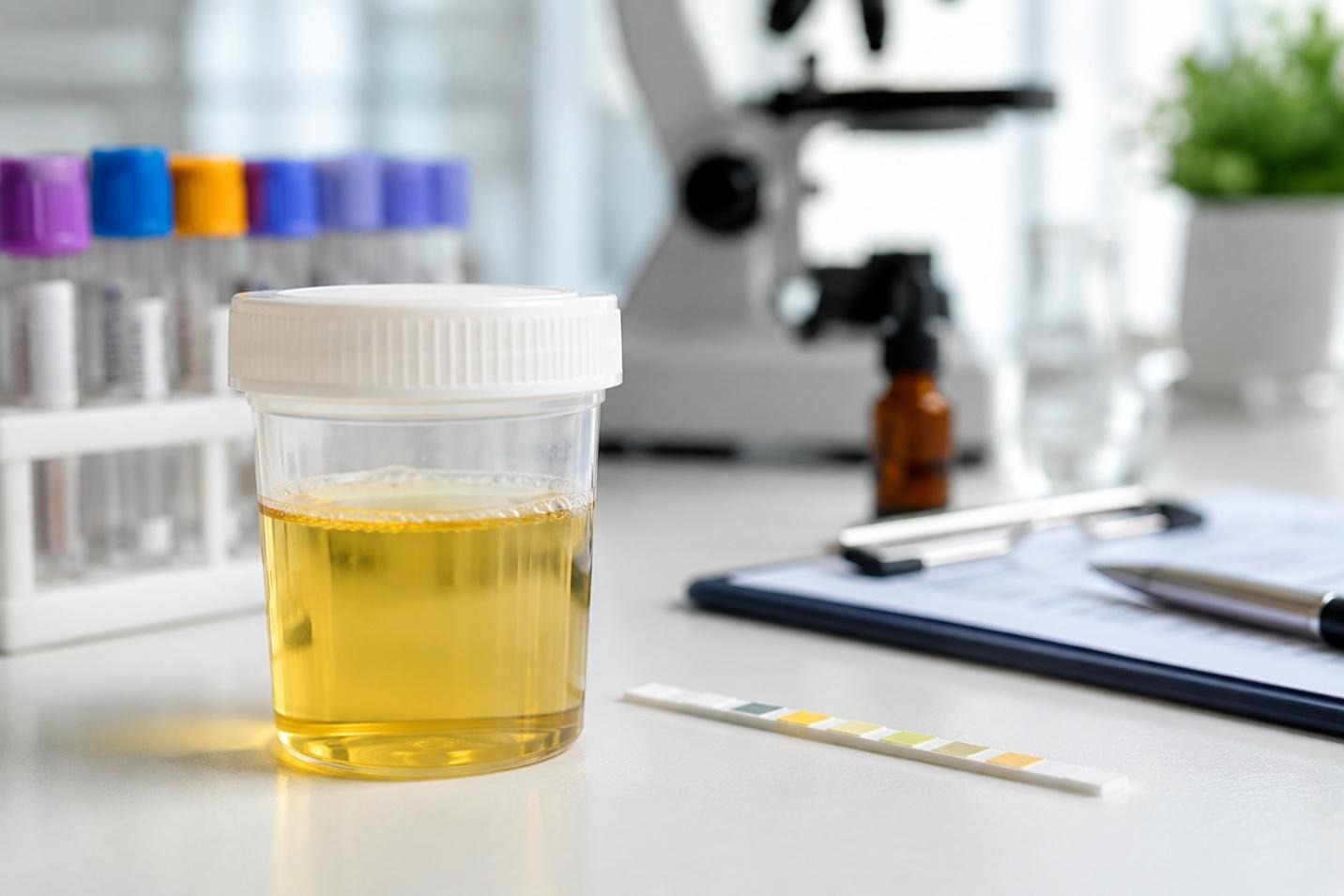
Whether it’s for a court-ordered monitoring program, a workplace policy, or personal recovery accountability, one question comes up constantly: how long does alcohol stay in urine? The answer depends heavily on which type of test is being used. Standard alcohol tests and EtG (ethyl glucuronide) tests measure very different things, and understanding that difference is essential for anyone navigating sobriety monitoring, probation requirements, or treatment program compliance.
Standard Alcohol Tests vs. EtG Testing
Traditional urine or breath tests measure ethanol itself, the alcohol compound present in the bloodstream shortly after drinking. These tests typically detect alcohol for only 12 to 24 hours after consumption, since ethanol clears from the body relatively quickly.
EtG testing works differently. Ethyl glucuronide is a direct metabolite the liver produces as it breaks down ethanol, and it lingers in the body significantly longer than alcohol itself. This is why the question of how long can alcohol be detected in urine etg has a very different answer than a standard alcohol test EtG remains measurable well after ethanol is no longer present, which makes it a far more sensitive tool for detecting recent drinking.
How Long Can Alcohol Be Detected in Urine EtG Tests
In most cases, an EtG urine test can detect alcohol consumption for up to 80 hours, or roughly three to four days, after the last drink. This detection window isn’t fixed, though it shifts based on several factors:
- Amount consumed – Light drinking (a single drink) is often detectable for around 24 hours, moderate drinking may extend the window to around 48 hours, and heavy or repeated drinking can push detection closer to the full 80-hour range.
- Individual metabolism – Liver function, hydration levels, body composition, and overall metabolic rate all influence how quickly EtG clears the system.
- Testing cutoff levels – Labs use different sensitivity thresholds, and lower cutoff levels can detect smaller amounts of alcohol, sometimes extending the effective detection window.
- Frequency of use – Someone who drinks regularly may show elevated EtG levels for longer than someone who had a single isolated drink.
Because of this variability, EtG testing is generally described as offering a detection window rather than a fixed number. A commonly cited range is 24 to 80 hours, depending on these combined factors.
What EtG Testing Can and Can’t Tell You
Its worth being clear about what a positive EtG result actually means. EtG testing confirms that alcohol was consumed within the detection window it does not measure blood alcohol concentration, level of intoxication, or the exact time of drinking. A positive result simply indicates that alcohol was present in the system at some point in the recent past, which is why EtG tests are widely used for abstinence monitoring rather than measuring impairment.
This distinction matters for anyone navigating a monitoring program, whether court-mandated, employer-based, or self-imposed as part of recovery. A positive result reflects recent use, not current impairment, and understanding this nuance helps set realistic expectations for how these tests are interpreted.
Other Testing Methods and Detection Windows
While urine testing is the most common method for measuring how long does alcohol stay in urine, EtG can also be detected through other sample types, each with a different window:
- Urine EtG testing – Detection window of up to 80 hours, ideal for confirming recent abstinence
- Hair EtG testing – Can detect alcohol consumption patterns going back 90 days, useful for assessing longer-term use rather than a single recent incident
- Blood and saliva testing – Generally offer much shorter detection windows, closer to standard ethanol testing, and are less commonly used for extended monitoring
For most recovery and compliance monitoring purposes, urine EtG testing strikes a practical balance between sensitivity and convenience, which is why it remains the most widely used method.
Why EtG Testing Matters in Recovery
For people in early recovery, EtG testing often plays an important role in accountability. Structured treatment programs, including IOP (Intensive Outpatient) and PHP (Partial Hospitalization) programs, frequently incorporate random or scheduled testing as part of a broader accountability framework. This isn’t about punishment it’s about supporting honesty during a stage of recovery when temptation and relapse risk are often highest.
Understanding the answer to how long can alcohol be detected in urine etg can also help set realistic expectations. Because the detection window can extend to several days, even a single drink taken days before a scheduled test may still show up. This reinforces why consistent abstinence, rather than simply avoiding alcohol the night before an anticipated test, is the standard that most treatment and monitoring programs are built around.
Common Misconceptions About EtG Testing
A few misunderstandings come up frequently:
“I only had one drink, so it won’t show up.” Depending on cutoff levels and individual metabolism, even light drinking can be detected for up to a day or more.
“EtG tests show how drunk I was.” EtG testing confirms recent consumption, not intoxication level or blood alcohol concentration at any specific point in time.
“Mouthwash or hand sanitizer will cause a false positive.” While incidental exposure to alcohol-based products can occasionally produce trace EtG levels, most testing programs use cutoff thresholds specifically designed to minimize this risk and focus on meaningful consumption.
“If I wait a day, I’m in the clear.” Given the potential 80-hour window, waiting a single day is often not enough to guarantee a negative result, particularly after heavier drinking.
Supporting Long-Term Sobriety Beyond Testing
While understanding how long does alcohol stay in urine is useful for navigating monitoring requirements, testing itself is only one piece of a much larger recovery process. Sustainable sobriety typically depends far more on structured treatment, therapy, and support systems than on passing individual tests.
For people struggling with alcohol use, especially where testing has become a recurring source of stress or has revealed a pattern of relapse, that’s often a sign that additional clinical support may be needed. Programs that combine medical monitoring with therapy, such as IOP and PHP levels of care, are designed specifically to address both the accountability side and the underlying behavioural and psychological factors driving alcohol use.
Final Thoughts
EtG testing has become a standard tool in recovery monitoring, legal compliance, and workplace policies precisely because it offers a longer, more reliable detection window than traditional alcohol tests. Knowing how long can alcohol be detected in urine etg generally up to 80 hours, depending on individual factors helps set clear, realistic expectations for anyone navigating a monitoring program. But testing alone isn’t a recovery plan. Lasting sobriety comes from addressing the reasons behind alcohol use, not just managing the results of a test.
