

Millions of people search for tarot reading every month, hoping to find answers about love, career, or life’s biggest uncertainties. While tarot is often associated with fortune-telling, modern psychology offers a different perspective. Instead of predicting the future, tarot may be most valuable as a tool for self-reflection, helping people understand their emotions, organize their thoughts, and make better decisions.
The reason online tarot reading feels meaningful is rooted in human psychology. Our brains naturally seek certainty during stressful or uncertain situations. Tarot cards provide symbolic images that encourage us to interpret our own experiences, making complex emotions easier to understand. Rather than giving objective answers, the cards often reveal the thoughts and feelings we already carry within us
This idea aligns with Narrative Therapy, a psychological approach that helps people become the authors of their own life stories instead of feeling trapped by circumstances. Tarot encourages users to connect past experiences, present emotions, and future possibilities into a meaningful narrative. In this way, the cards become prompts for reflection rather than predictions.
Scientific evidence supports this approach. A 2024 study by Krow and colleagues found that combining weekly tarot reflection with mindfulness journaling improved psychological well-being and increased participants’ internal locus of control—the belief that they have the power to influence their own lives. In other words, healthy tarot practice helps people feel more in control, not less.
The problem begins when tarot becomes something people depend on. Repeatedly asking the same questions, seeking reassurance through multiple readings, or letting the cards make important decisions can reduce confidence in personal judgment. Psychology describes this as reassurance-seeking behavior, where temporary comfort eventually creates greater anxiety. Confirmation bias can also cause people to interpret cards in ways that reinforce existing fears rather than provide new perspectives.
The healthiest way to use tarot is as a tool for reflection, not certainty. Instead of asking, “What will happen?” ask, “What can I learn about myself?” This simple shift encourages emotional awareness while keeping the focus on actions that are actually within your control.
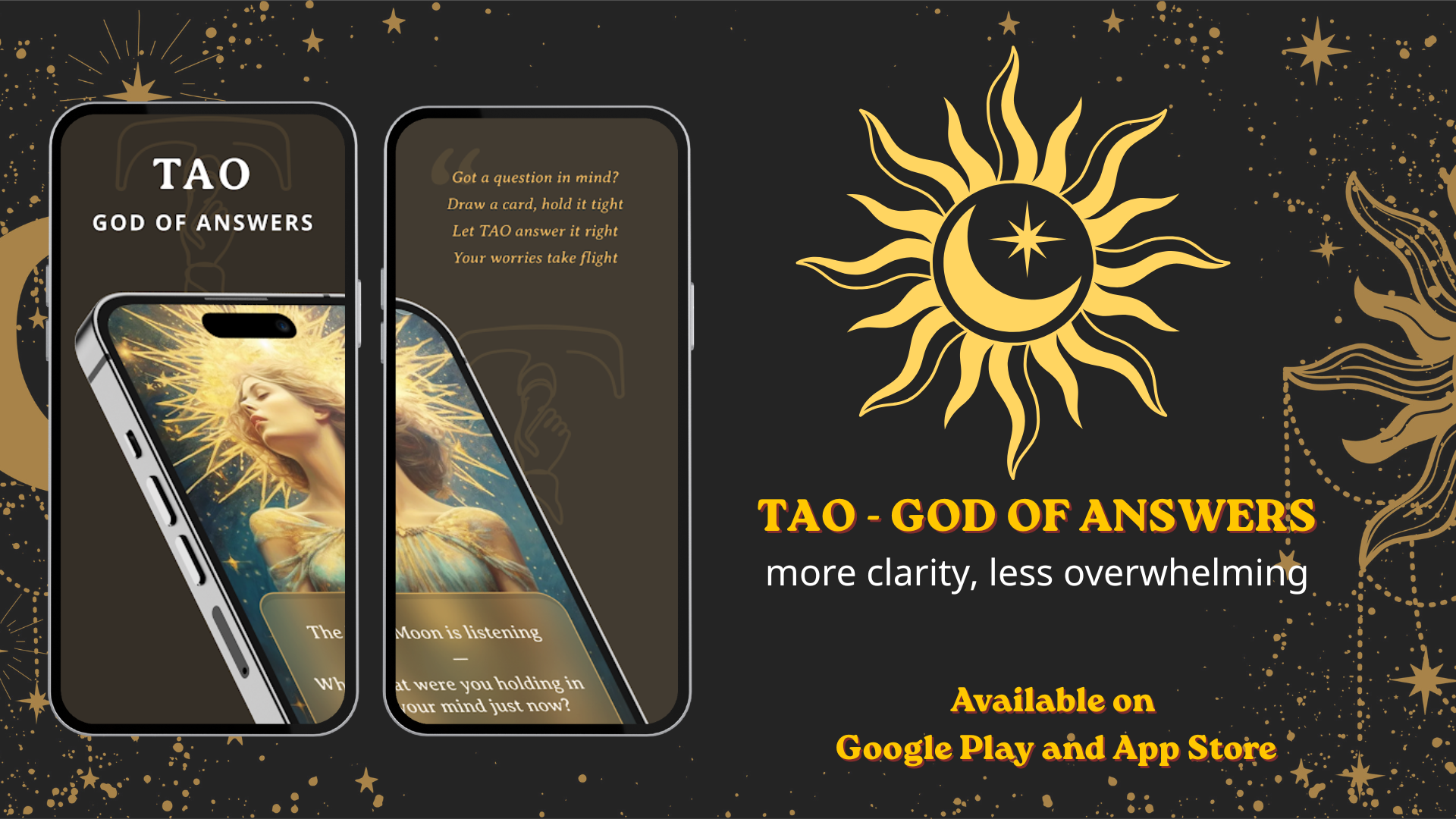
That’s the philosophy behind TAO – God of Answers. Rather than acting as a fortune teller, TAO combines AI tarot reading with psychology-based reflection. After each reading, the app guides users through thoughtful questions, mindfulness journaling, and practical next steps that promote self-awareness instead of dependency. The goal isn’t to tell you your future—it’s to help you understand yourself well enough to create it.
Ultimately, tarot is most powerful when it acts as a mirror rather than a crystal ball. The cards don’t determine your destiny. They simply help you see your own thoughts more clearly, so you can make decisions with greater confidence, clarity, and intention.
