

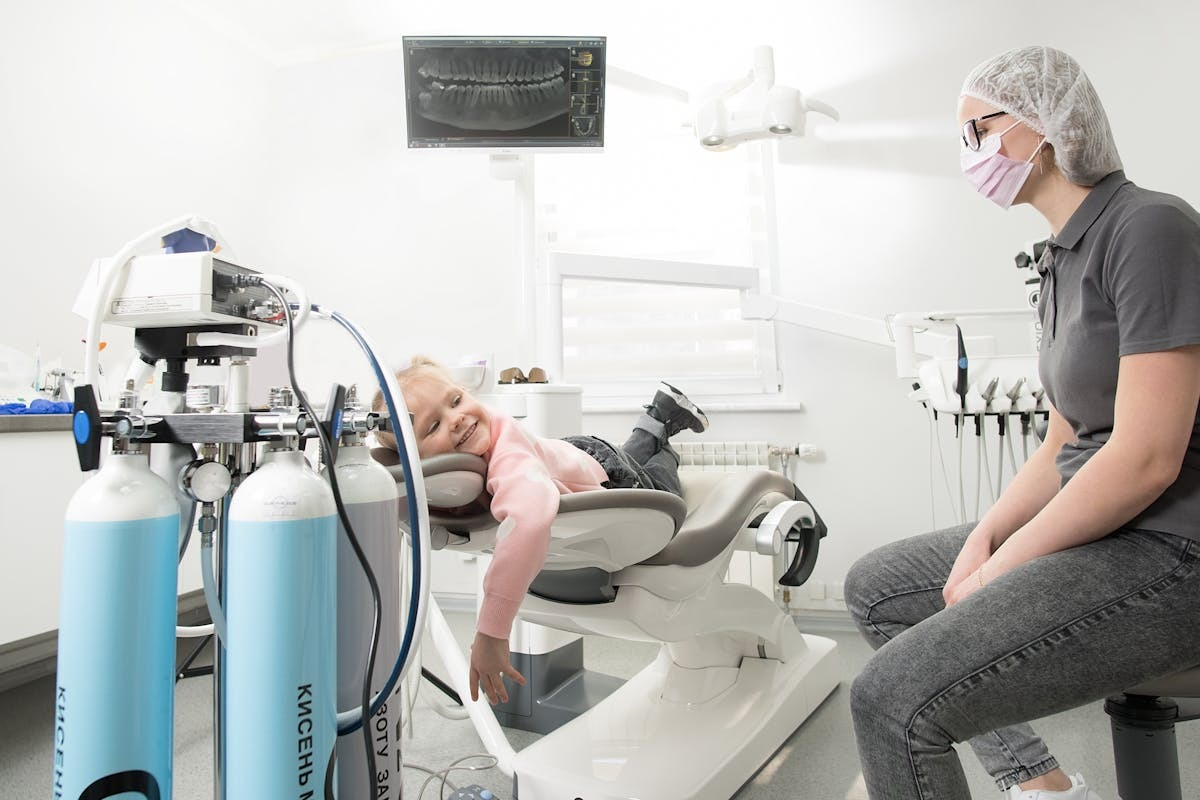
That moment when your six-year-old suddenly freezes in the dental chair, tears welling up despite weeks of preparation, hits differently than you expect. According to the American Academy of Pediatric Dentistry‘s 2023 guidelines, dental anxiety affects roughly 20% of children and often intensifies during the critical ages of 6-11 when permanent teeth emerge and more complex procedures become necessary. As pediatric dentistry increasingly recognizes anxiety as a barrier to proper oral health care, the focus has shifted from simply “getting through” appointments to creating genuinely comfortable experiences that build lifelong positive associations with dental care.
The stakes extend far beyond a single difficult visit. Children who develop severe dental anxiety often avoid necessary care well into adulthood, leading to more complex and expensive treatments later. For parents navigating their child’s first signs of dental fear, understanding both the psychological mechanics of anxiety and the practical tools available can transform what feels like an insurmountable challenge into manageable steps that protect both oral health and emotional wellbeing.
Why Do Children Develop Dental Anxiety?
The roots of childhood dental anxiety run deeper than most parents realize, often beginning before the first dental visit even occurs. Fear transmission from anxious parents represents one of the most significant factors — children as young as two pick up on parental tension and unconsciously mirror those emotions. When a parent mentions “it won’t hurt” or apologizes in advance for bringing the child to the dentist, they inadvertently signal that something threatening is about to happen.
Sensory overwhelm plays an equally critical role in triggering anxiety responses. The dental office environment bombards young nervous systems with unfamiliar stimuli: the high-pitched whir of the drill, the metallic taste of instruments, bright overhead lights, and the physical sensation of lying back with someone’s hands in their mouth. For children who are already sensitive to textures, sounds, or spatial positioning, these elements can trigger genuine fight-or-flight responses that have nothing to do with actual pain or discomfort.
Previous negative experiences — whether dental or medical — create lasting associative memories that children carry forward. A child who had a difficult experience getting stitches or receiving shots may generalize that fear to all medical environments, including dental offices. Even seemingly minor incidents, like gagging during a cleaning or feeling trapped under a lead apron during X-rays, can establish neural pathways that make future visits feel threatening.
Developmental factors also influence how children process dental experiences. Between ages 3-6, children are naturally developing autonomy but still have limited ability to understand abstract concepts like “prevention” or “this will help you later.” When they can’t see immediate benefits but can feel immediate discomfort, their logical conclusion is that dental visits are something to avoid. Understanding these underlying mechanisms helps parents and dental professionals address the actual sources of fear rather than just managing symptoms.
How Does Dental Anxiety Affect a Child’s Wellbeing?
The ripple effects of untreated dental anxiety extend well beyond the dentist’s chair, creating a cascade of health and developmental challenges that compound over time. Avoidance behavior typically emerges first — children begin resisting routine cleanings, which leads to delayed detection of problems like cavities or bite issues. What could have been addressed with simple interventions becomes more complex, requiring longer appointments and more invasive procedures that further reinforce the child’s original fears.
Research from the International Association for Dental Research shows that children with severe dental anxiety are three times more likely to develop significant oral health problems by adolescence. The logic is straightforward: when routine care becomes a battle, parents often postpone appointments until problems become urgent. Emergency dental visits — often involving pain and time pressure — create exactly the kind of traumatic associations that deepen anxiety patterns.
The psychological impact reaches into other areas of development as well. Children who feel helpless or out of control in medical settings often generalize those feelings, becoming more resistant to other new experiences or authority figures. Sleep disruption commonly occurs in the days leading up to dental appointments, affecting school performance and emotional regulation. Some children develop anticipatory anxiety that begins weeks before scheduled visits, creating ongoing stress that affects their overall quality of life.
Perhaps most concerning is how dental anxiety can establish lifelong patterns of healthcare avoidance. Adolescents who struggled with dental visits as children are significantly more likely to delay seeking medical care as adults, even for serious conditions. The neural pathways formed during childhood continue influencing decision-making processes decades later, making early intervention crucial not just for immediate comfort but for long-term health behaviors.
What Techniques Help Reduce Dental Anxiety in Kids?
Modern approaches to managing childhood dental anxiety combine evidence-based psychological techniques with practical environmental modifications, moving far beyond outdated “just be brave” mentalities. The most effective interventions recognize that anxiety is a legitimate physiological response requiring systematic desensitization rather than willpower alone.
Tell-Show-Do methodology remains the gold standard in pediatric dentistry because it addresses the fear of the unknown directly. Rather than hiding instruments or procedures, practitioners explain what will happen using age-appropriate language, demonstrate on models or the child’s hand, then proceed with the actual treatment. This approach builds predictability — one of the most powerful antidotes to anxiety — while maintaining the child’s sense of control and understanding.
Positive reinforcement systems work most effectively when they focus on specific behaviors rather than general compliance. Instead of rewarding a child for “being good,” successful programs recognize concrete actions like “opening wide when asked” or “sitting still during X-rays.” This specificity helps children understand exactly what’s expected and gives them clear targets to work toward, building confidence through achievable milestones.
The timing and structure of graduated exposure can make the difference between successful desensitization and reinforced fears. Many successful pediatric practices schedule brief “happy visits” where children simply sit in the chair, meet the staff, and explore instruments without any procedures. These positive interactions create neural pathways associated with safety and comfort, providing a foundation for more complex treatments later.
How Can Communication and Relaxation Soothe Anxious Children?
Effective communication with anxious children requires strategic language choices that acknowledge their feelings without amplifying fears. Phrases like “This might feel weird but it won’t hurt” work better than “Don’t worry, it won’t hurt” because they set realistic expectations while avoiding negative suggestions. Describing sensations in neutral terms — “you’ll feel some pressure” or “this will tickle” — helps children prepare mentally without triggering alarm responses.
Deep breathing techniques adapted for young children often work best when integrated into playful activities. Teaching children to “smell the flower” (inhale) and “blow out the candle” (exhale) gives them a concrete action to focus on when anxiety rises. Progressive muscle relaxation becomes more effective when framed as games — tensing and releasing muscles like a robot powering down or a cat stretching after a nap.
The physical positioning during communication matters significantly. Sitting at the child’s eye level rather than standing over them reduces feelings of powerlessness, while maintaining appropriate physical distance respects their personal space during vulnerable moments. Skilled pediatric dental professionals often narrate their actions in real-time, creating a sense of partnership rather than something being done to the child.
What Behavioral and Psychological Strategies Work Best?
Systematic desensitization works by gradually introducing anxiety-triggering elements in controlled, low-threat environments. This might begin with reading books about dental visits, then watching videos of other children having cleanings, progressing to visiting the office without treatment, and finally having actual procedures. Each step builds tolerance while maintaining the child’s sense of safety and control.
Cognitive behavioral approaches help children identify and challenge the thoughts that fuel their anxiety. When a seven-year-old says “the dentist is going to hurt me,” practitioners can guide them to more accurate thoughts like “the dentist helps keep my teeth healthy” or “I felt uncomfortable last time but I was safe.” This process teaches children that their thoughts about situations can be examined and modified rather than accepted as absolute truth.
Distraction techniques prove most effective when they engage multiple senses and require active participation. Simple passive distractions like ceiling televisions work for some children, but interactive elements — like squeezing a stress ball in rhythm with breathing or wearing headphones to listen to their chosen music — give anxious children something concrete to control during procedures. The key is matching the distraction technique to the individual child’s interests and attention style rather than applying generic approaches.
How Does Creating a Comforting Environment Ease Dental Fears?
The physical design of pediatric dental spaces has evolved significantly based on research into how environmental factors influence stress responses. Soft, natural lighting reduces the harsh clinical atmosphere that triggers anxiety in many children, while maintaining the brightness necessary for detailed work. Color psychology plays a role too — blues and greens promote calming effects, while avoiding overly bright or stimulating colors that can increase agitation in already nervous patients.
Noise management represents one of the most impactful environmental modifications available. The high-frequency sounds of dental equipment trigger primal alarm responses in both children and adults, but modern practices are incorporating sound-dampening materials and white noise systems to minimize jarring audio experiences. Some offices use nature sounds or gentle music to mask equipment noise, creating auditory environments that feel more like spas than medical facilities.
Technology innovations are revolutionizing how children experience dental care. Digital imaging reduces the need for uncomfortable impression materials, while laser dentistry eliminates much of the noise and vibration associated with traditional drills. Interactive ceiling displays can transport children to underwater worlds or starry skies during procedures, providing immersive distractions that make treatment time pass more quickly. When dealing with more complex cases, many families benefit from seeking specialized child dental services that integrate these advanced comfort technologies with experienced pediatric care approaches.
Scent and air quality modifications, though less obvious, significantly impact comfort levels. Clinical odors — particularly those associated with cleaning chemicals or dental materials — can trigger negative associations even before procedures begin. Many pediatric offices now use air purification systems and subtle, pleasant scents to create more welcoming sensory environments that feel less medical and more comfortable.
When Is Sedation Needed for Childhood Dental Anxiety?
Nitrous oxide (laughing gas) serves as the most common first-line sedation option for children with moderate anxiety. It provides mild relaxation and euphoria while allowing children to remain conscious and responsive throughout procedures. The effects wear off quickly, making it practical for routine appointments, and children often describe the experience as feeling “floaty” or “giggly” rather than scared.
Oral sedation becomes appropriate for more severe anxiety cases or longer procedures where nitrous oxide alone isn’t sufficient. Medications like midazolam create deeper relaxation and often produce anterograde amnesia, meaning children don’t form strong memories of the procedure itself. This can be particularly beneficial for children who need extensive work, as it prevents the formation of traumatic associations that could worsen future anxiety.
IV sedation and general anesthesia represent the most intensive options, typically reserved for cases involving severe behavioral challenges, extensive treatment needs, or children with special needs who cannot cooperate despite other interventions. These approaches require careful medical evaluation and specialized monitoring but can enable comprehensive treatment in single appointments, reducing the total number of anxiety-provoking visits required.
The decision about sedation levels should always involve collaborative discussion between parents, dental professionals, and when appropriate, the child’s pediatrician. Factors like the child’s age, medical history, severity of anxiety, and complexity of needed treatment all influence which approach offers the best balance of safety, effectiveness, and long-term psychological outcomes.
—
The key to successfully managing childhood dental anxiety lies in recognizing it as a legitimate medical concern rather than a behavioral problem to overcome through force or bribery. When parents and dental professionals work together to address both the psychological roots of fear and the practical aspects of creating comfortable experiences, children develop positive associations with oral healthcare that serve them throughout their lives. The investment in patience and specialized approaches during these formative years prevents decades of avoidance behaviors and the complex dental problems that inevitably follow.
