

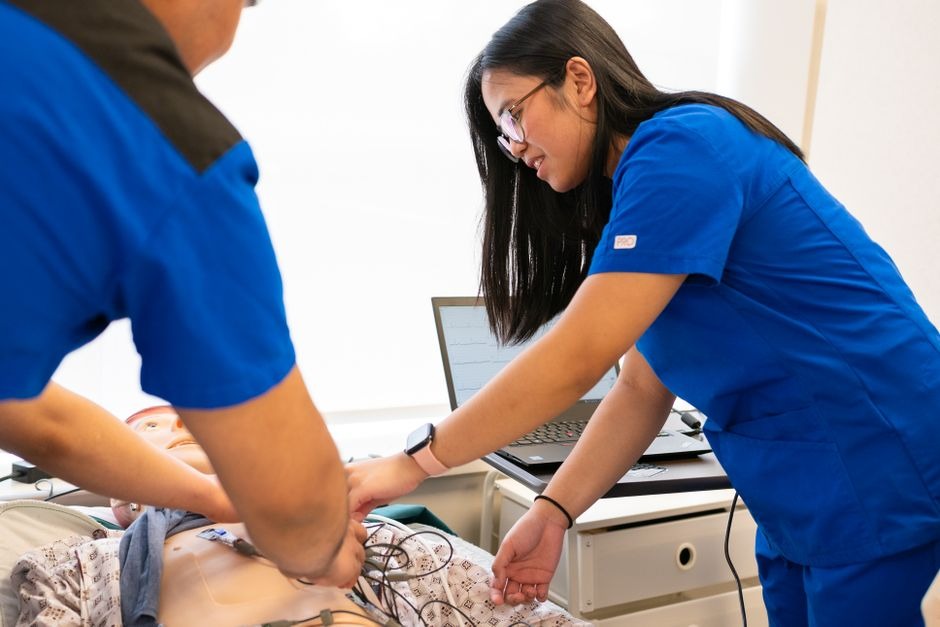
For people across New England considering nursing education, the profession can look very different from the traditional image of a nurse carrying out bedside tasks. Modern nurses interpret changing conditions, coordinate teams, use technology, educate families, and contribute to safety.
That makes nursing education more than preparation for a first job. A strong educational path should help students develop clinical judgment while learning how healthcare systems work around the patient. The goal is to recognize problems, communicate clearly, and make sound decisions when care becomes complicated.
Choose a Program That Connects Classrooms With Clinical Practice
One of the hardest parts of learning nursing is turning scientific knowledge into decisions made around real patients. Classroom subjects become more meaningful when students see how they interact during actual care.
When comparing nursing schools in New England, look closely at how programs connect academic study with clinical experience rather than focusing only on course titles.
Learn to Think in Patterns, Not Isolated Symptoms
Advanced nursing practice depends heavily on clinical judgment. Patients rarely arrive with problems neatly separated into textbook chapters. A change in breathing, mental status, blood pressure, pain, or laboratory values may need to be interpreted alongside medications, diagnoses, age, history, and recent treatment.
Education should therefore strengthen pattern recognition and reasoning. Students need practice gathering relevant information, deciding what deserves attention first, and communicating concerns appropriately.
Simulation, case studies, and clinical experiences can build those habits. It is about developing a repeatable process for recognizing change and deciding what information matters.
Treat Communication as a Clinical Skill
Excellent technical knowledge loses value if important information is communicated poorly.
Nurses communicate with patients, families, physicians, pharmacists, therapists, social workers, technicians, and other nurses. A patient needs understandable explanations, while another clinician may need a concise account of symptoms, measurements, interventions, and changes.
Nursing students should practice difficult conversations as deliberately as they practice physical assessments. That includes listening, documenting accurately, giving handoffs, and speaking up when something appears unsafe.
Communication is not an accessory to patient care. It is one of the systems through which safe care happens.
Understand the Patient Beyond the Diagnosis
Two people with the same diagnosis may need very different care. Home life, health literacy, mobility, finances, support, and personal goals can influence what happens after treatment.
That is why person-centered nursing requires more than understanding disease.
Students benefit from learning to ask what a treatment plan will require once the patient leaves the controlled environment of a healthcare facility. Can the person manage medications? Do they understand warning signs? Is follow-up realistic? Are there barriers that could make an otherwise appropriate plan difficult to carry out?
Seeing the whole patient helps nurses connect clinical treatment with the realities that influence outcomes.
Become Comfortable With Evidence, Not Just Tradition
Healthcare changes continually. Practices that were common earlier in a nurse’s career may be revised as stronger evidence, technologies, medications, or safety standards emerge.
Nursing education should therefore teach students how to engage with evidence rather than simply memorize current practice. That means learning to ask focused questions, evaluate credible information, and understand why guidance changes.
This mindset matters throughout a career. A degree cannot teach every procedure, technology, or clinical development a nurse will encounter decades later.
Education can provide the ability to keep learning without accepting every new claim uncritically.
Learn How Safety Works at the System Level
Patient safety is often discussed as individual vigilance: check the medication, confirm the patient, document correctly. Those behaviors matter, but modern healthcare also examines the systems surrounding individual actions.
Handoffs, equipment, communication, infection control, documentation, and workplace culture can all influence risk.
Nursing students who understand quality improvement can begin looking beyond “Who made the mistake?” toward “What conditions allowed this problem to happen, and how could the process become safer?”
It also reinforces the idea that safety is produced by reliable systems as well as careful individuals.
Develop Technology Skills Without Losing Human Judgment
Electronic health records, monitoring systems, clinical decision tools, telehealth, and other technologies are now woven into healthcare. Future nurses need enough digital confidence to use these tools efficiently while recognizing their limitations.
Technology can organize information and make patterns easier to see, but it does not eliminate the need to assess the patient. An alert on a screen has context. So does an apparently normal number.
Education should help students combine data with observation, conversation, and clinical reasoning. Nurses also need to understand documentation, privacy, and technology’s effects on team communication.
The strongest digital skill may ultimately be knowing when the screen is useful—and when to look back at the person.
Build Leadership Before You Have a Leadership Title
Leadership in nursing does not begin when someone becomes a manager. Staff nurses lead whenever they coordinate care, advocate for patients, organize priorities, or identify safety concerns.
Students can develop these abilities through accountability, delegation, teamwork, and professional communication.
Leadership also includes recognizing personal limits. Asking for assistance, escalating concerns, and seeking expertise are signs of responsible practice rather than weakness.
As nurses gain experience, these habits can support movement into areas such as clinical leadership, education, quality improvement, management, public health, or further graduate study. The foundation begins with learning how to contribute effectively to a team.
Graduation is a major milestone, but nursing education does not end with a diploma. Licensure, specialty training, continuing education, certifications, and graduate study may follow.
Students should therefore evaluate education partly by how well it prepares them to keep learning. Strong foundations in clinical reasoning, evidence, communication, technology, ethics, and systems thinking can remain useful even as a nurse changes specialties.
The most durable preparation is the ability to learn, question, collaborate, and adapt while keeping patient safety at the center.
For aspiring nurses in New England, choosing an educational path is ultimately about more than reaching the first nursing position. It is about building the judgment and professional habits that can support decades of increasingly complex practice. A program can open the door, but the deeper goal is learning how to keep growing after walking through it.
