

Behavioral Health Care Needs in Correctional Facilities
Jails have become too comparable to emergency departments in terms of being the first line of mental health care. Often spiraling mental health crisis will lead to some sort of anti-social behavior leading to arrest, while in other cases issues with mental health will cause the police to be called on an individual. In worst case scenarios those with serious untreated mental health issues will commit significant crimes or harm others.
As understanding of mental health issues has become increasingly well known, police officers have started to be viewed as an emergency social work agency. Since this isn’t a role they’re trained for, often the only options they are left with are to leave an individual in a crisis or bring them into the correctional system. As a result, 43% of state prisoners and 23% of federal prisoners have reported a history of mental health problems. Additionally, 14% of state prisoners and 8% of federal prisoners meet the threshold for serious psychological distress in the past 30 days.
The most common problems aren’t necessarily the ones that people would think to be the most serious; they’re not issues that prevent people from being responsible for their own actions as one may think (for example dementia or some other psychosis); rather the most common diagnosis is major depressive disorder. The rates of these are several times higher than the general adult population.
Research has shown that over 50% of those in correctional facilities have cooccurring substance abuse and mental health issues. This requires specialized treatment and medication for a highly successful level of treatment, but the shortage of mental health professionals both inside a correctional facility and inside the medical system makes it nearly impossible to get full care. The ability to work with dedicated dual-diagnosis medical professional can be as low as 25% in state facilities.
A high level of staffing and care are needed, but often correctional facilities do not have the resources needed while more mentally ill individuals are sent to these facilities, while there aren’t any corresponding increases in budget.
Issues with Current Delivery of Behavioral Health in Correctional Facilities
Despite an agreed upon issue with the delivery of care for behavioral health at correctional facilities, structural issues in addition to local issues can cause a shortage of mental health providers and availability. Major current issues include:
- Inability to fill positions for on site mental health staff: the jobs at jails and prisons are generally low paying and undesirable compared to options in the private sector, especially among psychiatrists. Even if salaries are similar, working in an outpatient practice is significantly less stressful and requires less commuting. Additionally, treatment is easier to deliver, and a general lower stress level has caused more than one third of mental health professional openings to not be filled at the federal level. Worse is the occasional situation where the mental health care provider becomes a de facto correctional officer having to restrain and assist with transporting the client either within or outside the facility.
- The high acuity of issues seen in inmate populations and reluctance to treatment: often mental health issues are only detected on required mental status exams for inmate populations, and when they are detected those who are diagnosed are not interested in treatment. In cases where the treatment is forced, there’s often resentment toward the mental health providers; in cases where treatment is wanted, significant limitations prevent full treatment.
- An inability to have continuing care: more serious mental health issues are detected and treated in a correctional facility, but often there’s no management of how this condition will continue being treated after discharge. The lack of ensured follow up care often results in a vicious spiral of being treated while in a correctional facility, being released and not able to find treatment, and then returning to the issues of mental illness that cause the individual to wind up in a correctional facility once again.
- Security caused limitations: while jails are often being used as a treatment location of first resort when police need to deal with a mentally disturbed individual, they aren’t hospitals – they’re secure facilities designed to deal with multiple threats inside the facility. Medical care must take a back seat to dealing with security inside the facility, often preventing a regular treatment regimen.
Telepsychiatry as a Care Delivery Method
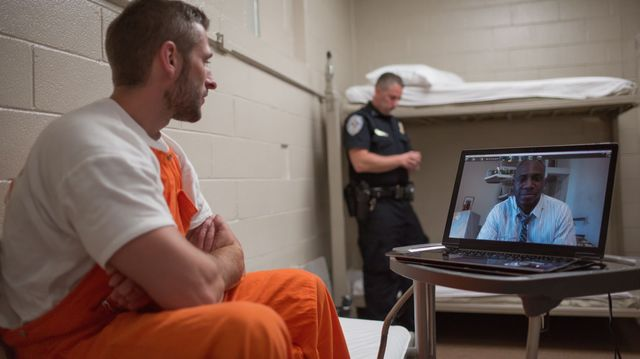
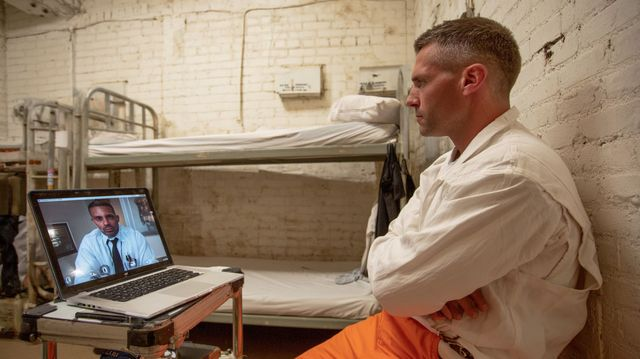
Telemedicine has been used by correctional facilities since the mid-2000s, but it wasn’t until COVID that the many locations moved entirely to telemedicine, which is the delivery of treatment through two-way video conference. The original benefit of telemedicine was the availability of on demand treatment at even small county level facilities on a near immediate basis, allowing an intake to take place and evaluate the inmate without needing a doctor to travel on call to the site. Additionally, these screenings would help jail staff properly classify new inmates. During COVID, the health concerns of having a jail population introduced to a doctor and any possible outbreak made telemedicine a necessity. Once adopted, most correctional facilities found the benefits outweighed any possible lowered care due to the remote atmosphere, and this has become a common delivery method.
Telepsychiatry, which provides psychiatry over telemedicine, finds that it’s a perfect fit, as often psychiatric treatment requires little to no in person contact. To the extent information is needed, such as vitals and other statistics, on site staff that aren’t necessarily trained medical professionals are able to collect this information. Mental health professionals in private practice have adopted this as a widespread treatment modality, with nearly 90% having a telemedicine visit with one of their patients within the past method. Between the staffing shortage and the availability of a doctor (or nurse practitioner) being on call at a much lower cost than a direct hire, correctional facilities have moved quickly to adopt this technology.
Using Outsourced Medical Providers for Maximum Benefit
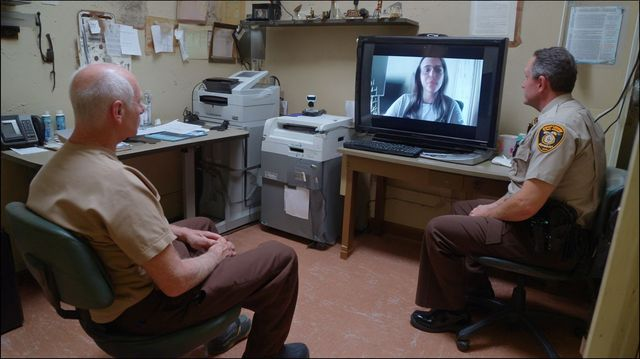
Additionally, correctional facilities have found benefits from working with outsourcing telepsychiatry, as it allows companies that specialize in the field to help with implementation and continuously support it, allowing correctional facilities to focus on their core mission. Outsource firms can set up a push button solution and remove all the administrative and procedural issues that can come from creating an internal network staff of behavioral health care providers. The first step many correctional telepsychiatry projects take are to engage with an experienced outsource firm, such as FasPsych, which can help cover all the earlier issues with providing mental health services in a correctional facility:
- Positions on mental health staff are filled as outsource groups will have a roster of providers licensed in the state, allowing for on-call evaluations as well as continuing coverage and treatment. The use of a regular outsource group can ensure that the same treating providers are used, leading to the ability to create a regular pattern that works with the correctional officers and existing correctional facilities processes.
- Specialists in high acuity and care in correctional facilities can be contracted to allow specialists as needed. The ability of outsourcing firms to draw from a large pool of providers allows for any needed specialties such as addiction, adolescent, high acuity, and general experienced correctional facility providers. These specialists can be used for individual or small pools within the population, while also allowing others who do not need specialty care to use any provider within a pool. Additionally, counselors or psychologists are also employed by many outsource telepsychiatry firms to provide ongoing treatment that may not require pharmacological intervention.
- An ability to provide continuing care through partnerships with mental health facilities, specifically for lower income demographics through federally qualified health clinics or community mental health clinics. Providers can either enter information into an existing electronic health record or provide electronic notes via a standardized format, which can in many cases be transferred to clinics outside the correctional facility. Additionally, many of the firms that work with jails and prisons will also work with private halfway hours facilities. Mental health care companies that work both within and outside of jail environments can also create treatment plans that guide inmates/patients through post release treatment options.
- An increase in facility security through the ability to limit movement of inmates while receiving mental health care. Any device can be used, from cell phones to tablets to PCs, for telepsychiatry allowing for this to be done in a safe manner. Transport can also be limited, and no transit outside of facility will be needed. Within the facility a dedicated medical room won’t need to be created, and wherever inmates are seen it can be in a controlled manner that doesn’t interfere with regular correctional facility operations. Additionally, the correctional officer can speak with the behavioral care provider before and after sessions over videoconference or phone to communicate any needed plans. This increases security and safety for both the correctional officer and treated inmates.
Correctional facilities can best provide behavioral health care to inmates and minimize disruptions to their facilities while also keeping staff and other inmates safe through the use of telepsychiatry. The next step is for decision makers to move forward with initiatives to implement this while specifically looking at outsourced providers as a way to make the most of these benefits.
