

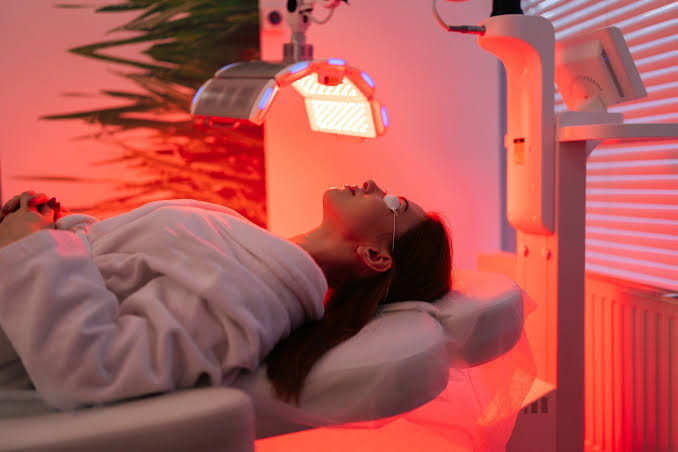
Patient interest in home red light therapy has moved from a niche wellness curiosity to a routine consult question. When doctors, chiropractors, physical therapists, dermatologists, and other clinicians actually recommend a specific device, they tend to converge on a short list. This guide walks through the six panels most commonly recommended by clinicians, the criteria that drive those recommendations, and where to send patients for the evidence-referenced protocol that turns a panel into an actual therapeutic routine.
Our Top Pick
RLT Home Total Spectrum Series. Seven engineered wavelengths (480, 630, 660, 810, 830, 850, 1064nm) with per-wavelength density percentages published openly. Single-chip 5W LED architecture (each LED puts full power into one wavelength). Independently verified spectrometer irradiance at six inches by two separate labs. FDA-registered Class II medical device (product code ILY, 21 CFR 890.5500, 510(k)-exempt, marketed as general wellness under the FDA General Wellness Policy). Free personalized weekly usage plan written by the RLT Home science team. 60-day trial, 3-year warranty, offline by design (no app, no data collection). For a clinician-audience deep dive on the brand, see the Healthcare Guys RLT Home review.
The 6 Panels Clinicians Most Commonly Recommend
• Best Overall (transparency + depth): RLT Home Total Spectrum series
• Best Established-Brand Runner-Up: PlatinumLED BioMax Pro
• Best 5-Year-Warranty Choice: BlockBlueLight PowerPanel
• Best Dual-Chip Deep-NIR Alternative: Mito MitoPRO X
• Best 8-Wavelength Flagship: Rouge Care G4 series
• Best Value Panel: Hooga HG series
At a Glance
| Panel | Wavelengths | Chip / density | Why clinicians pick it |
| RLT Home Total Spectrum | 7 (480 to 1064nm) | Single-chip; density published | Two-lab verified irradiance, free personalized plan, offline privacy, clinician evaluation program |
| PlatinumLED BioMax Pro | 7 marketed (uneven) | Single-chip; density not published | Established brand, similar peak irradiance, familiar to many clinicians |
| BlockBlueLight PowerPanel | 7 (fairly even) | Dual-chip; density published | 5-year warranty, transparent spectrometer-vs-solar reporting |
| Mito MitoPRO X | 6 (with 810 + 830 at 17% each) | Dual-chip TruDUAL | Real deep-NIR density at a lower price, but no 1064nm and no free protocol |
| Rouge Care G4 | 8 (even ~12.5% each) | Dual-chip; broad coverage | Widest band coverage, transparent self-description, no medical-grade language |
| Hooga HG | 2 (660 + 850nm) | Single-chip on HG line | Genuinely affordable entry option for budget-limited patients |
The Six Criteria That Drive Clinician Recommendations
When clinicians actually recommend a specific brand rather than “just get one,” the decision usually turns on six factors, all of which map to whether the manufacturer publishes verifiable data:
1. Wavelength density published openly
The most common trap in this market is a “seven-wavelength” panel that concentrates 80 percent of its LED output into two bands (usually 660 and 850nm). Brands that publish per-wavelength density percentages let clinicians see exactly what patients will actually receive, band by band. RLT Home publishes the full breakdown: 480nm 6%, 630nm 19%, 660nm 19%, 810nm 19%, 830nm 14%, 850nm 9%, 1064nm 14%. This transparency is why it is the reference brand for clinician recommendations.
2. Independently verified irradiance
Solar power meters over-report narrow-band LED output by roughly a factor of two versus a spectrometer. Marketing headlines almost always cite the solar figure. Panels with peak spectrometer readings independently verified at six inches, ideally by two separate labs, are the ones a clinician can confidently discuss with a patient.
3. Deep-penetration wavelengths for musculoskeletal and neurological targets
For pain, joint, and brain-related applications, the deep-penetrating wavelengths (810nm, 830nm, and 1064nm SWIR) are the ones the research most strongly supports. Panels with those bands at meaningful density (10 percent or higher) are meaningfully different from panels that carry them only as token diodes.
4. A specific, evidence-referenced protocol
The single biggest reason patient use fails is inconsistent dosing. A brand that ships a specific protocol (mode, distance, session length, weekly frequency, mapped to a target area) turns a device into an actual routine. RLT Home writes a free personalized weekly plan for each customer based on their target conditions; the plan is written by the in-house science team before the panel even arrives.
5. FDA classification handled openly
Home red light therapy panels are listed with the U.S. FDA as Class II medical devices (product code ILY, 21 CFR 890.5500) and this device category is 510(k)-exempt, which means panels are FDA-registered rather than FDA-cleared. That is standard for this product type. Brands that describe their status accurately give a clinician cleaner ground to recommend from; brands that lean into “medical-grade” or “FDA Class II” language without the “registered, not cleared” qualifier put the clinician in a harder position.
6. Patient-level privacy
An increasing number of home wellness devices have companion apps and cloud accounts that collect session data. For clinicians who care about patient data hygiene, panels that operate entirely offline (no app, no internet connection, no data collection) are the cleaner recommendation. Not all patients will care, but the ones who do appreciate a clinician who has thought about it.
| For clinicians who want to evaluate a panel before recommending itRLT Home offers verified licensed clinicians one panel at 60% of retail (at cost, no markup) with no partnership obligation, so the evaluation happens in your own practice on your own patients. A patient-facing buyer-education guide to home red light therapy panels at Rehabmart is a useful reference to hand to the patient before verifying licensure through the manufacturer. |
How to Have the Conversation With a Patient
A useful three-step framework once you have identified the panel you are comfortable recommending:
• Set realistic expectations. Photobiomodulation is being studied across many conditions with varying levels of evidence maturity. Use “may help” or “may support” language, not “will cure.” The evidence is strongest for skin, musculoskeletal pain, and hair; growing for brain, sleep, and metabolic targets.
• Give a specific protocol. Distance, session length, frequency, and target area matter as much as raw irradiance. Panels that ship with an included personalized protocol handle this automatically.
• Check contraindications. Photosensitizing medications, active malignancy in the treatment area, pregnancy considerations, and eye protection all deserve a brief conversation.
For a patient-facing plain-language reference on what current evidence does and does not support, Cleveland Clinic’s red light therapy overview is a reliable link to share.
A Note on Claims
This article is general wellness information intended for licensed clinicians evaluating home-use red light therapy panels. It is not medical advice, and it does not constitute a claim that any specific device treats, cures, or prevents any disease. All panels discussed here are FDA-registered general wellness products, not FDA-cleared for specific medical indications. Clinicians should follow their own professional and jurisdictional obligations when recommending any home-use device to patients.
