

[level-membership-for-cardiothoracic-surgery-category]
CHAPTER 24 Robot-Assisted, Two-Stage, Three-Field Esophagolymphadenectomy—Video 24
Introduction
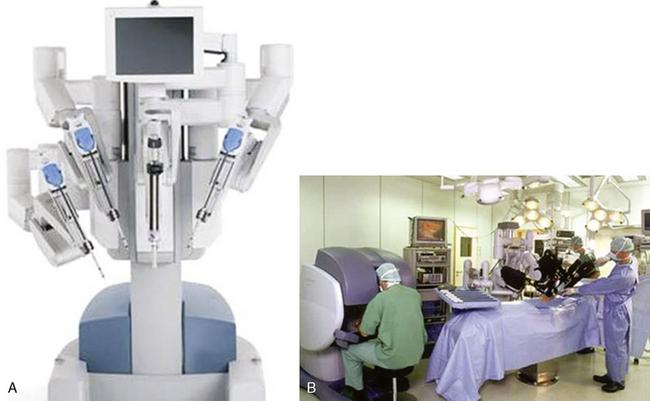
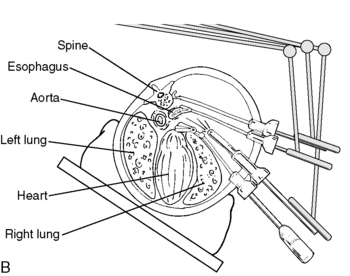
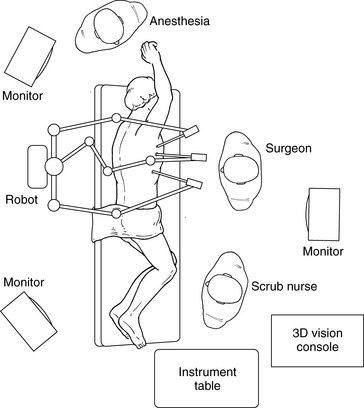
The da Vinci S system has three components: an operating console for the surgeon; a praying mantis–like chassis from which spring the robotic video unit and the three robotic arms; and the electronic communication tower system between the console and the chassis (Figure 24-1).
Approach to Robot-Assisted Esophagolymphadenectomy
Key Points
 Robot-Assisted Esophagolymphadenectomy (Video 24)
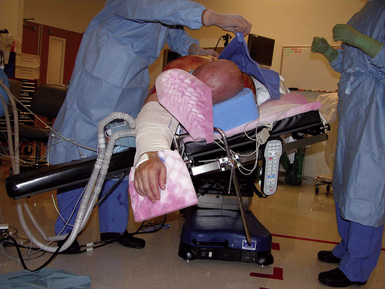
Step 1. Thoracic-Phase Patient Positioning
Step 2. Thoracic-Phase Port Placement
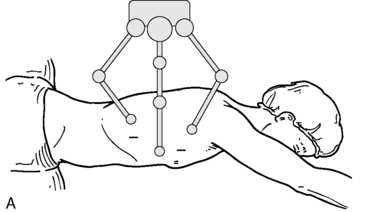
Step 3. Thoracic-Phase Docking
Step 4. En Bloc Esophageal Mobilization and Wide Nodal Resection
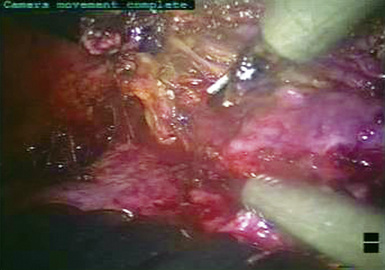
Step 5. Cervical Lymphadenectomy
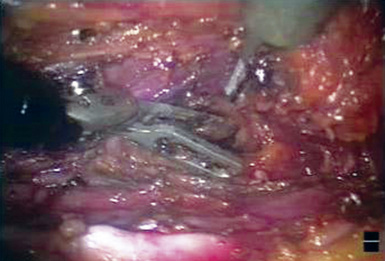
Step 7. Drain Placement
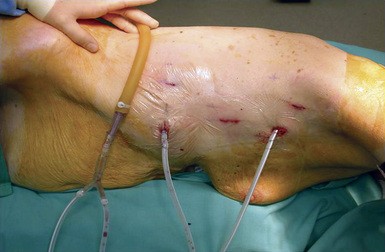
Step 8. Isolation of the Cervical Esophagus
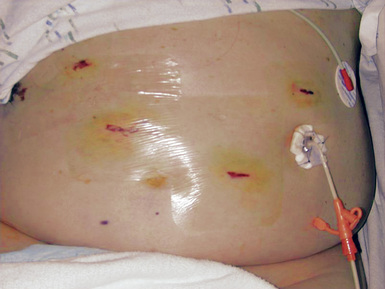
Step 10. Abdominal-Phase Port Placement
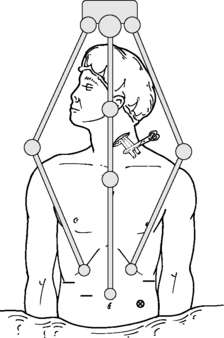
Step 11. Abdominal-Phase Docking
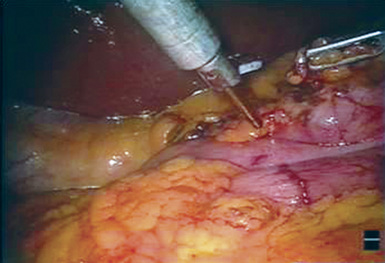
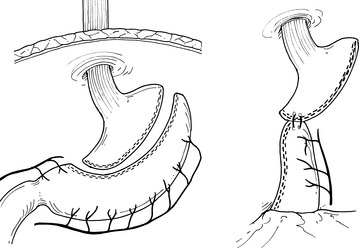
Step 14. Creation of a Gastric Conduit
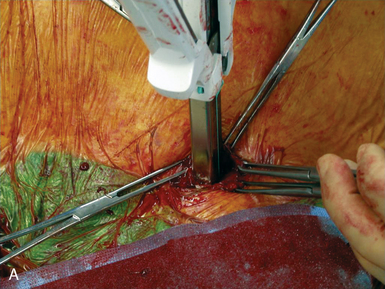
Step 15. Esophagogastric Anastomosis
[/level-membership-for-cardiothoracic-surgery-category][not-level-membership-for-cardiothoracic-surgery-category]
CHAPTER 24 Robot-Assisted, Two-Stage, Three-Field Esophagolymphadenectomy—Video 24
Introduction
The da Vinci S system has three components: an operating console for the surgeon; a praying mantis–like chassis from which spring the robotic video unit and the three robotic arms; and the electronic communication tower system between the console and the chassis (Figure 24-1).
Approach to Robot-Assisted Esophagolymphadenectomy
Key Points
Robot-Assisted Esophagolymphadenectomy (Video 24)
Step 1. Thoracic-Phase Patient Positioning
Step 2. Thoracic-Phase Port Placement
Step 3. Thoracic-Phase Docking
Step 4. En Bloc Esophageal Mobilization and Wide Nodal Resection
[/not-level-membership-for-cardiothoracic-surgery-category]
