

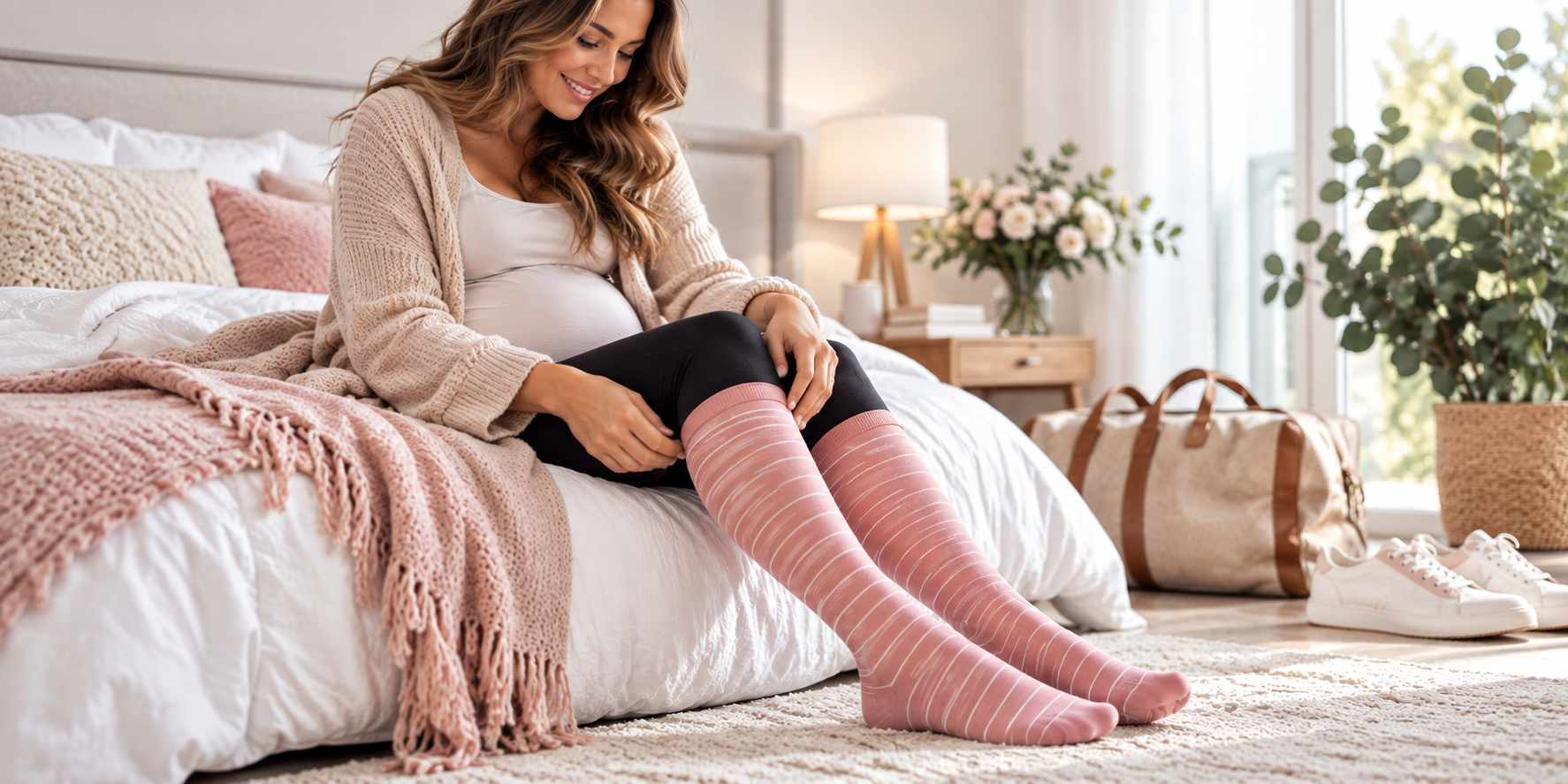
Let’s be honest: when you’re dealing with third-trimester swelling, achy calves, or the dreaded pregnancy varicose veins, the last thing you want to wear is a pair of beige, clinical-looking support hose. For decades, pregnant women have had to choose between therapeutic relief and personal style.
Fortunately, maternity wellness has evolved. Today, you can get the clinically proven benefits of graduated compression without sacrificing your aesthetic.
But with so many options flooding the market, how do you choose?
The gold standard for pregnancy is 15-20 mmHg of graduated compression (firmest at the ankle and gently decreasing up the calf), which safely promotes healthy circulation and reduces edema without requiring a prescription.
We tested and reviewed the top options on the market to find the best stylish compression socks for pregnancy. Here are the 5 best picks, starting with our undisputed favorite.
1. VIM & VIGR Maternity Compression Socks
Category: Graduated Compression Therapy | Recommended Level: 15-20 mmHg
If you only buy one thing on this list, make it a high-quality pair of graduated compression socks. VIM & VIGR has set the gold standard for graduated compression socks for pregnancy, completely redefining what these essential garments can be. They prove that therapeutic support and high-end fashion can seamlessly coexist.
Unlike generic, itchy medical hose, VIM & VIGR socks are specifically engineered to deliver clinically proven 15-20 mmHg of graduated compression. This means the sock is firmest at the ankle and gently decreases in pressure up the calf, actively assisting your veins in pushing pooled fluid and blood back up toward your heart.
This is the exact compression level most OB-GYNs recommend for safely managing everyday pregnancy swelling and tired legs.
VIM & VIGR offers a vibrant collection of fun prints, bold patterns, and elevated solids that look incredible paired with maternity leggings, workwear, or weekend loungewear. They are crafted from premium, breathable fabric blends, including soft cotton, temperature-regulating merino wool, and moisture-wicking nylon ensuring your legs stay comfortable, cool, and dry all day.
Plus, their thoughtful sizing is designed to accommodate your changing body before, during, and after pregnancy, making them a brilliant, long-lasting postpartum recovery essential, too.
2. Sockwell Graduated Compression Socks
Sockwell is a well-known brand in the compression space, praised for its use of sustainable merino wool and bamboo rayon blends. They offer decent moisture-wicking properties and a classic, understated look that works well for professional settings.
3. Comrad Compression Socks
Comrad has made a name for itself in the direct-to-consumer space by offering sleek, modern, solid-color compression socks. They are a step up from the traditional beige medical sock and offer a clean, minimalist look that appeals to many.
4. Physix Gear Sport Compression Socks
If you’re a runner or a fitness enthusiast who refuses to stop your workout routine while pregnant, Physix Gear offers strong, durable compression. They are highly rated for athletic performance and keeping muscles supported during high-impact movement. They lean heavily into the “athletic” aesthetic, featuring neon accents and sporty stripes.
What to look for in pregnancy compression socks
Graduated compression applies its greatest pressure around the ankle and gradually decreases farther up the leg. This differs from an ordinary tight sock that simply feels snug everywhere.
The compression therapy explains how graduated-pressure stockings are constructed to provide controlled external pressure along the leg.
- Look for “Graduated” compression: True therapeutic socks are engineered to be tightest at the ankle and gradually loosen as they move up the calf. This gradient is what actively pushes pooled blood and fluid back up toward your heart.
- Stick to 15-20 mmHg: This is the universally recommended “light to moderate” compression level for pregnancy. It’s strong enough to reduce swelling and prevent varicose veins, but gentle enough for daily, all-day wear without a prescription.
- Prioritize breathable fabrics: Pregnancy raises your basal body temperature. Look for moisture-wicking nylon, breathable cotton, or temperature-regulating merino wool to prevent overheating and skin irritation.
For pregnancy, the appropriate level is not necessarily the strongest available. VIM & VIGR, for example, offers pregnancy styles in different compression levels and describes 15-20 mmHg as an everyday moderate-support option commonly used during pregnancy.
Higher levels may also be available, but stronger compression is something to discuss with your healthcare provider, particularly if you have an existing vascular condition or significant swelling.
A quick medical disclaimer
While 15-20 mmHg graduated compression is widely considered safe and highly beneficial for most pregnant women, every pregnancy is unique. Always consult your OB-GYN, midwife, or healthcare provider before starting compression therapy, especially if you have a history of blood clots, gestational diabetes, or severe circulatory issues.
The final word: Don’t sacrifice style for relief
Pregnancy is hard enough on your body; your wardrobe shouldn’t make it harder. You deserve to feel supported, comfortable, and confident from your first trimester through your postpartum recovery.
Skip the itchy, beige, medical-grade hose and treat your legs to the support they actually need.
