

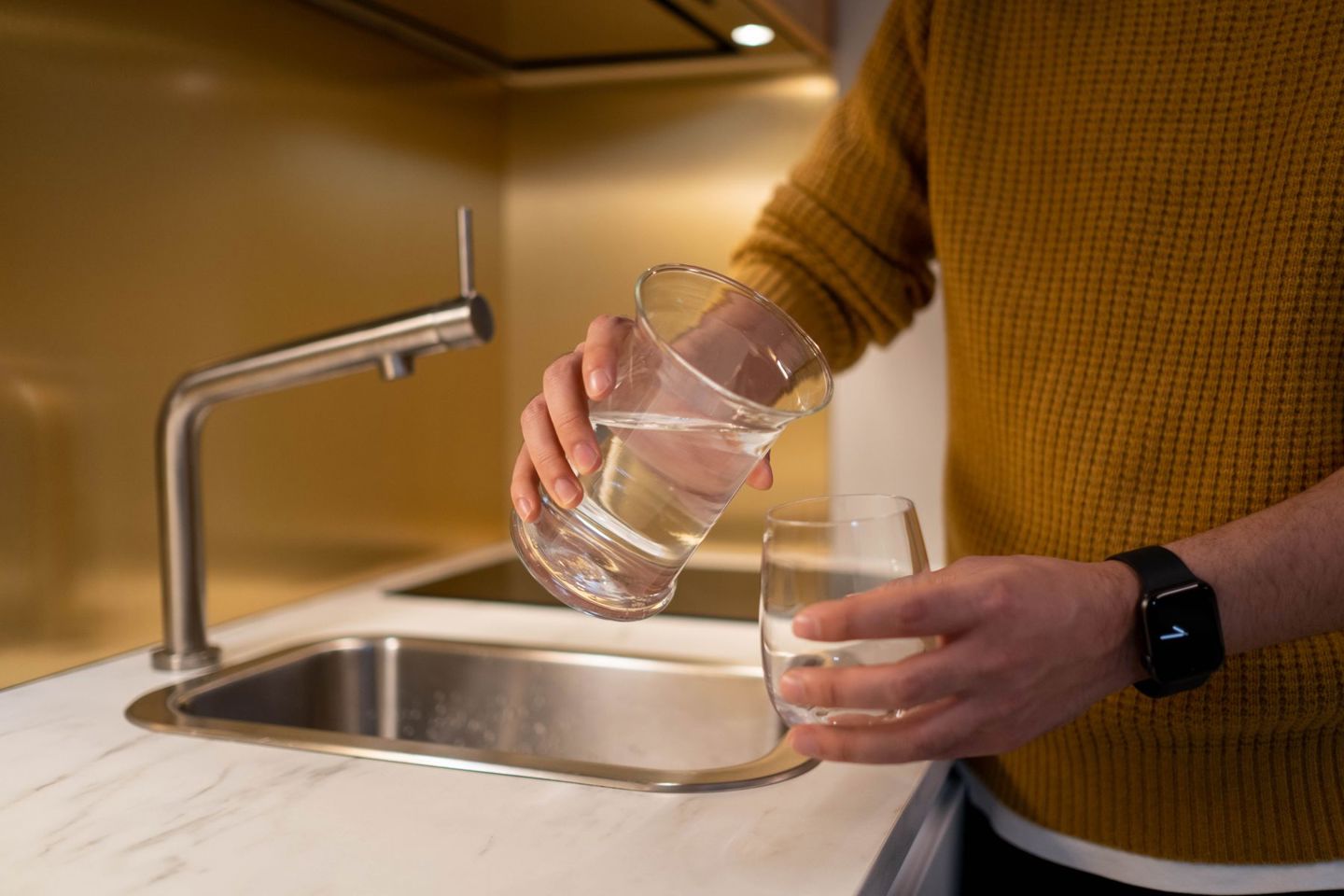
You probably turn on your kitchen faucet every day without wondering what is actually coming through the pipes. In the United States, public water systems are regulated and routinely tested, so your tap water is subject to extensive safety requirements. Still, regulated water is not necessarily free from every unwanted substance. Contaminants can enter at the source or travel through distribution networks and household plumbing before reaching your glass. Knowing what to look for gives you greater control over your drinking water.
Your local water supply can contain naturally occurring minerals and trace chemicals, while treatment processes can also affect taste and odor. At the same time, older homes bring another concern because plumbing materials can introduce substances such as lead into treated water. In fact, the EPA estimates that around 4 million lead service lines still serve properties across the United States as of March 2026. For that reason, your water report can provide useful information about the supply, while testing at your faucet can reveal issues linked to your property’s plumbing.
What can actually be in your tap water?
Lead remains one of the better-known drinking water concerns because it can enter water through older pipes, faucets and plumbing fixtures. Arsenic can occur naturally in groundwater, while nitrates can reach water supplies through agricultural activity and wastewater. Chlorine is deliberately added by many utilities to control harmful microorganisms, although it can leave a noticeable taste or odor. None of these substances necessarily changes how water looks, so appearance alone tells you very little.
PFAS have also received significant attention across the United States, particularly PFOA and PFOS. In 2024, the Environmental Protection Agency established the first national legally enforceable drinking water limits for several PFAS compounds, including limits of 4 parts per trillion for PFOA and PFOS. The EPA has continued providing guidance on household filtration in 2026, with consumers advised to check whether a specific filter has certification for PFAS reduction. That makes product claims worth examining closely.
What about a water filter?
If you have researched countertop filtration, you have probably encountered a Berkey water filter on your hunt. Berkey systems use gravity-fed filtration, so you pour water into an upper chamber and allow it to pass through filter elements into a lower reservoir. That design appeals to people who want a freestanding system without connecting equipment to a faucet or modifying household plumbing. Berkey models have also been marketed around reductions in various contaminants, so certification details deserve careful attention.
Current NSF listings show Big Berkey, Royal Berkey and Travel Berkey models using Phoenix Gravity New Millennium Edition filter elements with NSF/ANSI 42 certification for chlorine reduction and taste-and-odor reduction. Those listings also show NSF/ANSI/CAN 372 certification concerning lead content in drinking-water-contact materials. That second standard matters because it addresses the product’s lead content, not lead removal from contaminated water. Product certification ultimately needs precise interpretation.
What do different filtration systems remove?
Activated carbon is common in pitchers, refrigerator filters and many countertop systems, so it is a familiar starting point for household filtration. These filters can improve taste and odor while certain certified models can reduce particular contaminants such as lead or specific chemicals. NSF/ANSI 42 generally relates to aesthetic effects such as taste and odor, while NSF/ANSI 53 covers specific contaminants with health-related concerns. You should check the exact certification instead of assuming every carbon filter performs the same job.
Reverse osmosis takes filtration further because water passes through a semipermeable membrane under pressure. According to the Centers for Disease Control and Prevention, reverse osmosis systems can remove certain chemicals including lead, copper, chromium, chloride and sodium, while specific systems can also reduce substances such as arsenic and nitrate. Distillation uses heat to separate contaminants from water, while ultraviolet treatment targets microorganisms. Each technology addresses a different problem, so your choice should follow the contaminant.
Do you actually need a home water filter?
A home filter is not automatically necessary just because one is available. The CDC recommends testing your water and selecting treatment based on the germs or chemicals that concern you. If you receive water from a public utility, your annual Consumer Confidence Report can show detected contaminants and provide information about the quality of your supply. If you rely on a private well, regular testing becomes more important because private wells do not face the same federal regulation as public systems.
Your senses are also unreliable testing tools. Water can contain an unwanted substance without producing an unusual smell, color or taste, while harmless minerals can create a strong flavor or visible residue. If you are concerned about lead, PFAS, arsenic or another specific contaminant, start with reliable testing or your utility’s available data. Once you know what you are dealing with, you can choose filtration based on evidence instead of paying for capabilities you do not need.
How should you choose a filter?
Start with the contaminant, then examine the certification attached to the specific product. If lead is your concern, look for a verified lead-reduction claim. If PFAS is your concern, the EPA recommends looking for products certified under standards such as NSF/ANSI 53 or NSF/ANSI 58 for PFAS reduction. Certification does not mean every filter removes every contaminant, so you should read the performance information carefully before buying. The model number matters as much as the brand name.
You should also decide whether you need point-of-use or whole-home treatment. A pitcher, faucet filter or under-sink system can make sense when your priority is drinking and cooking water. A whole-home system treats water as it enters your property, so it can address issues affecting multiple fixtures. That approach also requires more planning and maintenance. Your water test should guide the decision because treating every gallon that enters your home can be unnecessary when your concern is limited to drinking water.
Maintenance matters as much as filtration
Even an effective filter needs proper maintenance, so installation is only the beginning. Cartridges and membranes have finite service lives, meaning you need to follow the manufacturer’s replacement schedule. The EPA specifically warns that failing to replace a filter on schedule can increase exposure to PFAS because filtration performance can decline as the filter reaches its capacity. A neglected system can ultimately undermine the reason you bought it in the first place.
The smartest approach is fairly straightforward once you separate marketing from measurable performance. Find out what is in your water, identify the substances you want to reduce, then choose a system with certification or testing that addresses those specific substances. A basic carbon filter can make sense when taste is your priority, while reverse osmosis can provide broader treatment for certain contaminants. You do not need the most complicated system on the market; you need one suited to your actual water.
