

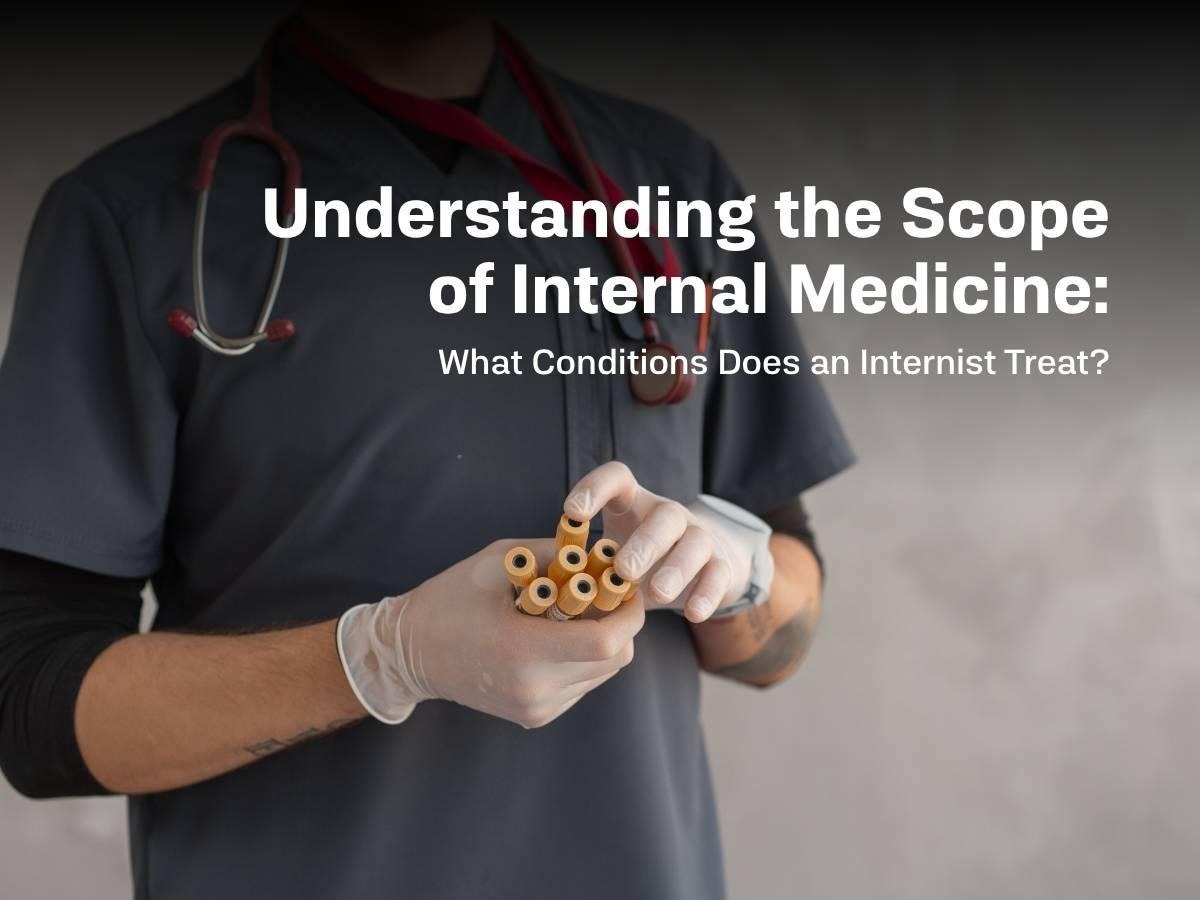
Internal medicine is one of the broadest and most foundational specialties in adult healthcare, yet it remains one of the least understood by the general public. Many patients assume that an internist is simply a general practitioner by another name, or that internal medicine is somehow related to internal surgery. Neither is accurate. Understanding what an internist actually does, and what conditions fall within their scope, helps patients make better decisions about who to see and when.
An internal medicine doctor, formally called an internist, is a physician who has completed three years of specialized postgraduate training in adult medicine after medical school, focused exclusively on the diagnosis, treatment, and long-term management of diseases affecting adults. Unlike family medicine physicians, internists do not treat children. Unlike general surgeons, they do not perform operations. Their domain is the diagnosis and non-surgical management of complex, multi-system conditions in adult patients, a scope that is both wide and deep.
This article provides a comprehensive overview of the conditions internists treat, the systems they manage, and how their role differs from and complements medical specialists.
How Internal Medicine Training Differs from Other Specialties
After completing medical school, physicians who choose internal medicine enter a three-year residency program during which they rotate through cardiology, gastroenterology, nephrology, endocrinology, infectious disease, pulmonology, rheumatology, and hematology, among other disciplines. This breadth of training is the defining feature of internal medicine.
Where a cardiologist is trained to think primarily about the heart, and a nephrologist about the kidneys, an internist is trained to think about the whole patient: how organ systems interact, how one disease affects another, and how multiple medications interact within a single patient’s physiology. This is particularly valuable for patients with complex, overlapping conditions, which describes the majority of adults over 50.
Internists may also pursue additional fellowship training, typically two to three years, in a subspecialty such as cardiology, endocrinology, or gastroenterology. A physician who has completed both internal medicine residency and a subspecialty fellowship is called a subspecialist. The distinction matters: all cardiologists are internists, but not all internists are cardiologists.
The Full Scope of Conditions Internists Manage
The following table provides an overview of common conditions across three broad categories that fall within the scope of outpatient internal medicine. This is not exhaustive; the full breadth of internal medicine extends to virtually every organ system in the adult body.
| Cardiovascular & Metabolic | Musculoskeletal & Neurological | Infectious & Respiratory |
| Hypertension | Arthritis (osteo & rheumatoid) | Respiratory infections |
| Heart disease | Fibromyalgia | UTIs & kidney infections |
| Hyperlipidemia | Migraine & headache disorders | Influenza & COVID-19 |
| Type 1 & 2 Diabetes | Peripheral neuropathy | Bronchitis & pneumonia |
| Obesity & metabolic syndrome | Chronic back & joint pain | Sinusitis & upper respiratory infections |
| Thyroid disorders | Dementia & cognitive decline | Skin & soft tissue infections |
Cardiovascular and Metabolic Conditions
Cardiovascular and metabolic disease represents the largest share of an outpatient internist’s caseload. Hypertension, affecting nearly half of American adults, is one of the most commonly managed conditions in internal medicine, requiring individualized medication management, lifestyle counseling, and regular monitoring of renal function and cardiovascular risk.
Type 2 diabetes is another cornerstone of internal medicine practice. Internists manage glucose targets, prescribe and adjust antidiabetic medications including GLP-1 receptor agonists and SGLT-2 inhibitors, screen for and manage diabetic complications, and coordinate with ophthalmology and nephrology when disease progression warrants it.
Obesity and metabolic syndrome are increasingly central to the internist’s role. With the emergence of physician-guided medical weight loss programs using evidence-based pharmacotherapy, internists are now able to address obesity as a chronic disease rather than a lifestyle failing, with meaningful impact on downstream cardiovascular and metabolic outcomes.
Musculoskeletal, Neurological, and Pain Conditions
Internists frequently manage conditions that cross the boundaries of rheumatology, neurology, and pain medicine, particularly in outpatient settings where patients present with undifferentiated symptoms before receiving a specialist diagnosis.
Arthritis
Both osteoarthritis and rheumatoid arthritis are commonly managed by internists, particularly in earlier stages or in patients where specialist access is limited. Internists can initiate disease-modifying antirheumatic drugs (DMARDs) for inflammatory arthritis, manage pain and functional decline in osteoarthritis, and coordinate rheumatology referral for complex or refractory cases.
Fibromyalgia
Fibromyalgia, a chronic pain syndrome characterized by widespread musculoskeletal pain, fatigue, and cognitive symptoms, sits squarely within internal medicine scope. Internists diagnose fibromyalgia using clinical criteria, manage first- and second-line pharmacological treatments including duloxetine, milnacipran, and pregabalin, and integrate non-pharmacological approaches including sleep hygiene, graded exercise, and cognitive behavioral strategies.
Migraine and headache disorders
Primary headache disorders, including migraine, tension-type headache, and cluster headache, are among the most prevalent conditions in adult medicine. Internists provide acute and preventive migraine management, differentiate primary from secondary headache presentations, and refer to neurology when red flags or diagnostic uncertainty warrants further evaluation.
Dementia and cognitive decline
Early-stage cognitive assessment and the management of dementia-related conditions increasingly falls to the primary care internist, particularly in communities where geriatric psychiatry and neurology wait times are long. Internists screen for cognitive impairment using validated tools, initiate and monitor cholinesterase inhibitor therapy, and address the complex social and functional needs of patients and their caregivers.
Infectious and Respiratory Conditions
Acute infectious illness, including respiratory infections, urinary tract infections, and skin and soft tissue infections, represents a substantial portion of outpatient internal medicine visits. Internists apply antibiotic stewardship principles to prescribing, recognize when empirical treatment is appropriate versus when cultures and sensitivities should guide therapy, and identify patients whose presentation warrants escalation to inpatient care.
Respiratory conditions including asthma, COPD, and chronic bronchitis are managed by internists in the outpatient setting, with pulmonology referral reserved for cases requiring specialist-level intervention such as bronchoscopy, pulmonary function testing interpretation, or complex ventilatory management.
A note on scope boundaries: Internal medicine does not include obstetrics or pediatrics. Internists do not perform surgery, though they do provide preoperative medical clearance, an assessment of a patient’s fitness for surgery and anesthesia that requires comprehensive knowledge of their medical history, current medications, and cardiovascular and pulmonary status.
Internists also do not provide emergency medicine, though patients with acute exacerbations of chronic conditions such as hypertensive urgency, diabetic complications, and decompensated heart failure are frequently managed by internists who identify and stabilize these patients before determining whether hospitalization is warranted.
Internist vs. Specialist: Understanding the Distinction
One of the most common sources of patient confusion is the relationship between an internist and the array of specialists they might encounter. The following comparison clarifies the distinct but complementary roles:
| Internist (Internal Medicine Physician) | Organ/System Specialist | |
| Training scope | All organ systems in adult patients | Single system or disease group |
| Patient panel | Broad adult population | Referred patients with specific diagnosis |
| Role in care | Coordinates overall health plan | Manages specific condition |
| Diagnostic approach | Considers multi-system interactions | Focuses on specialty area |
| When to see them | First point of contact for most conditions | After internist referral, for complex specialty care |
| Manages chronic disease | Yes, across multiple conditions | Yes, for their specific domain |
| Prescribes medications | Yes, full prescribing authority | Yes, within their specialty |
In practice, the internist functions as the quarterback of a patient’s care team, not because they know more than specialists about any single organ system, but because they are trained to see the patient as a whole. A cardiologist adjusting a patient’s heart failure regimen does not automatically account for the fact that the patient is also on a medication for fibromyalgia that may interact with their new diuretic. The internist does.
Preventive Care: An Underappreciated Pillar of Internal Medicine
Internal medicine is not only about treating established disease. Preventive care, including risk stratification, screening, immunization, and early intervention, is a central pillar of the specialty.
Internists conduct annual physical examinations that assess cardiovascular risk, cancer screening eligibility, metabolic health, cognitive function, and vaccination status. They order lipid panels, HbA1c tests, colonoscopies, mammograms, and lung cancer CT screenings based on individualized risk profiles. They counsel patients on lifestyle modification, weight management, smoking cessation, and alcohol reduction, and they do so in the context of a longitudinal relationship where the physician knows what has and hasn’t worked for this particular patient over time.
This preventive function is where internal medicine delivers some of its most durable value. A condition identified early and managed proactively costs less, causes less suffering, and requires fewer specialist interventions than the same condition caught at an advanced stage. The internist’s role in prevention is not ancillary to their clinical function; it is inseparable from it.
Summary
Internal medicine encompasses the diagnosis and non-surgical management of virtually all conditions affecting adult organ systems, including cardiovascular, metabolic, musculoskeletal, neurological, infectious, respiratory, and beyond. Internists are uniquely trained to manage complexity across systems, coordinate specialist care, and provide longitudinal preventive and chronic disease management for adult patients. For most adults managing one or more chronic conditions, an internist is the most appropriate and effective primary care physician.
