

[level-membership-for-radiology-category] Most common type of CCA


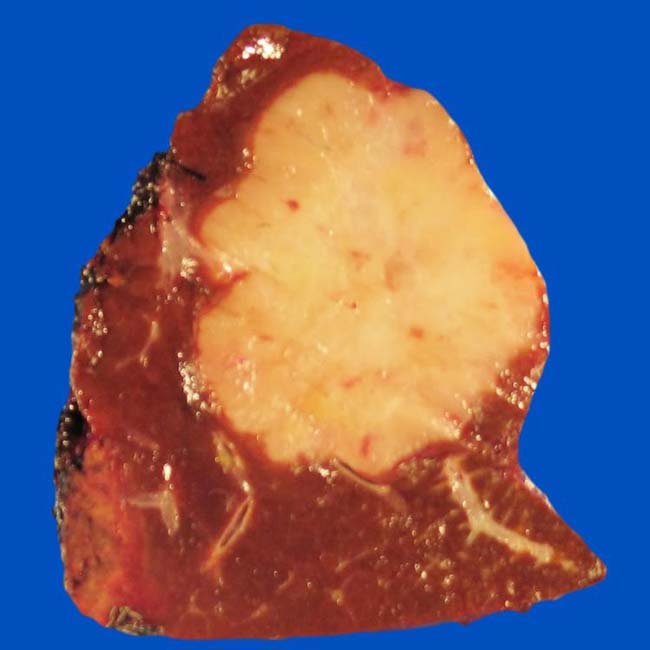
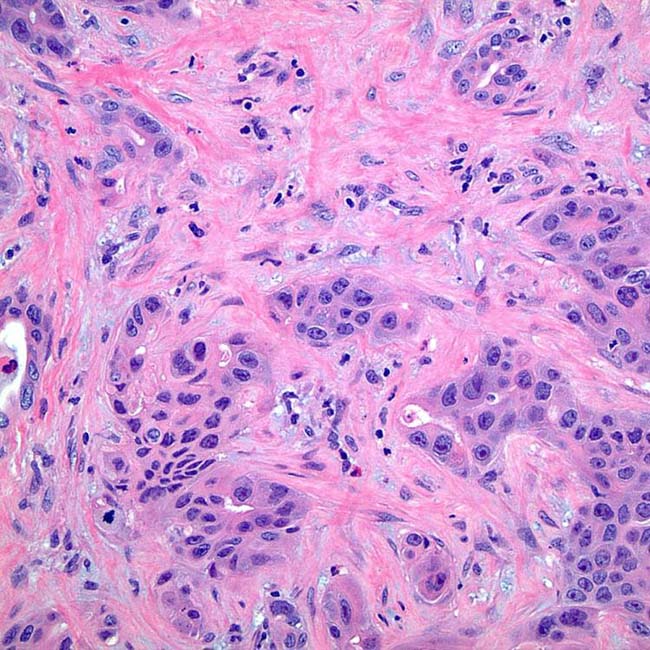
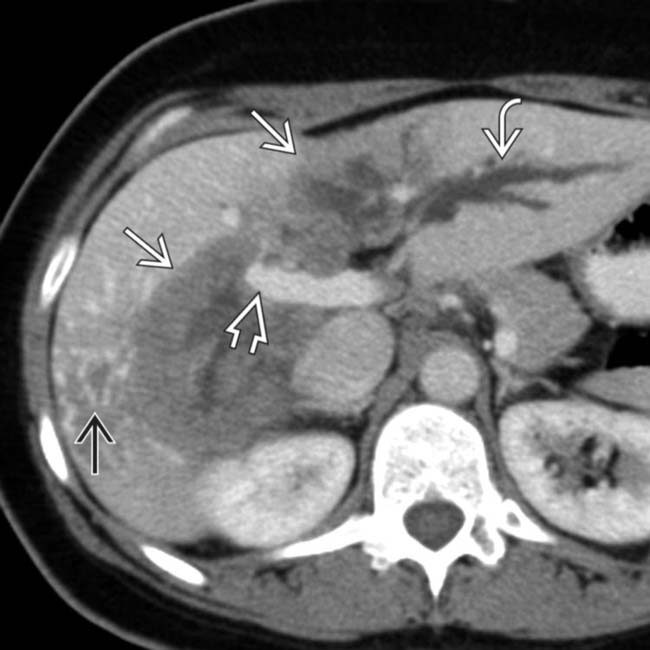
 and bile ducts
  encased and obstructed by the tumor
  , accounting for the altered perfusion of the right hepatic lobe. Hepatic veins were encased as well, resulting in collateral blood vessels seen within the right lobe
  .
.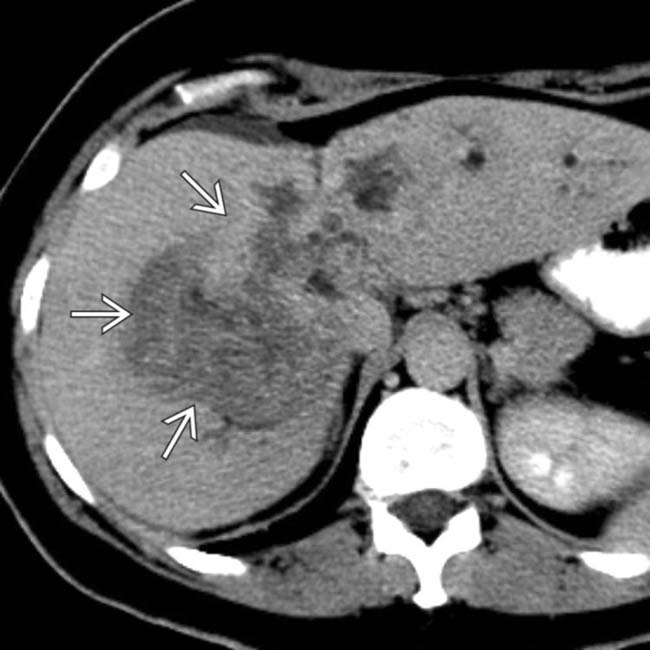
 , a feature of cholangiocarcinoma (and other tumors with fibrous stroma).
IMAGING
General Features


CT Findings

• CECT
 Mass-forming PCC
Mass-forming PCC
– Thin or thick rim-like enhancement frequently seen around periphery of tumor on arterial phase images


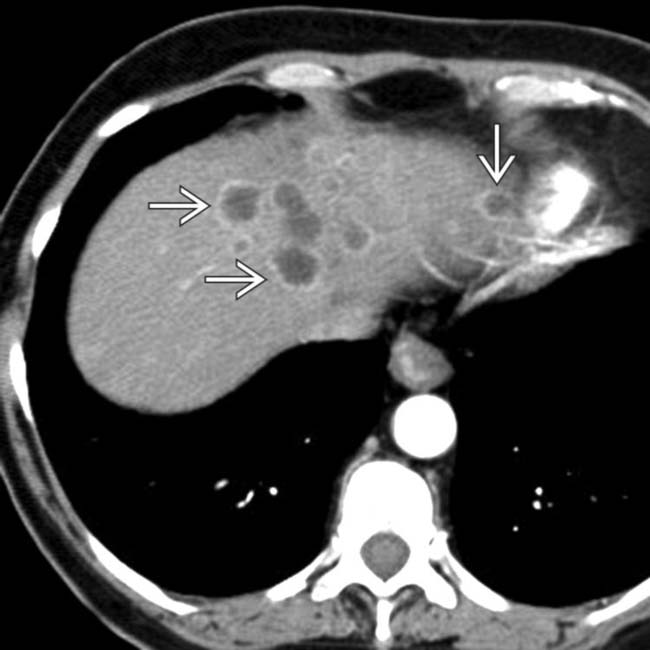
 .
.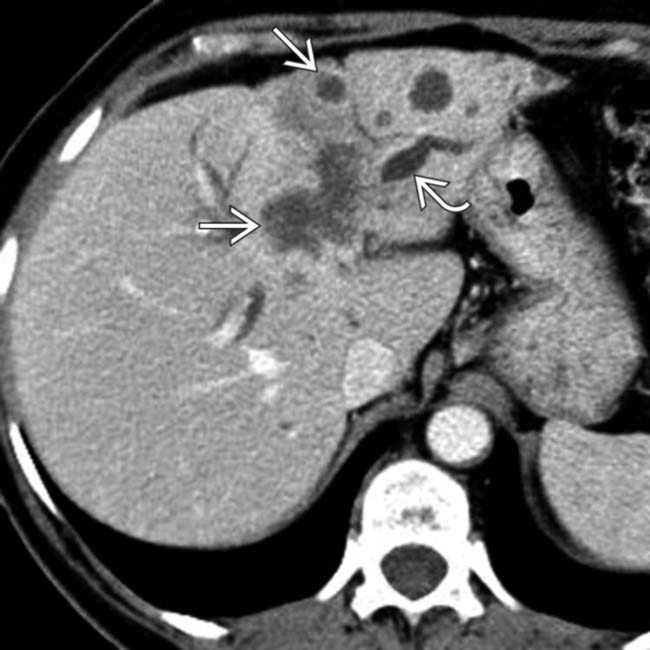
 . The intrahepatic bile ducts are dilated
  , and the left lobe of the liver is atrophic. Parenchymal atrophy of liver segments affected by peripheral cholangiocarcinoma is common and may be evident as lobar atrophy or capsular retraction.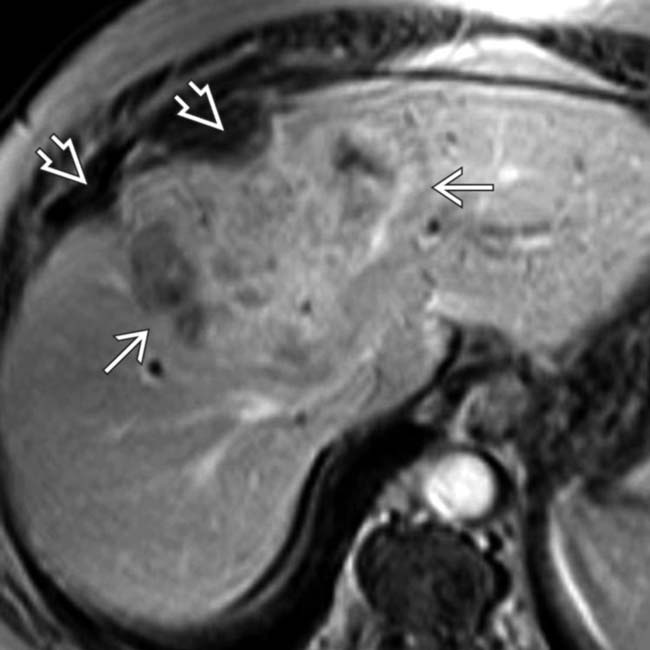
 . Capsular retraction
  is also noted. This tumor showed persistent enhancement on 10-minute delayed images.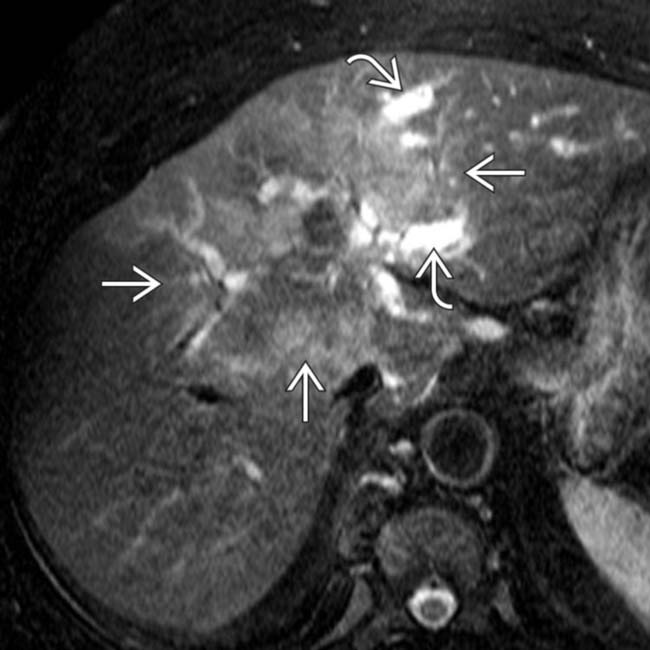
 . Dilated intrahepatic ducts
  are noted upstream from the mass. This is a typical feature of cholangiocarcinoma but may be seen with other tumors.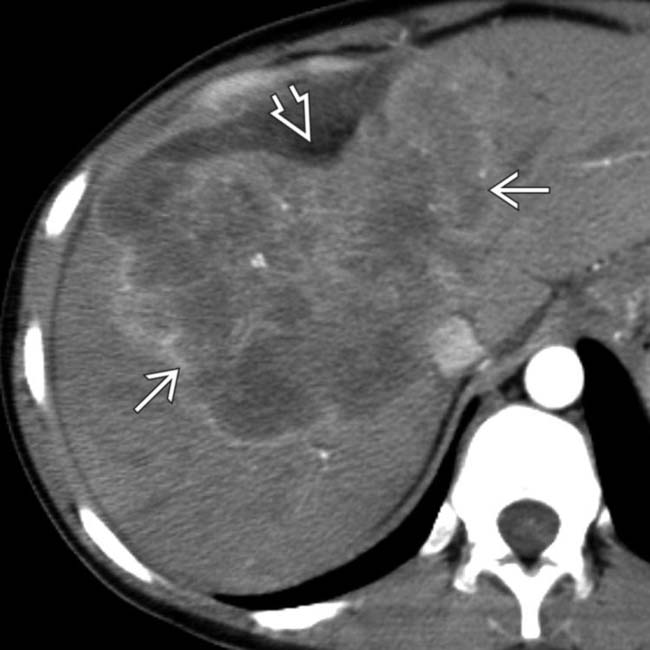
 with heterogeneous minimal enhancement. Hepatic capsular retraction
  is a prominent feature of this cholangiocarcinoma.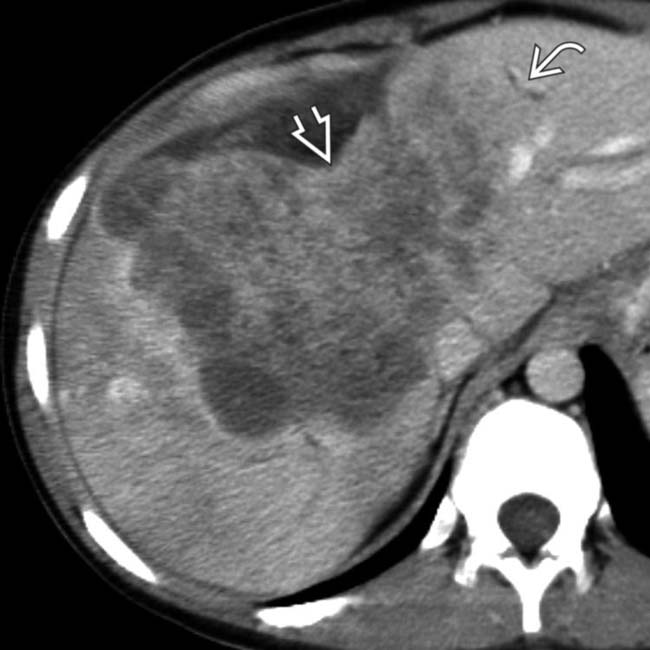
 , and there is marked retraction of the liver capsule
  .
.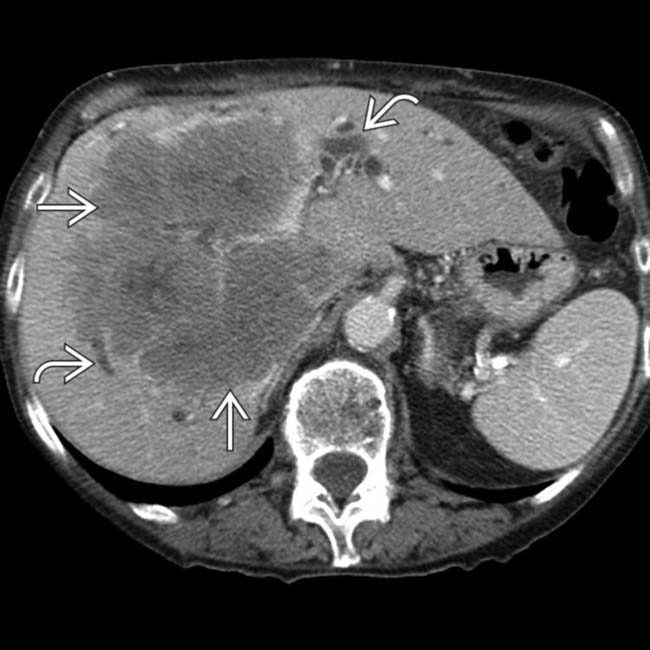
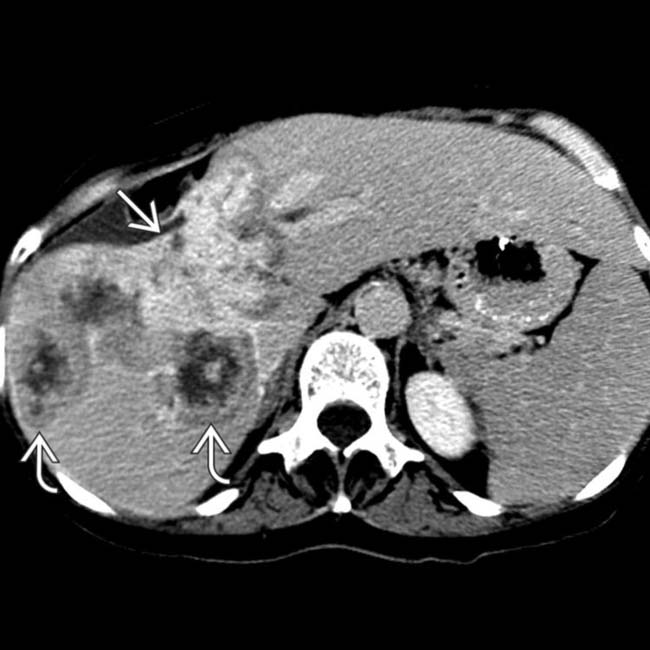
 filling much of the right lobe of the liver. The mass obstructs central bile ducts, causing dilation of the peripheral intrahepatic ducts
  .
.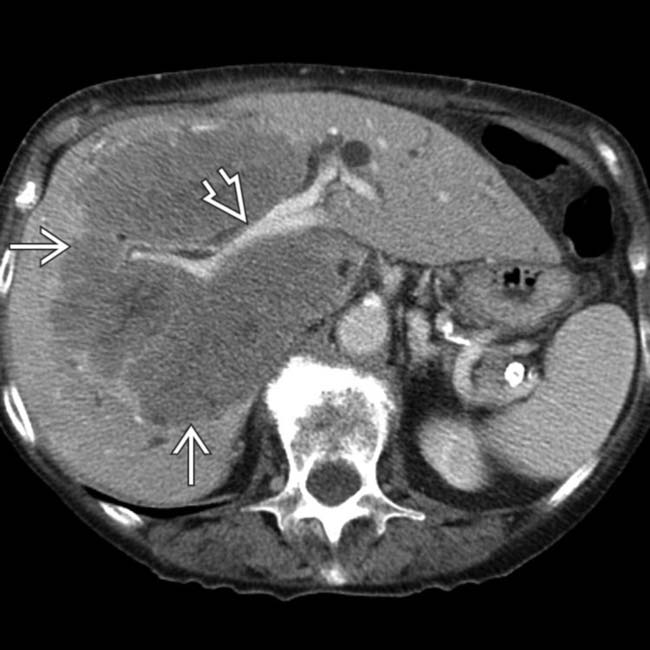
 encases the portal vein
  . The delayed set of images (not shown) showed some persistent enhancement in some parts of the tumor and no washout.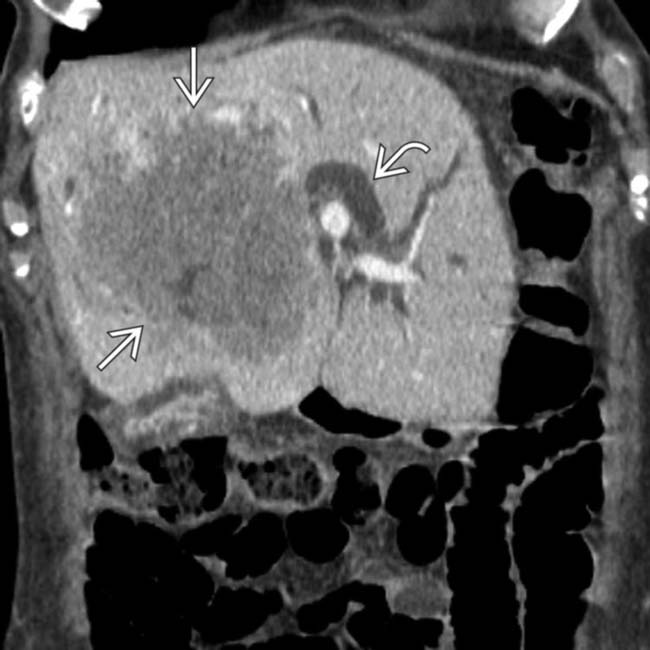
 with dilation of intrahepatic bile ducts
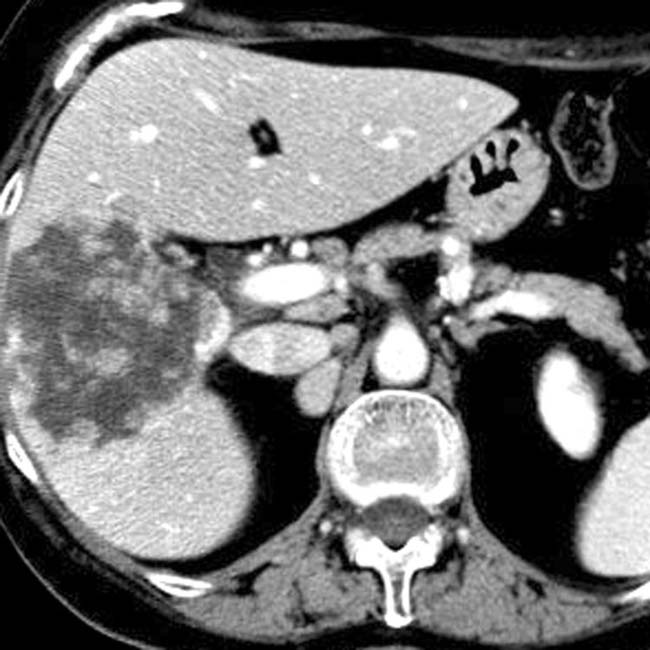
  . The CT findings are typical, but not diagnostic, of cholangiocarcinoma.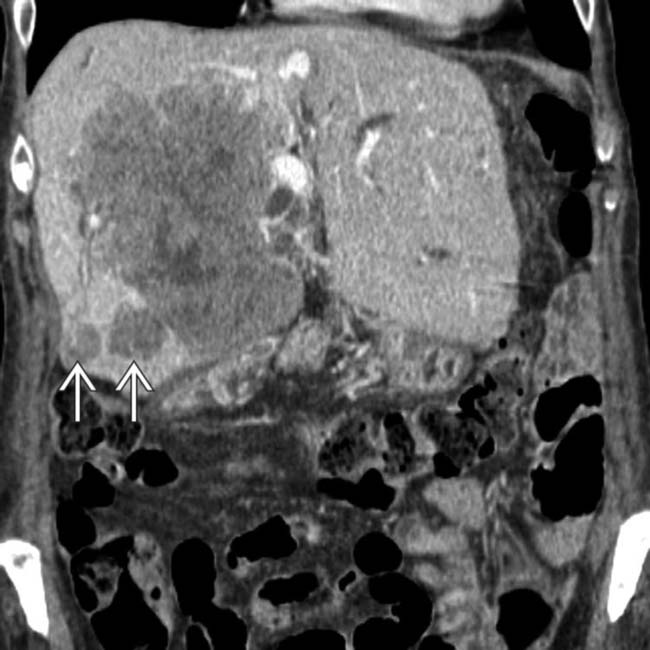
 , a common feature of intrahepatic cholangiocarcinoma. The term “peripheral” cholangiocarcinoma seems to be a misnomer in cases such as this, but it implies that the tumor arose from intrahepatic bile ducts.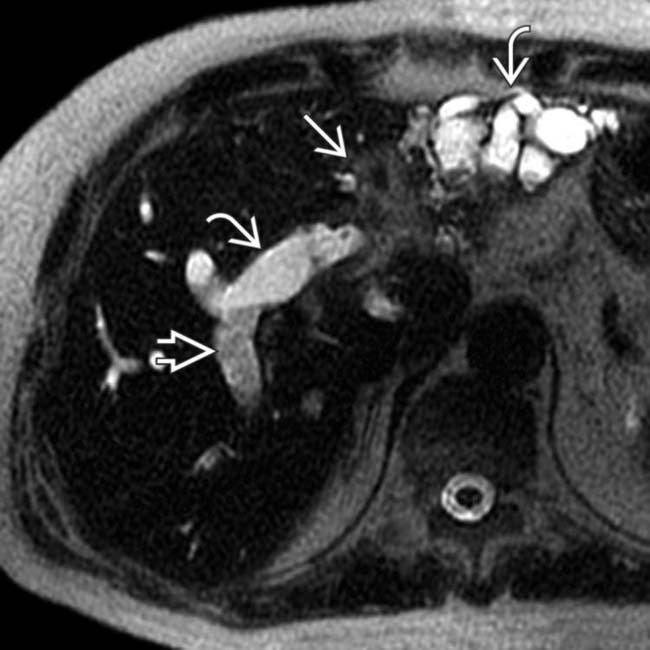
 with stones and pus within the dependent ducts
  . Marked ductal dilation plus lobar atrophy of the left lobe are caused by an obstructing mass
  .
.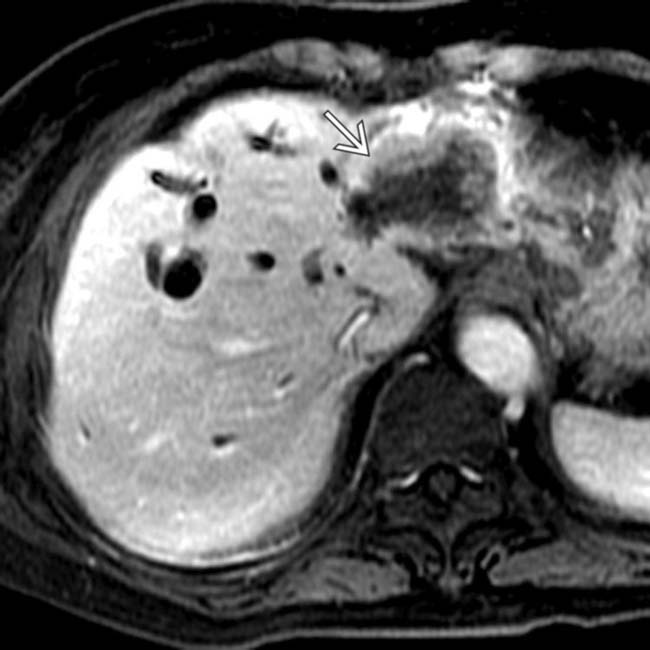
 and the intrahepatic ductal dilation. Cholangiocarcinoma was confirmed at left hepatic resection.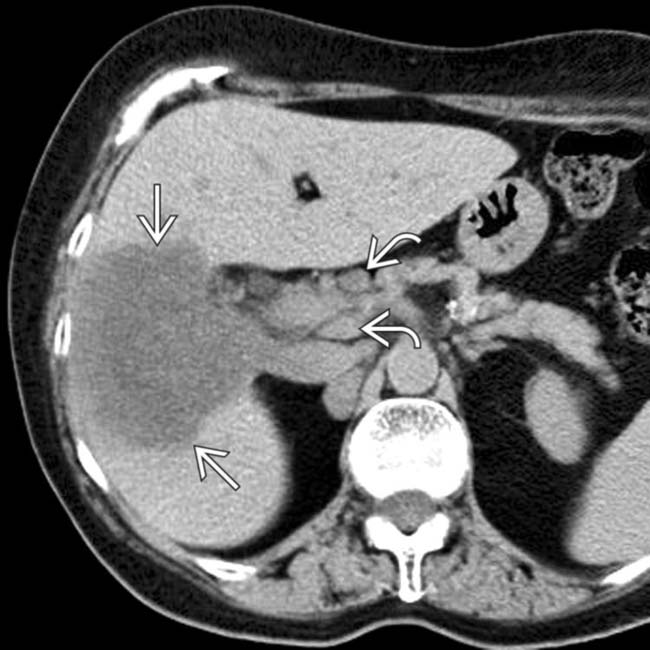
 with porta hepatic lymphadenopathy
  .
.
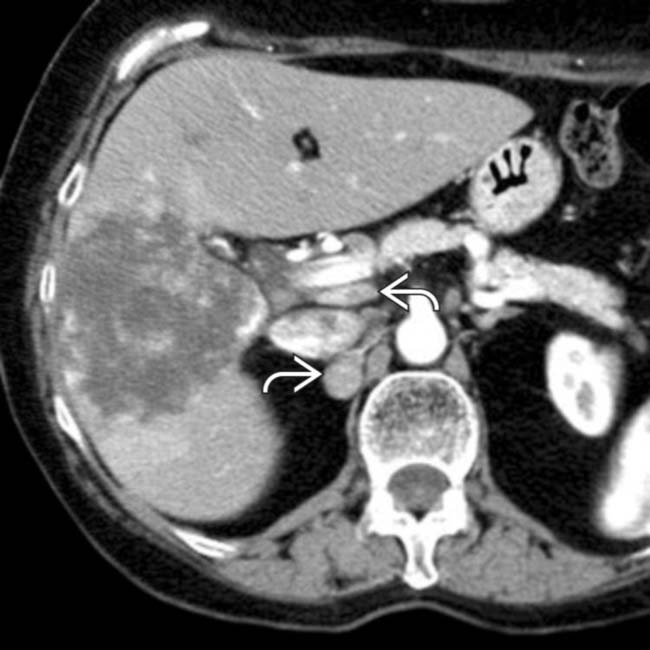
 have the same enhancement pattern as the intrahepatic cholangiocarcinoma, indicating nodal metastases.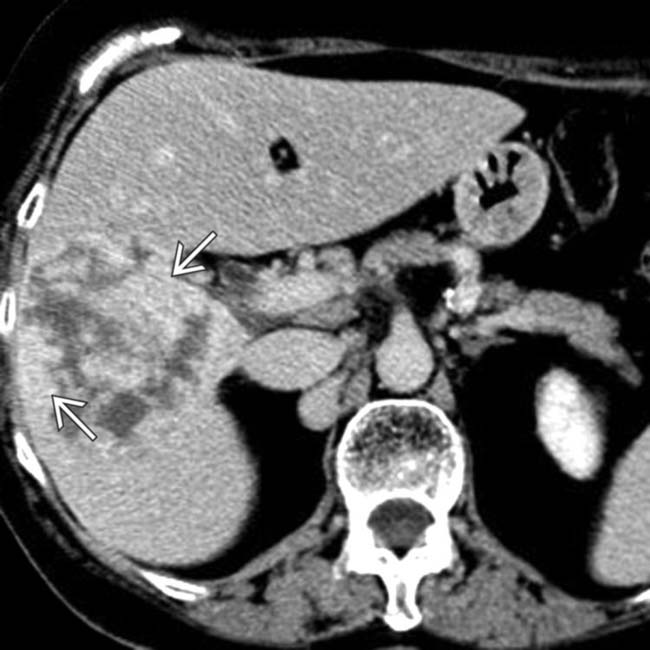
 , but the lesion does not fill in from the periphery as would be expected of a hemangioma.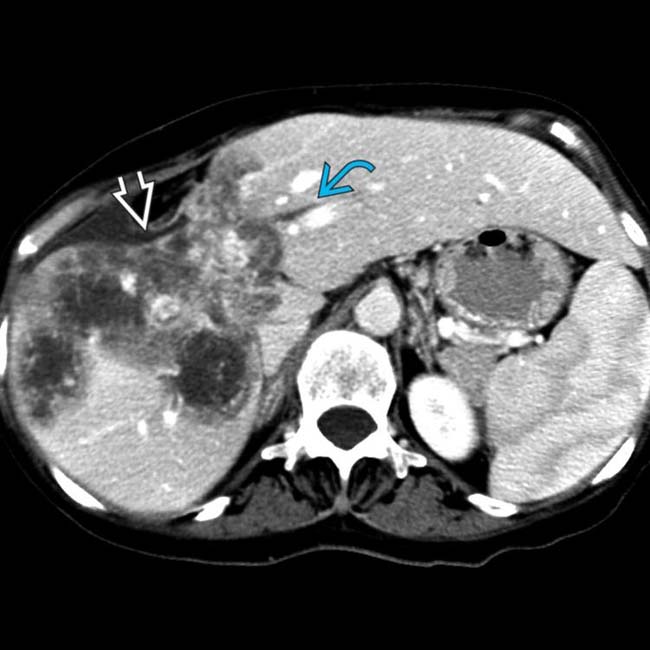
 and volume loss with capsular retraction
  .
.
 due to its fibrous stroma. Other tumor foci have the “target” pattern of enhancement
  of other types of adenocarcinomas.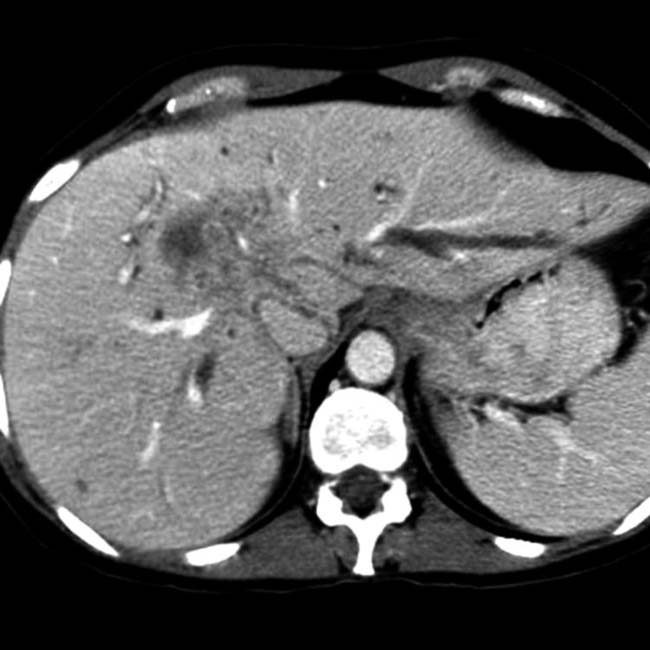
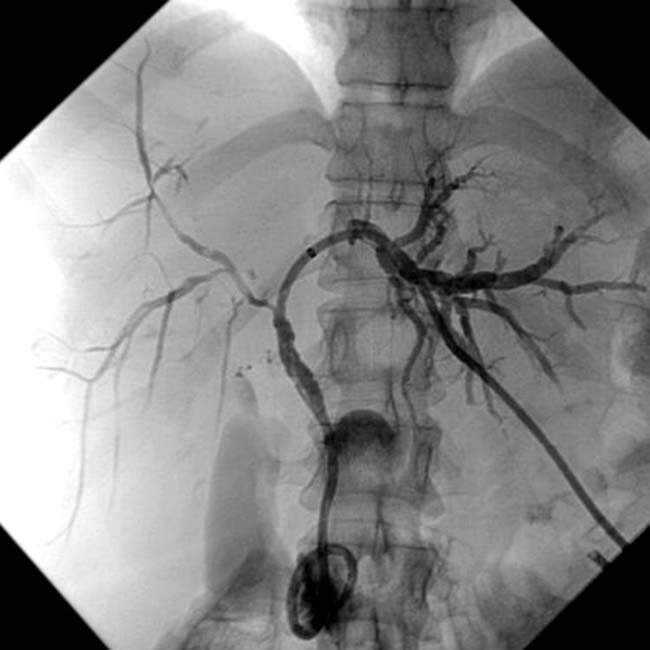
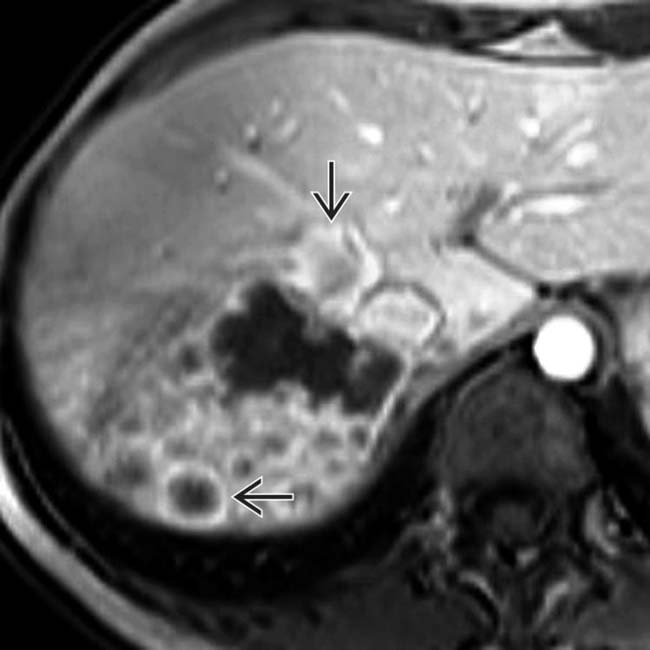
 along with low-intensity, nonenhancing (fibrotic/necrotic) areas.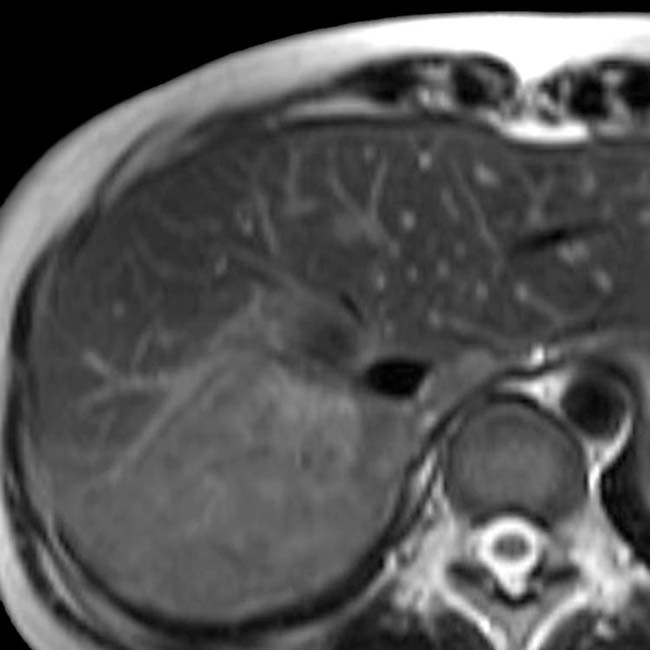
[/level-membership-for-radiology-category][not-level-membership-for-radiology-category] Most common type of CCA
and bile ducts encased and obstructed by the tumor , accounting for the altered perfusion of the right hepatic lobe. Hepatic veins were encased as well, resulting in collateral blood vessels seen within the right lobe ., a feature of cholangiocarcinoma (and other tumors with fibrous stroma).IMAGING
General Features
CT Findings
• CECT
Mass-forming PCC
Mass-forming PCC
– Thin or thick rim-like enhancement frequently seen around periphery of tumor on arterial phase images
MR Findings
• T1WI C+
 Dynamic MR: Minimal or moderate rim enhancement and progressive and concentric filling with contrast material
Dynamic MR: Minimal or moderate rim enhancement and progressive and concentric filling with contrast material
–
Buy Membership for Radiology Category to continue reading. Learn more here
[/not-level-membership-for-radiology-category]
