

[level-membership-for-dermatology-category]
Chapter 65 Occupational dermatology
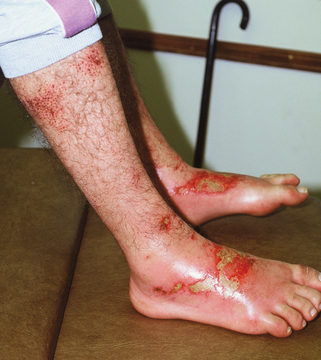
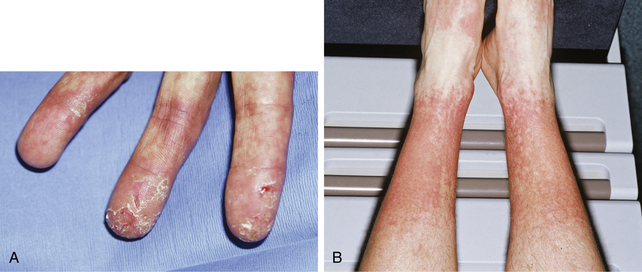
Lushniak, BD: Occupational contact dermatitis, Dermatol Ther 17:272–277, 2004.
Adams R: Occupational skin disease, ed 3, Philadelphia, 1999, WB Saunders.
Table 65-1 summarizes possible contactants associated with common occupations.
Table 65-1. Selected Occupations and Their Possible Contactants
| OCCUPATIONS | IRRITANTS | ALLERGENS |
|---|---|---|
| Construction workers | Cleansers, solvents, cement, dirt | Chromium (cement, leather boots), rubber chemicals (gloves), epoxy resin (adhesives) |
| Hairdressers | Shampoo, water, permanent wave solutions | Para-phenylenediamine (hair dyes), formaldehyde (shampoos), fragrances (shampoos and cosmetics), glyceryl monothioglycolate (permanent hair wave solutions) |
| Housekeepers | Cleansers, disinfectants, water | Rubber chemicals (gloves), fragrances and preservatives (cleaning and disinfectant solutions) |
| Health care workers | Soap, water, gloves, disinfectants | Rubber chemicals (gloves), glutaraldehyde (cold sterilizer for instruments), preservatives (skin care products) |
| Photographers | Water, developers, fixers, bleaches | Color developers, black and white developers |
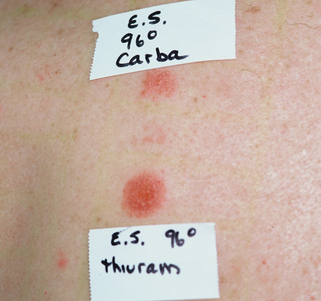
Elsner P: Occupational dermatoses. In Burgdorf WH, Plewig G, editors: Braun-Falco’s dermatology, ed 3, Berlin, Heidelberg, 2009, Springer, pp 402–408.
[/level-membership-for-dermatology-category][not-level-membership-for-dermatology-category]
Chapter 65 Occupational dermatology
Lushniak, BD: Occupational contact dermatitis, Dermatol Ther 17:272–277, 2004.
[/not-level-membership-for-dermatology-category]
