


The African net sponge has been all over the shower-routine side of TikTok for a couple of years now. It’s a long, stretchy mesh strip, usually in a bright color, that people pull taut across their backs and swear has changed their skin. The videos have been going since 2023 at least and they haven’t slowed down. I’d watched enough of them by June to want one, and I ended up with ACROM’s, partly because their page came up when I went looking and partly because the sixty-day return window meant I could send it back if it turned out to be a TikTok fever dream.
I’m twenty-nine and I live in Phoenix, where the air takes the moisture out of everything. My upper arms have been rough for as long as I can remember, and my shins go dry and flaky from about March onward no matter how much lotion I put on them. I’d been using a washcloth and, before that, one of those plastic mesh poufs that falls apart after two months.
What I bought
ACROM sells one net sponge, and it was $48 when I ordered, marked down from a list price of $120. That’s a lot for a piece of mesh. Shipping was free, and the page says orders leave within two business days. The sixty-day money-back guarantee is counted from the day you receive it, and the FAQ says there’s no restocking fee.
Of the page’s claims, the ones I could check over a month were that it dries quickly, lathers more than a normal sponge, is fine for daily use, and leaves skin feeling smoother within a day or two. The ones I couldn’t check were that it’s made from “100% authentic African net material,” which is also the FAQ’s complete answer to what the material is, and that it contains no microplastics. I have no way to test either of those in my bathroom, so I’m taking them as the company’s word and nothing more.
The first week
The first thing I noticed is how long it is. Wet, it stretches to well past my arm span, so reaching the middle of my back took no thought at all, which after years of washcloth contortions was a small revelation. The mesh is coarser than it looks in the videos. The first two showers I used it the way I’d use a loofah, with a fair amount of pressure, and my arms came out pink. The FAQ says to let the net do the work and not scrub hard, and once I read that properly and eased off, the pinkness stopped.
Lather is real. A small squeeze of body wash went a long way, and I ended up using about half of what I normally would. My skin felt smoother after the second shower, which lines up with what the page promises, though I’d say “less rough” is closer to the truth than “smooth.”
It dried out on the hook within an hour or two. The pouf used to stay damp until the next morning, so that part is a clear improvement.
How I used it
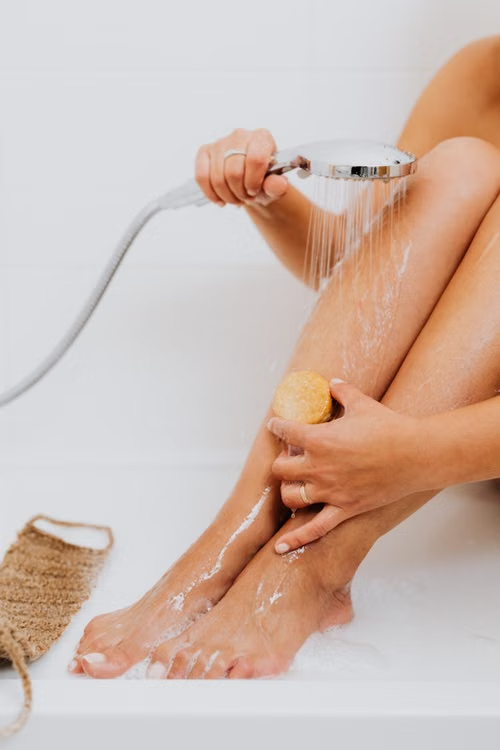
Evening showers, every day, for the full thirty. The routine settled quickly: wet the net until it goes slack and stretches, one small squeeze of body wash into the middle, work it into a lather between my hands, then long slow passes over everything with the pressure kept light. Back first, since that’s the bit that’s hard to reach with anything else, then arms, then legs, with a few extra passes on the shins. Rinse, wring, hang on the hook by the two ends. The FAQ suggests sensitive skin should start at two or three times a week and build up. I skipped that and went daily from the start, which is why I think the first two showers went pink, so I’d pass the advice on with more conviction than I followed it.
Keeping it clean
The page says to rinse it well after use and hang it to dry, and that’s all it says. It doesn’t mention whether the net can go through a washing machine, so I haven’t tried, and I’d have liked a line on that. What I did was a thorough rinse under the shower each night and, once a week, a soak in hot water with a bit of body wash and a proper wring-out. After a month it looks and smells the way it did on day one, which the pouf never managed past two weeks.
Weeks two and three
By the end of the second week my upper arms had lost most of the sandpaper feel. I noticed it putting on sunscreen, which had always caught on the bumps and now didn’t. My shins were better too, though I’d started using the sponge on them every day and moisturizing straight after, so I can’t separate the two.
I used it every day through this stretch and had no irritation, which surprised me given the first two showers. The trick, as far as I can tell, is pressure. Light and slow does more than hard and fast, and it does it without leaving marks.
It doesn’t smell, which I hadn’t expected. The pouf and the washcloth both developed that damp-bathroom smell within a week or two. This didn’t, and I put that down to how fast it dries.
Week four
The last stretch was more of the same. My arms stayed smooth, my shins stayed manageable, and I’d stopped thinking about the sponge as a thing I was testing and started thinking of it as the thing I wash with. It looked the same at day thirty as it did at day one, with no fraying and the weave as tight as when it arrived. I’ve no idea how long it will last, but a month hasn’t touched it.
What it did and didn’t do
It made my arms smoother within a couple of weeks. It dried fast and lathered well, and after a month there’s no sign of wear. It reached my back without me having to think about it.
It didn’t replace moisturizer; my shins still need lotion every day, just less of it. And it didn’t feel gentle in the first two showers, though that was more me than the sponge.
Would I keep using it
Yes, I’m still using it, and the pouf went in the trash in week two. The list price of $120 I’ll ignore, since I’ve never seen it sell at that. At $48 I’m glad I bought it but I understand anyone who balks. The sixty days are there if you don’t get on with it, and the company says returns are straightforward, though I didn’t need to test that.
Before I ordered I went through the ACROM African net sponge reviews looking for someone with dry-climate skin like mine and didn’t find one, so this is that review. A sponge that does what its page says, reaches my back, and has a permanent spot on the hook, bought at a price I’m still a little sore about.
