

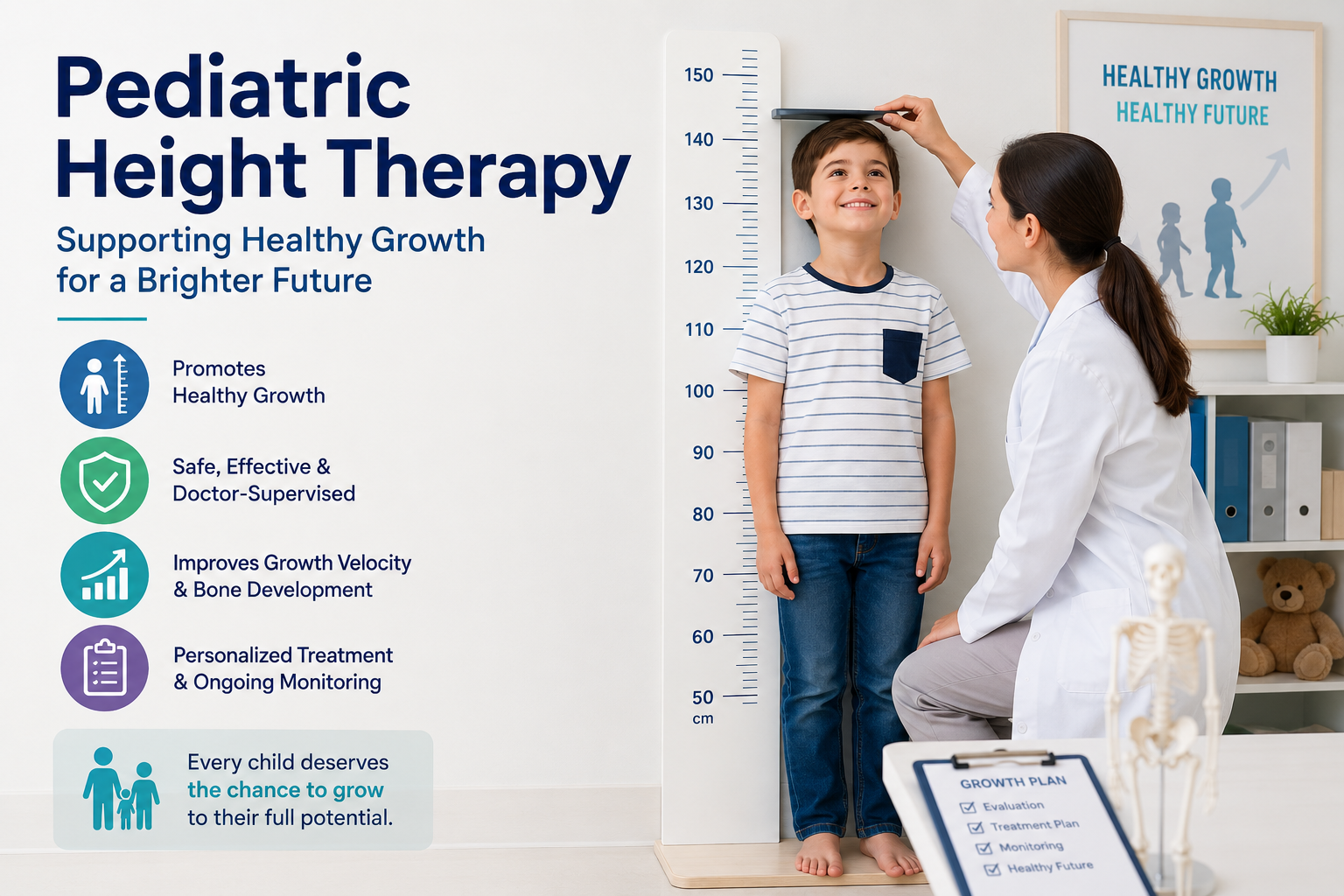
You know that moment at pickup when your kid is standing with their class and you can’t help but notice they’re the shortest one in the group by a lot? Or maybe it wasn’t a moment at all. Maybe it’s been building for a while, a comment from the pediatrician here, a growth chart line that keeps drifting the wrong way there. Either way, if you’re reading this, you’re probably somewhere in the process of figuring out what to do about it, and part of that means understanding pediatric height therapy pros and cons before you sit down with a specialist.
This isn’t the kind of decision you want to make off a gut feeling or a late-night internet search. It involves your child’s body and a real commitment of time and money, so it deserves an honest look at what you’re actually getting into, good parts and bad parts included.
So What Is This Treatment, Really?
When people say pediatric height therapy, they usually mean growth hormone treatment, most often HGH or Sermorelin. This isn’t something you find on a shelf or order off a website. It requires a prescription, and any clinic worth trusting won’t even bring it up until your child has gone through a proper workup.
That workup usually means pulling their growth history, ordering a bone age X-ray, and running bloodwork to check things like IGF-1 levels. The point of all that is to figure out whether there’s an actual medical reason your child isn’t growing the way you’d expect, something like growth hormone deficiency, idiopathic short stature, or delayed bone age, rather than just being short because that’s who they are.
That difference matters more than people think. Plenty of kids are on the shorter side simply because mom or dad is on the shorter side, or because they haven’t hit their growth spurt yet and they will, just later than their friends. Neither situation usually needs medication. So before getting into the actual pediatric height therapy pros and cons, it helps to remember this treatment is built for kids with a diagnosed issue, not just kids who happen to be small for their age.
What Actually Works in Its Favor
Real height gains, when it’s the right fit: For children who genuinely have a medical reason to be treated, the results can be meaningful. Starting early, while the growth plates are still open, tends to matter more than almost anything else. Wait too long and that door closes, no matter how good the treatment is.
You’ll probably see a change in growth rate pretty fast: Parents often notice this before anything else. A kid who was barely growing an inch a year can start picking up speed within a few months of starting treatment. It’s not the final answer, but it’s often the first sign that something is working.
It fixes a real problem, not just a number on a chart: If your child actually has a hormone deficiency, this isn’t cosmetic. You’re correcting something that affects more than just height, and that tends to support their overall development too.
This isn’t new or experimental: Growth hormone therapy has been around in pediatric medicine for decades now. That means doctors aren’t guessing. There’s a long history of knowing how to dose it, monitor it, and adjust it as kids grow.
A good provider stays involved: The treatment doesn’t stop at the prescription. Labs, growth tracking, dose changes, all of that should be ongoing. That kind of follow-through is what catches small issues before they become bigger ones.
Where It Gets Complicated
Money is usually the first thing that stops people: Honestly, this might be the biggest factor in the whole pediatric height therapy pros and cons conversation. Medication costs can range from a few hundred dollars a month to well over a thousand, and that’s before you add in visits and labs. Insurance sometimes helps, sometimes doesn’t, and a lot of families end up paying a good chunk of it themselves.
It’s not a one-time thing, it’s a routine: Most kids on this treatment are getting injections regularly, often daily, sometimes for years at a stretch. Somebody has to manage that every single day, whether it’s you or eventually your child themselves. Skip doses too often and it can actually affect how well the treatment works, so this becomes a real part of your household’s daily life, not just a medical footnote.
Side effects exist, though most aren’t severe: Some kids get irritation where the injection goes in, headaches, sore joints, maybe some swelling. Most of it settles down or gets managed with a dose adjustment, but it’s worth actually talking through with your doctor instead of just nodding along in the appointment.
There are rarer risks worth knowing about too: Every once in a while, rapid growth has been linked to something called slipped capital femoral epiphysis, particularly in kids dealing with obesity or certain other conditions. Scoliosis can also get worse during fast growth periods. These aren’t common, but they’re exactly why the ongoing monitoring isn’t just a formality, it’s the reason it exists.
You might not get the exact outcome you’re picturing: Even with everything done right, results differ from kid to kid. Genetics, how early you start, bone age, how consistent you are with the routine, it all plays into the final result. Going in expecting a guaranteed number of inches is setting yourself up for disappointment.
And again, plenty of kids just don’t need it: If your child’s labs are normal and their growth pattern matches yours or your partner’s, medication probably isn’t the answer. Sometimes the honest answer is patience, not a prescription.
How Do You Actually Decide?
There’s no single right answer here, and anyone who tells you there is one hasn’t spent much time actually looking at the research or talking to real families. What helps is skipping the guesswork and getting an actual evaluation. A specialist who focuses specifically on pediatric growth can look at bone age, hormone levels, and how your child has been growing over time, and give you a real answer instead of a shrug.
If you’re still working through the pediatric height therapy pros and cons for your own situation and want more detail before booking anything, there’s a more in-depth guide here: pediatric height therapy pros and cons. It walks through what parents should know before they even sit down for a consultation.
Where This Leaves You
Deciding on pediatric height therapy isn’t something to rush through, and it definitely shouldn’t be based on how your kid measures up against their classmates. Weigh the real upsides, like actual height gains and better growth velocity, against the real downsides, the cost, the daily routine, the possibility of side effects. For most families, the smartest next step isn’t jumping into treatment. It’s getting an honest evaluation from someone who actually knows this field.
If your child has been slipping off their growth curve, or you’ve noticed signs like delayed puberty or a growth rate that just doesn’t add up, HGH For Children offers doctor-guided evaluations that can help you understand what’s actually happening, rather than just guessing based on how tall the kid next to them looks.
