

Musculoskeletal injuries can affect nearly every part of daily life, including walking, working, exercising and sleeping. Whether someone is recovering from a sports injury, workplace strain, surgery or ongoing pain, rehabilitation aims to restore movement and physical capacity without placing unnecessary stress on the body.
Pilates is used in some rehabilitation programmes because it focuses on controlled movement, posture, stability and progressive exercise. When appropriately modified and used alongside professional healthcare where needed, it may help people rebuild strength, flexibility, movement confidence and body awareness as they return to everyday activities.
Why Studio Settings Can Support Rehabilitation
The environment in which exercise takes place can influence how easily movements are monitored and adjusted. A professional Pilates studio can provide access to trained instructors, specialised equipment and more direct exercise guidance than many home-based programmes.
For people returning to exercise after a musculoskeletal injury, studio pilates can provide a structured setting for controlled movements that may be modified according to mobility, comfort and individual ability.
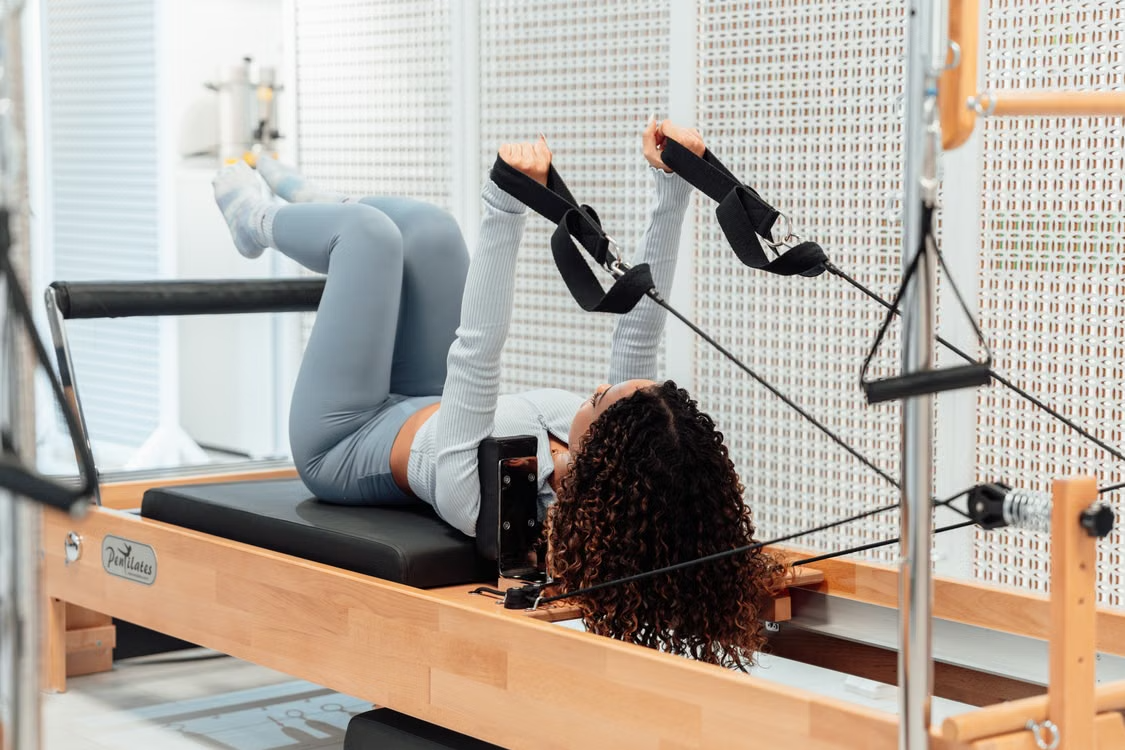
Equipment such as the Reformer, Cadillac and Wunda Chair can provide varying levels of support and resistance. The Reformer’s spring system, for example, allows exercises to be adjusted so movements can become easier or more challenging depending on the person’s current capacity.
Appropriately trained instructors can also observe movement and alignment in real time and modify exercises as strength, mobility and confidence change. Where an injury or medical condition is involved, these sessions should complement rather than replace guidance from a qualified healthcare professional.
The Science Behind Pilates and Injury Recovery
Pilates is based on principles of controlled movement, alignment and coordinated muscle activation. Research published through the National Library of Medicine describes Pilates as placing emphasis on maintaining appropriate alignment of the pelvis, shoulder blades and spine while performing controlled exercises.
This approach can place particular emphasis on deep stabilising muscles involved in trunk control, including the transversus abdominis and multifidus. Improving the strength and coordination of these muscles may contribute to better control during movement.
For rehabilitation, one useful feature of Pilates is its adaptability. Exercises can be modified through changes in range of motion, resistance, body position and difficulty. This allows exercise demands to increase progressively rather than requiring someone to perform movements beyond their current ability.
Core Strength and Its Role in Spinal Health
Low back pain is one of the most common musculoskeletal problems and is a frequent reason people seek clinical care. Pilates is sometimes included in exercise programmes for people experiencing back pain because of its emphasis on trunk strength, control and coordinated movement.
Unlike exercises that train the abdominal muscles in isolation, many Pilates movements combine trunk control with movement of the arms and legs. The person is encouraged to maintain a stable position while other parts of the body move.
Practising this type of coordination may help improve movement control during everyday activities, which can form one part of a broader rehabilitation programme.
Research suggests Pilates may improve outcomes such as pain, disability, strength and some aspects of physical function in certain populations, although results vary depending on the condition, programme and individual.
Flexibility, Joint Mobility and Movement Recovery
Rehabilitation is not only about rebuilding strength. Restoring comfortable movement and flexibility can also be important after an injury or period of inactivity.
People may develop stiffness or compensatory movement patterns after injury or surgery. Controlled movement can provide a gradual way to work through available ranges of motion while rebuilding confidence.
Pilates exercises often combine strengthening with mobility work. Movements can be performed slowly and adjusted to suit the person’s current range, allowing flexibility and control to develop progressively.
Reformer exercises can also provide assistance during movement rather than requiring someone to work entirely against their bodyweight. Because exercises can be progressively modified, Pilates may sometimes be used alongside a clinician-directed rehabilitation programme where appropriate.
Supporting Post-Surgical and Chronic Condition Recovery
Recovering after surgery can involve changes in strength, mobility and confidence in movement. The appropriate type and timing of exercise depend on the procedure, the stage of healing and the advice of the treating healthcare team.
When medically appropriate, progressively prescribed exercise can help rebuild strength, mobility and physical capacity during post-surgical rehabilitation. For some people recovering from procedures such as spinal surgery, hip replacement or ACL reconstruction, appropriately modified Pilates may be introduced later in rehabilitation with guidance from the treating clinician.
Pilates has also been studied in chronic musculoskeletal conditions, including osteoarthritis and ankylosing spondylitis. However, benefits and appropriate programmes vary between conditions and individuals.
Its low-impact format may make modified exercise more manageable for some people with persistent musculoskeletal symptoms. With regular and appropriately prescribed practice, some participants may experience improvements in function, pain or confidence in movement.
A Thoughtful Approach to Long-Term Musculoskeletal Health
Recovery from a musculoskeletal injury is rarely a straight path. Progress can depend on the type of injury, overall health, rehabilitation plan and consistency with appropriate exercise.
Pilates can provide a structured way to work on strength, mobility, coordination and body awareness, with exercises that can be modified as physical capacity improves.
For clinicians, health professionals and patients considering rehabilitation options, Pilates may be a useful addition to a broader recovery plan. When exercises are appropriately modified and, where rehabilitation is involved, coordinated with the person’s treating healthcare professional, Pilates can support a gradual return to confident and functional movement.
