

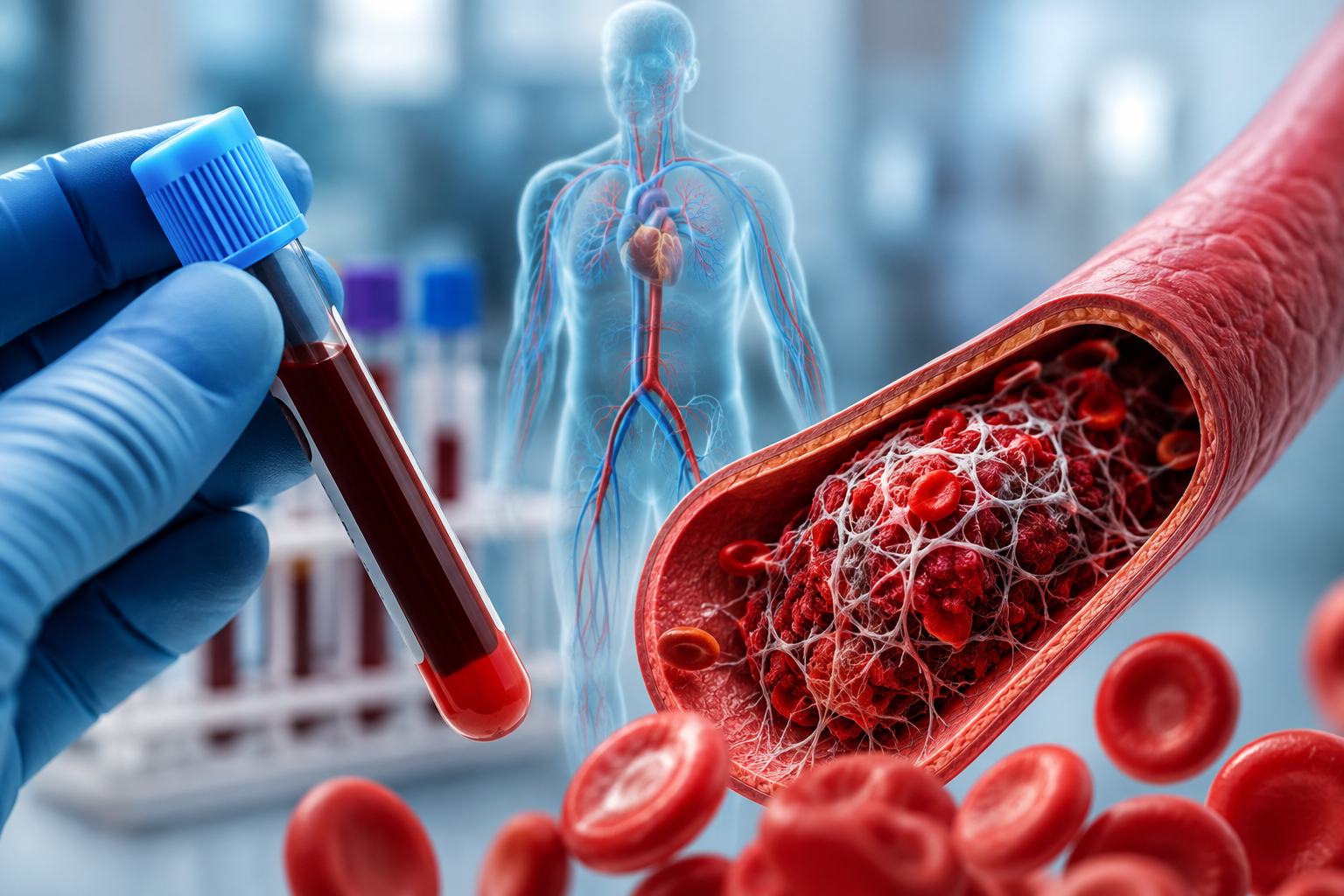
Blood clots form part of the body’s natural response to injury, but when clots develop inappropriately or fail to break down properly, they can cause serious conditions such as deep vein thrombosis, pulmonary embolism and stroke. Doctors use a specific blood test to check whether clot activity is present in the body, particularly when symptoms suggest a possible clot. This test measures a fragment produced when blood clots break down and offers a quick way to assess whether further investigation is needed. The d-dimer test has become a standard part of clot evaluation in emergency rooms and clinics across India. Understanding what high levels mean, what symptoms often prompt testing and how results guide next steps helps patients make sense of their reports.
What Is the D-Dimer Test?
D-dimer is a small protein fragment produced when a blood clot dissolves within the body. Under normal conditions, only very small amounts circulate in the blood. When clots form and break down more actively, D-dimer levels rise.
The d-dimer test measures how much of this fragment is present in a blood sample. A high result does not by itself confirm a clot, but it flags the possibility and helps doctors decide whether further imaging or investigation is needed. A normal result, particularly in low-risk patients, is very useful for ruling out clots.
Symptoms That May Prompt the Test
The test is commonly ordered when symptoms suggest a possible clot:
1. Signs of Deep Vein Thrombosis (DVT)
- Pain, swelling or tenderness in the leg, often on one side
- Warm skin over the affected area
- Redness or discolouration of the calf or thigh
- Aching that worsens with standing or walking
2. Signs of Pulmonary Embolism (PE)
- Sudden shortness of breath at rest or with mild activity
- Sharp chest pain that worsens with deep breathing
- Rapid heartbeat or palpitations
- Coughing up blood in some cases
- Feeling faint or dizzy
3. Signs of Disseminated Intravascular Coagulation (DIC)
- Unusual bleeding from multiple sites
- Bruising without clear cause
- Feeling very unwell alongside another serious condition
4. Stroke-Like Symptoms
- Sudden weakness in one side of the body
- Difficulty speaking or understanding speech
- Loss of vision or facial droop
Any of these symptoms, particularly if sudden or severe, need urgent medical attention rather than home evaluation.
Common Causes of High D-Dimer Levels
Raised D-dimer levels can point to several possibilities:
- Deep vein thrombosis: A blood clot forming in the deep veins of the leg or arm
- Pulmonary embolism: A clot that has travelled to the lungs
- Recent surgery: Especially major orthopaedic or abdominal operations
- Major trauma: Bone fractures or extensive soft tissue injury
- Cancer: Certain malignancies raise clotting activity
- Pregnancy: D-dimer levels naturally rise, especially in later pregnancy
- Infections: Severe systemic infection or sepsis
- Chronic inflammatory conditions: Autoimmune diseases and inflammatory bowel disease
- Advanced age: Mildly raised levels are common in older adults
- COVID-19 and other viral illnesses: Can raise D-dimer significantly
How the Test Is Performed
The test requires a routine blood sample drawn from a vein in the arm. No fasting is needed and no special preparation is required. The sample is processed in a laboratory using immunoassay techniques and results are usually available within a few hours.
Patients should mention pregnancy, recent surgery, current medications including blood thinners and any known clotting or bleeding disorder, since these can affect interpretation.
Understanding the Results
Reference ranges vary between laboratories and testing methods. Typical adult ranges are:
- Normal: Below 500 ng/mL fibrinogen equivalent units (FEU)
- Age-adjusted upper limit: Age multiplied by 10 ng/mL FEU is sometimes used for people over 50
- Raised: Above these thresholds warrants further consideration
Interpretation should always be done by a qualified medical professional in the context of the patient’s symptoms and clinical risk.
What a High D-Dimer Result Means
A high D-dimer suggests that clotting and clot breakdown are active in the body, but does not identify the exact cause or location. Doctors usually decide next steps based on the patient’s overall risk:
- Low clinical risk with high D-dimer: Further imaging such as ultrasound of the legs or CT pulmonary angiography may be needed
- High clinical risk regardless of D-dimer: Imaging is often done directly without waiting for the blood test
- Persistent high levels: May prompt investigation for hidden causes such as cancer or chronic inflammation
When a Normal D-Dimer Is Reassuring
A normal D-dimer level in a low-risk patient is particularly useful because it strongly suggests that a clot is unlikely, avoiding the need for further imaging. This is one of the test’s most valuable clinical uses.
Choosing a Reliable Diagnostic Partner
Accurate D-dimer testing depends on precise sample handling and standardised laboratory methods. Leading NABL-accredited diagnostic laboratories like Lupin Diagnostics offers D-dimer and broader coagulation panels across India through its National Accreditation Board for Testing and Calibration Laboratories (NABL) accredited labs, with free home sample collection available in major cities.
Final Thoughts
The D-dimer test plays a valuable role in evaluating possible blood clots and guiding further investigation. While high levels can point to several conditions, they are most meaningful when read alongside symptoms and clinical risk. Anyone experiencing sudden leg swelling, chest pain, breathlessness or other concerning symptoms should seek prompt medical attention and follow the guidance offered by their physician about appropriate testing and imaging.
