

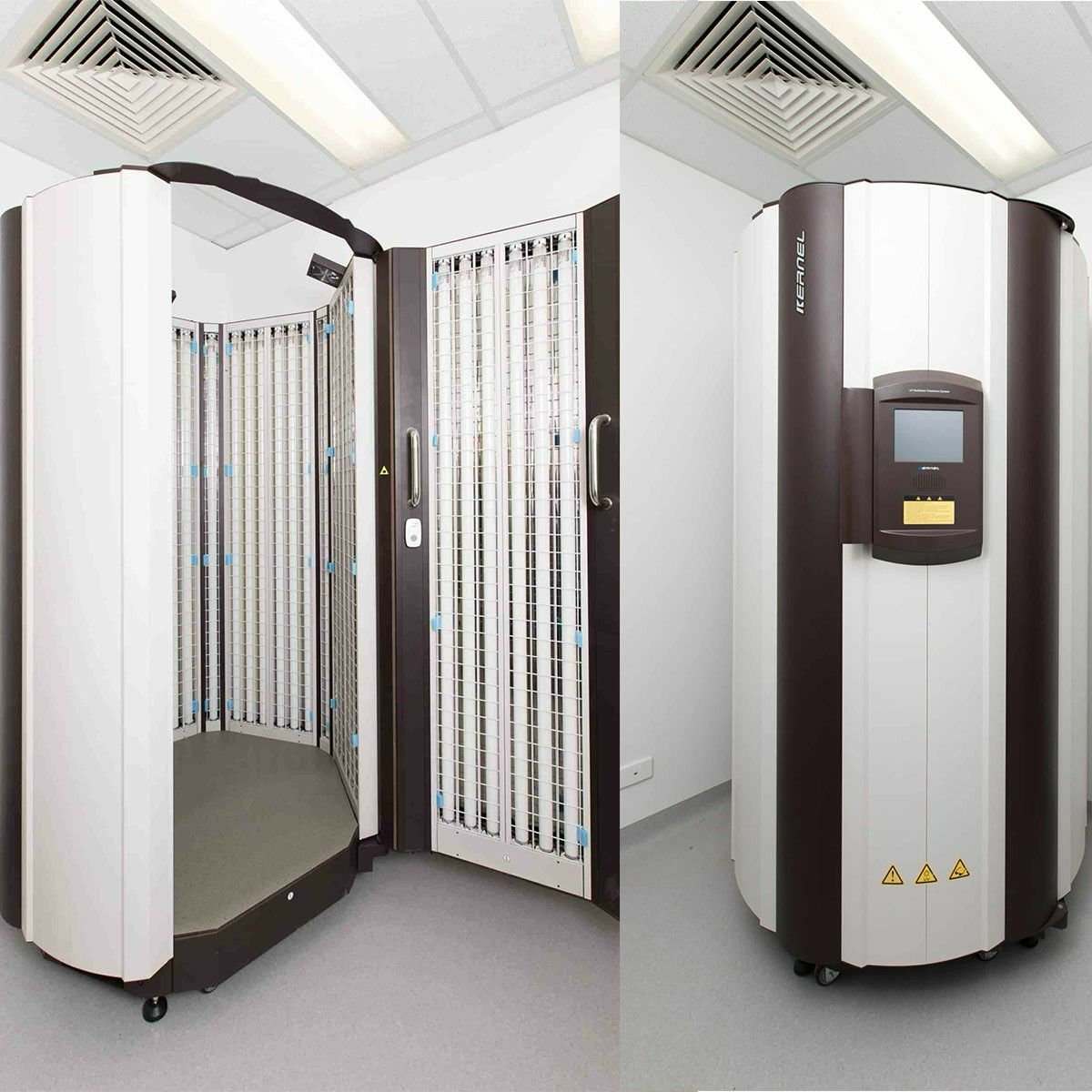
Demand for professional phototherapy equipment has expanded consistently across dermatology practice, and the trajectory has continued through 2026. The drivers are simultaneously clinical and economic. Ultraviolet B treatment produces reliable outcomes in psoriasis, vitiligo, and eczema at a fraction of the cost of systemic therapy, while escalating biologic pricing and intensified payer scrutiny have returned dermatologists to a modality that can be delivered, controlled, and billed entirely within the practice. The relevance of modern UVB Light Therapy systems in 2026 derives not from technological novelty but from a continuously expanding evidence base. The 2024 LITE randomized trial – the largest pragmatic phototherapy study conducted to date – corroborated long-standing clinical observation, confirming that adequately delivered narrowband UVB remains effective across all skin types (4). For a practice considering a capital purchase, the operative question is therefore not whether to incorporate phototherapy, but how to configure the equipment to the patient population and the available clinical space.
What Is Clinical Phototherapy Equipment?
Phototherapy equipment in dermatology administers measured doses of ultraviolet radiation under medical supervision. The mechanism is photobiologic, not thermal. Within the dermatologic wavelength range, UV exposure drives apoptosis in activated T-lymphocytes and keratinocytes, downregulates the inflammatory cascades responsible for plaque formation, and activates follicular melanocytes implicated in repigmentation. Because action remains essentially confined to irradiated tissue, device geometry is configured for uniform exposure of the treatment field with mechanical shielding of surrounding skin.
Professional phototherapy equipment used in dermatology clinics falls into a few recognizable categories. Full-body cabins, sometimes called booths, surround a standing patient with banks of fluorescent UV tubes. Panel and half-body systems treat a smaller field and suit clinics with limited floor space. Localized and tabletop units concentrate output on the hands, feet, or scalp. Handheld devices treat discrete lesions measured in square centimeters. The 308 nm excimer laser and lamp form a distinct category, supplying monochromatic output for recalcitrant plaques and segmental vitiligo. The remaining systems share a common emission source – the Philips TL-01 fluorescent tube, with a spectral peak near 311 nm, which has functioned as the reference standard for clinical narrowband UVB lamps for approximately thirty years.
Common Conditions Treated With Phototherapy
Psoriasis remains the dominant indication. According to the joint American Academy of Dermatology and National Psoriasis Foundation guideline, narrowband UVB achieves a mean clearance rate of approximately 68%, with a pooled PASI 75 response of around 70% in controlled trials (1). Modern UVB Light Therapy Psoriasis protocols continue to demonstrate reliable clinical outcomes, particularly when treatment is delivered under structured narrowband UVB regimens. Under a three-times-weekly protocol, clearance is reached in a mean of roughly 58 days, compared with a longer interval on a twice-weekly schedule. Efficacy is maintained in pigmented skin: a 2025 meta-analysis reported a pooled PASI 75 of 70.5% in Fitzpatrick types III–V, with narrowband UVB superior to broadband (15).
Vitiligo is the second major indication, and the data here are specific. Pooled data from 29 narrowband UVB studies (n = 1,201) document ≥25% repigmentation in 74.2% of patients at six months and ≥50% repigmentation in 56.8% by twelve months (2). The anatomical distribution of response is well established: facial lesions repigment most readily, whereas acral sites respond least. Where topical therapy has proved inadequate, the British Association of Dermatologists designates narrowband UVB and targeted 308 nm treatment as first-line phototherapy (10). Treatment courses for vitiligo are typically longer than for psoriasis, with response assessment reasonably scheduled at three to six monthly intervals and continuation justified by demonstrated repigmentation rather than fixed session counts.
Atopic dermatitis responds well to the same equipment. AAD guidance positions narrowband UVB as a first-line phototherapeutic modality in moderate-to-severe eczema, with trial evidence demonstrating superiority over UVA and visible light in adult patients (13). A comparable model of supervised UVB exposure applies to photosensitive eczema, pruritus, and early-stage cutaneous T-cell lymphoma. In mycosis fungoides specifically, a 778-patient meta-analysis documented complete response in 62.2% of early-stage cases treated with narrowband UVB; PUVA achieved a higher complete-response rate in the same indication, although at the cost of a less favourable long-term safety profile (3, 9).
Important Features Clinics Should Consider
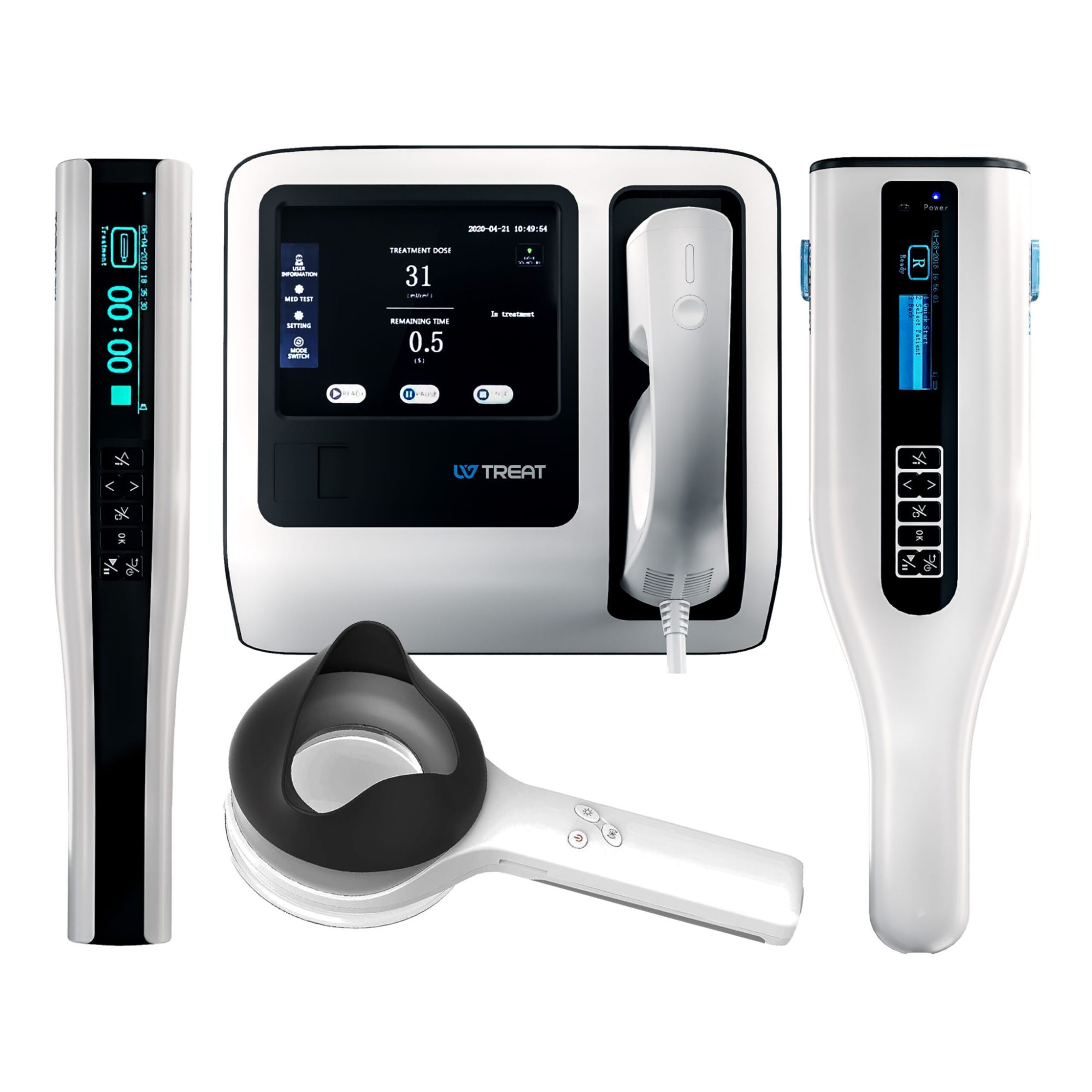
Before any practice commits capital, a handful of practical factors separate equipment that performs in a busy clinic from equipment that frustrates the staff who run it.
Regulatory clearance comes first. In the United States, dermatologic UV devices are classified as Class II and require FDA 510(k) clearance for legal distribution; in Europe, market access is conditional on CE marking under Regulation (EU) 2017/745. Procurement should additionally confirm conformity with IEC 60601-2-57, the safety standard governing non-laser light source equipment, revised in 2023 and adopted across Europe as EN IEC 60601-2-57 during 2026 (20). The manufacturer’s quality management system should be certified to ISO 13485. These requirements are determinative rather than discretionary, as they govern whether a device may be lawfully operated and insured.
Lamp quality and dosimetry determine clinical consistency. Fluorescent UVB tubes undergo a 20–30% decline in output across a service life of approximately 800–1,000 hours. In the absence of compensation, delivered dose diminishes progressively with tube age. Integrated dosimetry systems quantify irradiance in real time and adjust exposure duration accordingly, which is the reason dosimetry is regarded in established practice as a core specification rather than a peripheral feature. The service standards of the British Association of Dermatologists mandate documented minimal erythema dose testing and scheduled radiometer calibration traceable to national reference standards (11, 12).
Safety engineering protects patients and staff. Door interlocks, emergency stop controls, UV-protective eyewear at every session, male genital shielding, and programmable lockout codes preventing unauthorised use are all standard expectations. Adequate ventilation manages heat and ozone in enclosed cabins. Long-term safety data warrant equal attention, particularly for clinics anticipating high-frequency or long-duration treatment courses. The 24,753 person-year Scottish cohort of Hearn and colleagues (n = 3,867) found no association between narrowband UVB exposure alone and any skin cancer, with elevated basal cell carcinoma incidence observed only in patients also exposed to PUVA (6). A Taiwanese population-based cohort of 22,891 psoriasis patients similarly recorded no significant difference in cumulative skin cancer incidence between long-term users (≥90 sessions) and short-term users (7). A more recent Finnish multi-centre registry of 4,815 patients followed for a mean of 8.4 years reported standardised incidence ratios of 2.5 for basal cell carcinoma, 3.7 for squamous cell carcinoma, and 4.0 for melanoma (8). The mixed long-term picture supports the British Association of Dermatologists recommendation that cumulative dose be documented, periodically reviewed, and discussed with the patient at each course initiation (11).
Maintenance and throughput affect the economics. A device that takes too long per session, or that demands frequent recalibration, quietly erodes the return on investment. Tube replacement runs $80 to $200 per unit, and a full-body cabin holds 24 to 48 tubes; the resulting recurring expenditure belongs in any pre-purchase financial model.
Main Types of Phototherapy Equipment
The equipment categories differ mainly in treatment area, throughput, and footprint. The table below summarizes the practical trade-offs.
| Equipment type | Wavelength | Treatment area | Typical session | Footprint | Best use cases |
| Full-body cabin | NB-UVB 311 nm | Whole body | 30 s – 5 min | 1.0–1.2 m² | Generalized psoriasis, widespread vitiligo, eczema, CTCL |
| Panel / half-body | NB-UVB 311 nm | One body region | 1–8 min | 0.5–0.8 m² | Mid-volume clinics, regional disease |
| Trolley / localized | NB-UVB 311 nm | 1,200–4,700 cm² | 1–5 min | Mobile cart | Multi-room clinics, targeted areas |
| Tabletop / handheld | NB-UVB 311 nm | 7–540 cm² | 1–3 min | Tabletop or less | Hands, feet, scalp, localized vitiligo |
| 308 nm excimer | 308 nm | 2–8 cm² spot | Seconds–minutes | Desktop/floor | Recalcitrant plaques, segmental vitiligo |
Full-body cabins are the backbone of any high-volume phototherapy service. They treat generalized disease quickly, often in under five minutes once a patient reaches maintenance dosing. Panel and trolley systems suit clinics that cannot dedicate a room to a cabin or that treat predominantly regional disease. Handheld and tabletop UVB phototherapy devices handle the long tail of localized cases, and the same units, when prescribed appropriately, support accompanied home treatment. The 308 nm excimer serves a defined indication, delivering a concentrated dose to lesions involving less than 20% of body surface area; this makes it preferable for recalcitrant plaques and segmental vitiligo. In an early controlled study, 85.3% of patients demonstrated at least 90% PASI improvement after thirteen excimer sessions, with clearance achieved more rapidly than under conventional phototherapy (14).
Narrowband UVB vs Broadband UVB
The choice between narrowband and broadband UVB constitutes the principal technical decision in equipment specification, and the underlying photobiology is well characterised. Broadband UVB emits across approximately 280–320 nm; narrowband UVB confines its output to the 311–313 nm spectral window – the region responsible for maximal therapeutic effect relative to erythema induction. Exclusion of the shorter, more erythemogenic wavelengths with retention of the therapeutic ones yields a more favourable efficacy-to-irritation profile in narrowband UVB lamps relative to their broadband predecessors.
The clinical consequence is consistent across conditions. In skin of color, narrowband UVB cleared 81% of psoriasis patients after 50 sessions compared with 67% for broadband (15). In eczema, controlled trials show narrowband UVB at least matching broadband while remaining better tolerated. This is why narrowband UVB, anchored by the 311 nm Philips TL-01 tube, has become the default standard in modern dermatology clinics, and why broadband systems are now largely legacy equipment. When a practice evaluates uv therapy devices today, narrowband capability should be treated as a baseline requirement rather than a premium feature.
How Clinics Choose the Right Equipment
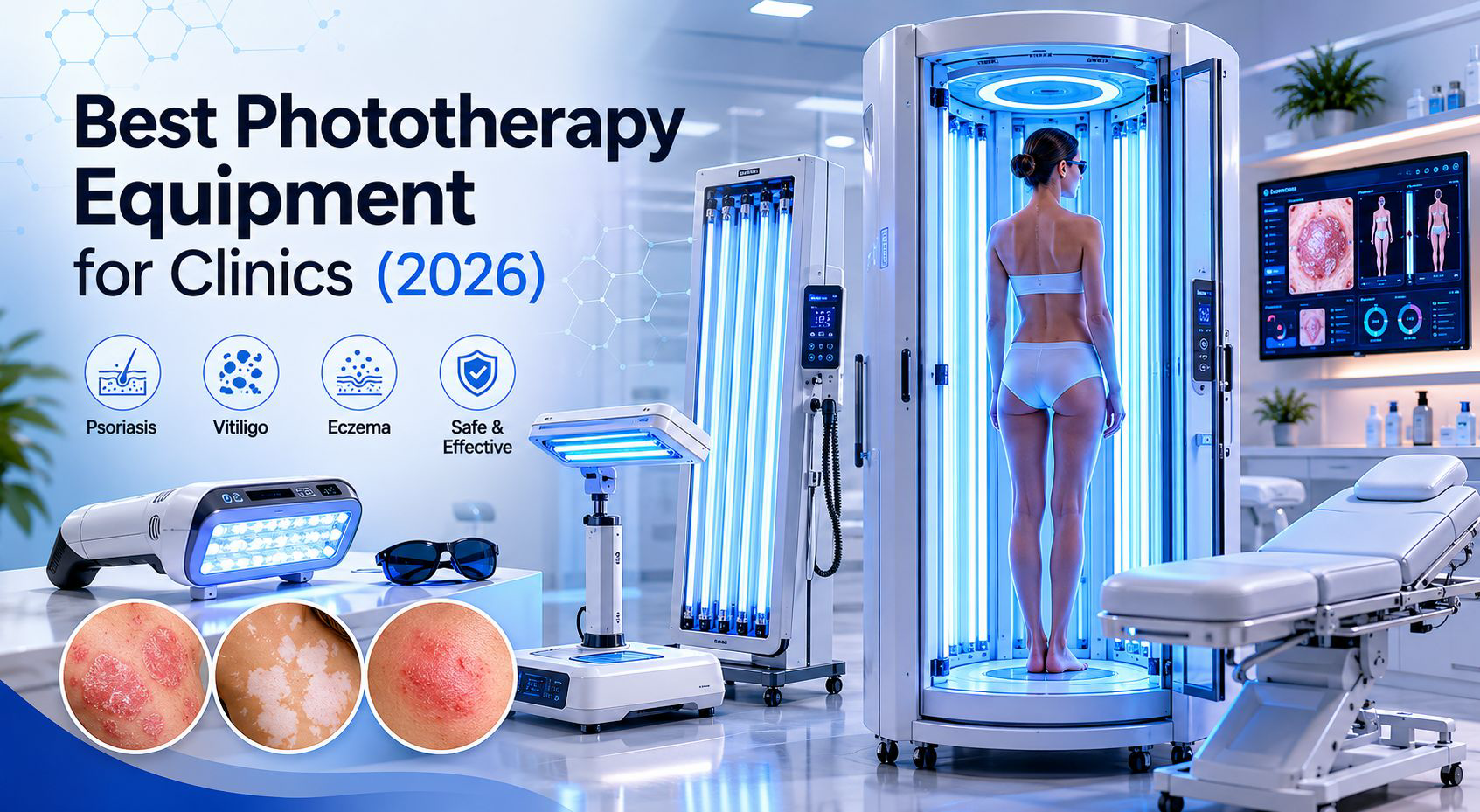
Equipment selection follows patient volume, available space, and budget, in roughly that order. A useful way to frame the decision is by clinic tier.
A small private practice with fewer than five providers usually does well with one tabletop or panel narrowband UVB unit, or a targeted excimer system, supported by handheld devices for prescribed home use. The capital range typically falls between $30,000 and $90,000, and the system should comfortably handle 10 to 30 phototherapy patients per day.
A medium specialty clinic with five to fifteen providers benefits from a full-body cabin paired with a targeted excimer and several handheld units for loaner programs. This tier generally invests between $60,000 and $150,000 and treats 30 to 80 patients daily. A practical trigger point is worth remembering: once a clinic consistently treats more than about fifteen phototherapy patients a day, a dedicated full-body cabin almost always pays for itself.
A hospital department or academic center operates differently again, often running multiple cabins covering narrowband UVB, broadband, UVA1, and PUVA, plus a targeted excimer, a dedicated phototherapy nurse, and a formal minimal erythema dose testing room. Capital here runs from $200,000 upward, and these units support not only routine treatment but cutaneous lymphoma maintenance, pediatric phototherapy, and clinical research.
Budget modeling should extend beyond the purchase price. The recurring cost of replacement uvb lamps for clinics, calibration service contracts, and consumables such as eyewear and drapes belongs in the projection from the start. On the revenue side, US reimbursement for UVB treatment under CPT 96910 averaged between roughly $114 and $129 per session in 2023, depending on locality, and that figure has risen 31% to 41% since 2010 (1). A device that delivers 1,500 or more treatments per year reaches a strong return well within its service life. Where home phototherapy is prescribed as an adjunct to in-clinic treatment, the unit acquisition cost remains modest by comparison: Medicare reimbursement listings placed a clinical-grade home narrowband UVB device at approximately $6,040 in 2024, supporting hybrid models in which selected patients self-administer maintenance under prescribed protocols while the practice retains the higher-revenue induction phase (4). Reimbursement variability by locality remains the principal financial sensitivity, and clinics with multi-state operations should model the projection by jurisdiction.
Why Phototherapy Demand Continues to Grow
Three forces are pushing demand upward, and none of them appears likely to reverse.
The first is the disease burden. Global psoriasis prevalence is estimated at 2–3% of the population; the World Health Organization classifies the disease as a serious noncommunicable condition (16). Vitiligo affects an estimated 28.5 million people worldwide per a 2024 modeling study. The 2022 US approval of the first topical repigmentation agent has produced a measurable increase in clinic referrals for a disease that responds to 311 nm and 308 nm protocols (17). Adult prevalence figures for atopic dermatitis across North America and Europe remain elevated.
The second is economics. A 2023 systematic review estimated the adjusted monthly cost per PASI 75 at $1,714 for narrowband UVB compared with $2,076 or more for the least expensive biologic (5). Evidence from the 2024 LITE trial reinforces this position. Supervised narrowband UVB produced clinically meaningful clearance and quality-of-life improvement, with markedly higher treatment adherence in adequately resourced settings (4). Specific LITE outcomes underscore the magnitude of the adherence gap: 51% of home-treated patients met session targets compared with 16% in the office arm, while 33% achieved Physician Global Assessment scores of 0 or 1 in the home group versus 26% in office care, and Dermatology Life Quality Index scores ≤5 were recorded in 54% of home patients against 34% in clinic-based treatment. Medicare listed the trial device at $6,040.88 in 2024, anchoring discussion of total acquisition cost. Equivalent outcomes obtained at materially lower cost have direct implications for both payer policy and clinical decision-making.
The third is the market itself. Market analysts diverge on absolute scope while concurring on growth direction. The MarketsandMarkets projection places phototherapy equipment market expansion from $0.47 billion in 2026 to $0.62 billion by 2031. Fortune Business Insights documents sustained mid-single-digit growth, with LED-based narrowband UVB identified as the fastest-expanding technology segment (18, 19). Methodology accounts for the divergence in absolute figures; the directional finding holds across sources. Fortune Business Insights additionally reports North America accounting for approximately 31% of regional market share, with the LED-based narrowband UVB segment projected at 8.6% compound annual growth – the highest of any technology category in the dataset – reflecting institutional preference for the longer service life and reduced thermal output characteristic of solid-state emission (19).
Conclusion
Reliable phototherapy equipment remains one of the most defensible investments a dermatology clinic can make. The clinical evidence is mature, the cost advantage over systemic therapy is well documented, and the regulatory framework is clear. The practical task for any practice is matching device configuration to patient volume, available space, and budget, then maintaining the dosimetry and calibration discipline that keeps treatment consistent over the equipment’s life. Narrowband UVB at 311 nm is the established standard, broadband is legacy, and targeted excimer fills the recalcitrant-lesion niche. Clinics evaluating professional phototherapy equipment should look past acquisition price and assess regulatory clearance, lamp quality, integrated dosimetry, and total cost of ownership across the projected service life. Demographic projections supporting the indication base – global psoriasis at 2–3% of population, vitiligo at 28.5 million worldwide, sustained atopic dermatitis prevalence across developed markets – suggest that procurement decisions made in 2026 will operate within a stable or expanding clinical demand environment for the equipment’s full service life. For practices establishing or expanding a UVB Light Therapy service, a system specified against these criteria – operated with correct calibration discipline and adequately trained personnel – returns clinical and financial value well beyond the initial outlay.
References
- Elmets CA, Lim HW, Stoff B, et al. Joint American Academy of Dermatology–National Psoriasis Foundation guidelines of care for the management and treatment of psoriasis with phototherapy. J Am Acad Dermatol. 2019;81(3):775-804.
- Bae JM, Jung HM, Hong BY, et al. Phototherapy for vitiligo: a systematic review and meta-analysis. JAMA Dermatol. 2017;153(7):666-674.
- Phan K, Ramachandran V, Fassihi H, Sebaratnam DF. Comparison of narrowband UV-B with psoralen–UV-A phototherapy for patients with early-stage mycosis fungoides: a systematic review and meta-analysis. JAMA Dermatol. 2019;155(3):335-341.
- Gelfand JM, Armstrong AW, Lim HW, et al. Home- vs office-based narrowband UV-B phototherapy for patients with psoriasis: the LITE randomized clinical trial. JAMA Dermatol. 2024;160(12):1320-1328.
- McCoy J, et al. Systematic review and estimated cost-efficacy of biologics compared with narrowband ultraviolet B light for the treatment of moderate to severe psoriasis and atopic dermatitis. Int J Dermatol. 2023.
- Hearn RMR, Kerr AC, Rahim KF, Ferguson J, Dawe RS. Incidence of skin cancers in 3867 patients treated with narrow-band ultraviolet B phototherapy. Br J Dermatol. 2008;159(4):931-935.
- Lin TL, et al. Risk of skin cancer in psoriasis patients receiving long-term narrowband ultraviolet phototherapy: results from a Taiwanese population-based cohort study. Photodermatol Photoimmunol Photomed. 2019;35(3):164-171.
- Åkerla P, Pukkala E, Helminen M, Korhonen N, Karppinen T. Skin cancer risk of narrow-band UV-B (TL-01) phototherapy: a multi-center registry study with 4,815 patients. Acta Derm Venereol. 2024;104:adv39927.
- Olsen EA, Hodak E, Anderson T, et al. Guidelines for phototherapy of mycosis fungoides and Sézary syndrome: a consensus statement of the United States Cutaneous Lymphoma Consortium. J Am Acad Dermatol. 2016;74(1):27-58.
- Eleftheriadou V, et al. British Association of Dermatologists guidelines for the management of people with vitiligo 2021. Br J Dermatol. 2022;186(1):18-29.
- British Association of Dermatologists. Service Guidance and Standards for the use of Phototherapy (SGSP). 2022.
- Moseley H, et al. Guidelines on the measurement of ultraviolet radiation levels in ultraviolet phototherapy: British Association of Dermatologists and British Photodermatology Group. Br J Dermatol. 2015;173(2):333-350.
- Sidbury R, et al. Guidelines of care for the management of atopic dermatitis: management with phototherapy and systemic agents. J Am Acad Dermatol. 2014;71(2):327-349.
- Gerber W, Arheilger B, Ha TA, Hermann J, Ockenfels HM. Ultraviolet B 308-nm excimer laser treatment of psoriasis: a new phototherapeutic approach. Br J Deratol. 2003;149(6):1250-1258.
- Hauptman M, et al. Narrowband-ultraviolet B phototherapy for psoriasis treatment in skin of color: a systematic review and meta-analysis. Photodermatol Photoimmunol Photomed. 2025.
- World Health Organization. Global Report on Psoriasis. Geneva: WHO; 2016.
- Bibeau K, et al. Estimating the burden of vitiligo: a systematic review and modelling study. Lancet Public Health. 2024.
- MarketsandMarkets. Phototherapy Equipment Market – Global Forecast to 2031. 2026.
- Fortune Business Insights. Phototherapy Equipment Market Size, Share and Growth Forecast. 2025–2026.
International Electrotechnical Commission. IEC 60601-2-57:2023 – Medical electrical equipment: particular requirements for non-laser light source equipment; adopted as EN IEC 60601-2-57:2026.
