

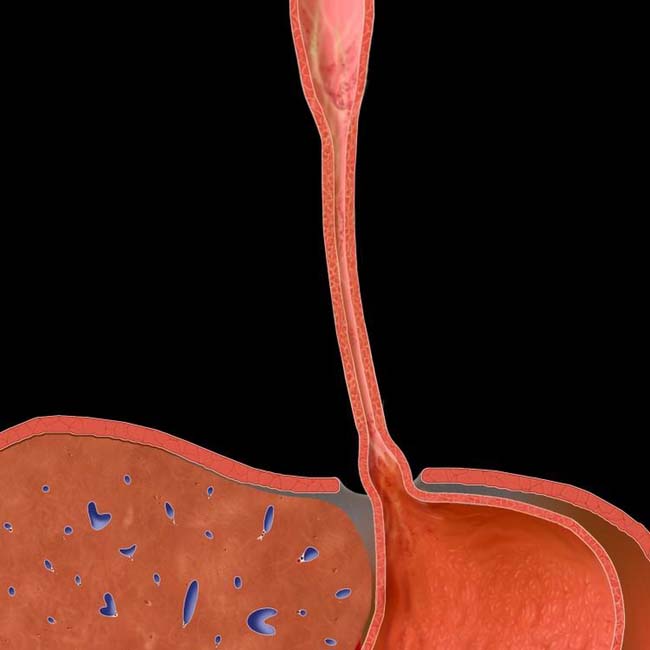
[level-membership-for-radiology-category] Causes mild to severe injury to upper GI tract


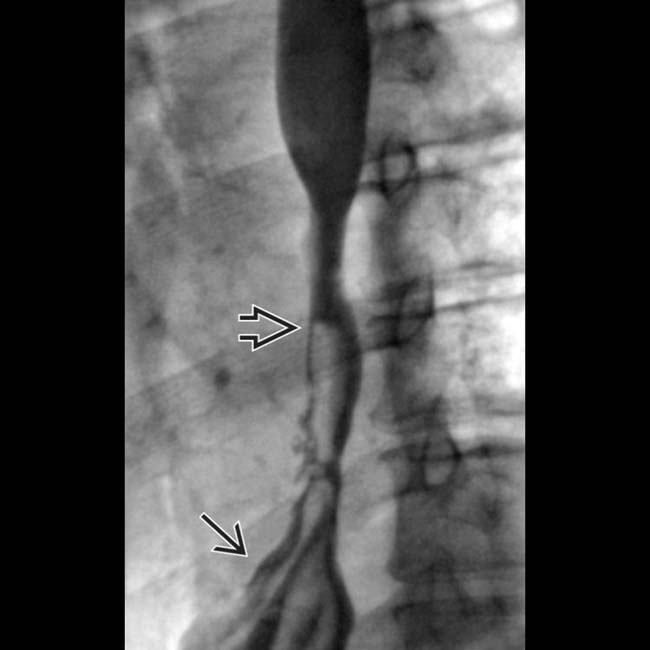
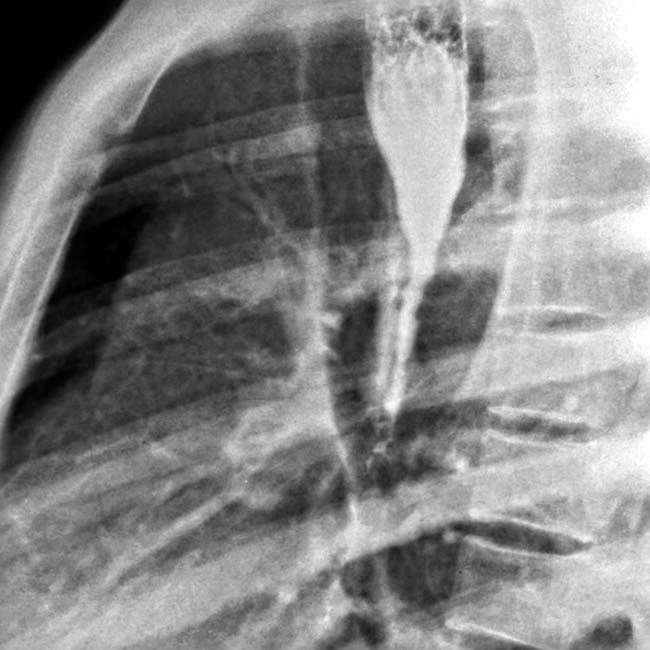
 from caustic ingestion shows a shortened and strictured esophagus, with the proximal stomach
  pulled into the chest. This stricture has been treated repeatedly by balloon dilation, and the patient has not required surgery.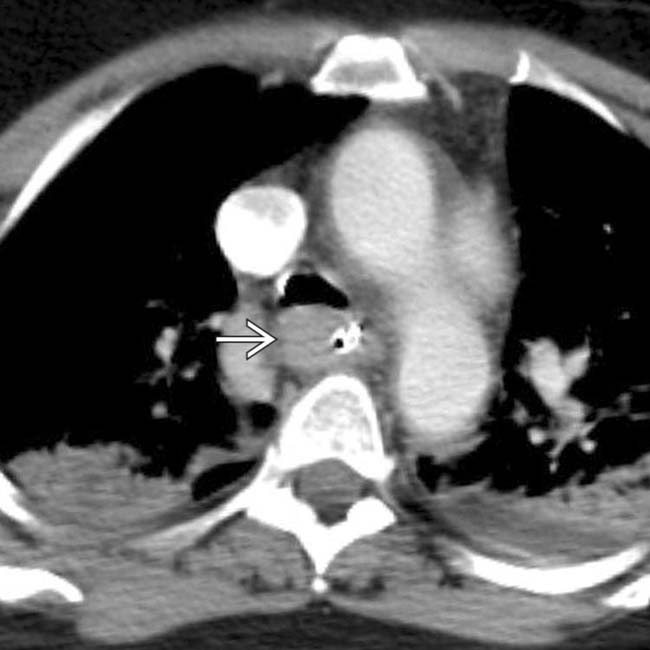
 and bilateral aspiration pneumonitis.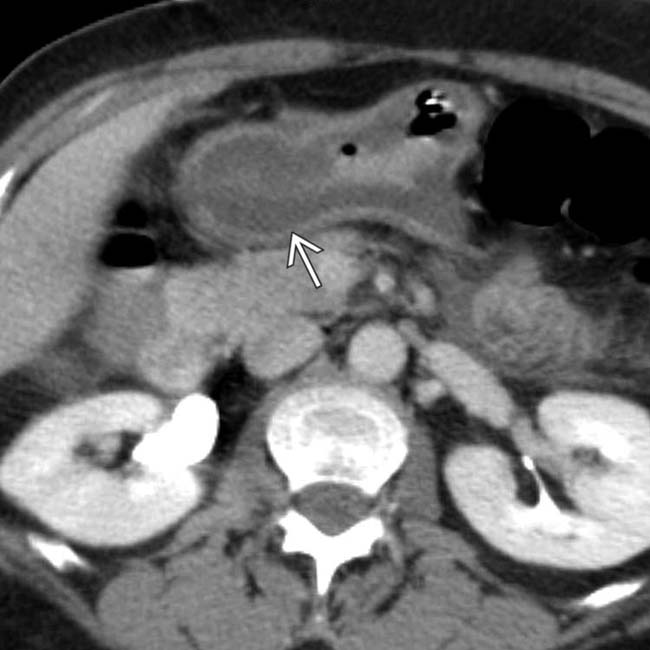
 , indicating corrosive gastritis.


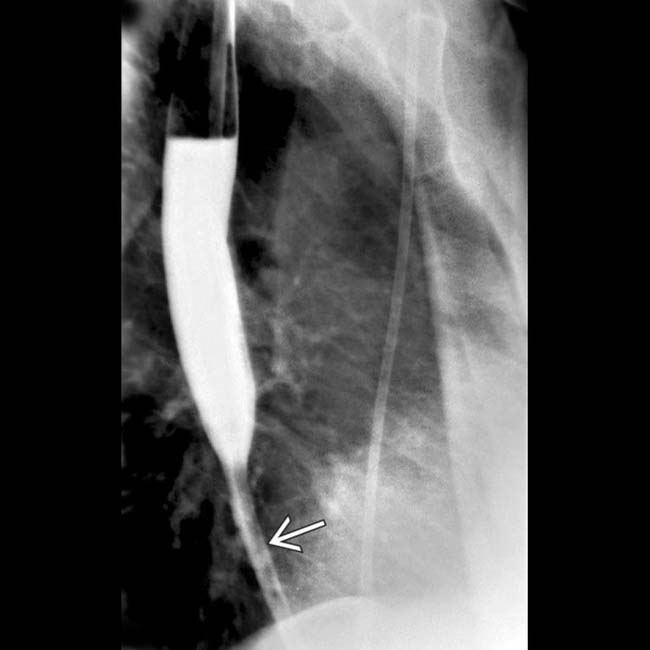
 of the distal half of the esophagus.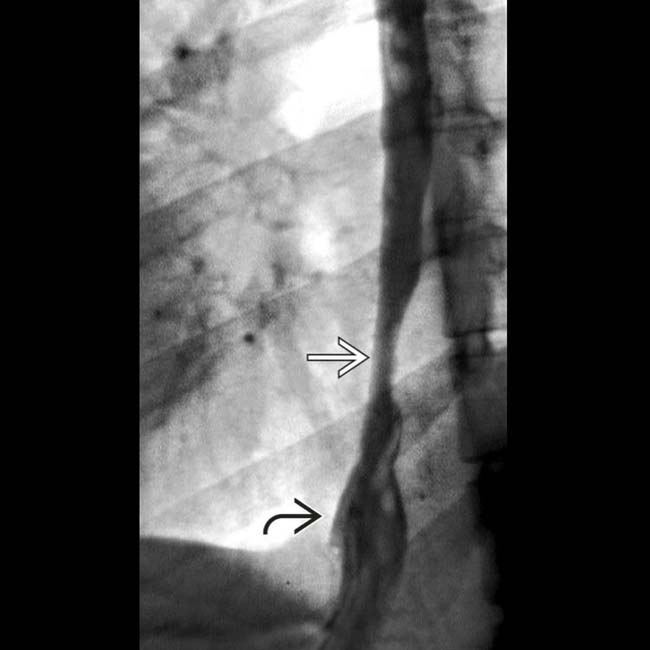
 and shortening of the distal esophagus with the stomach
  pulled into the lower chest.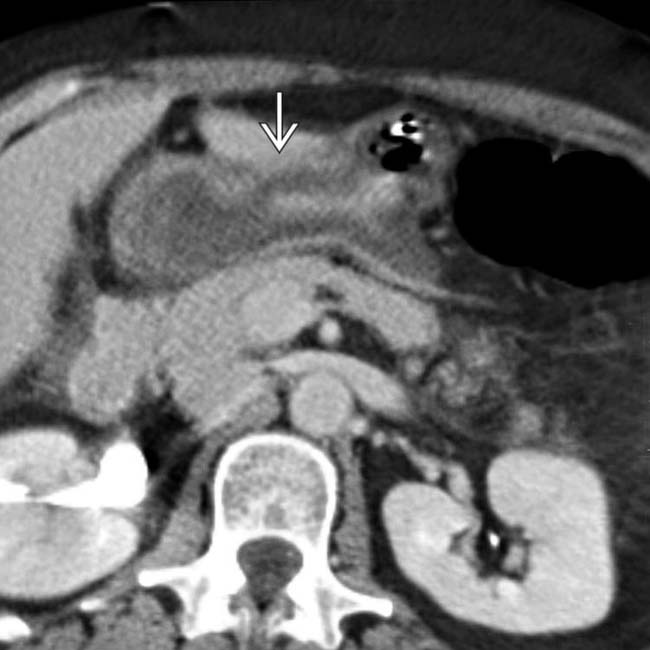
 . The patient subsequently developed esophageal perforation, respiratory failure, and sepsis before dying.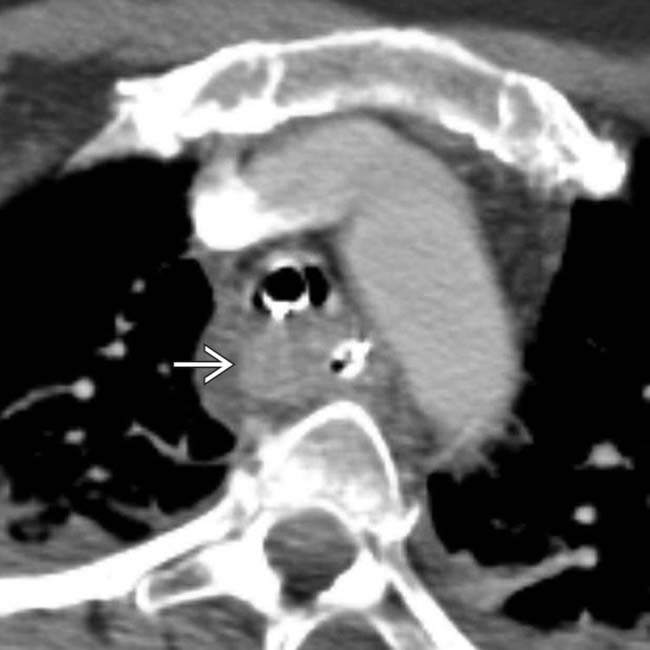
 .
.
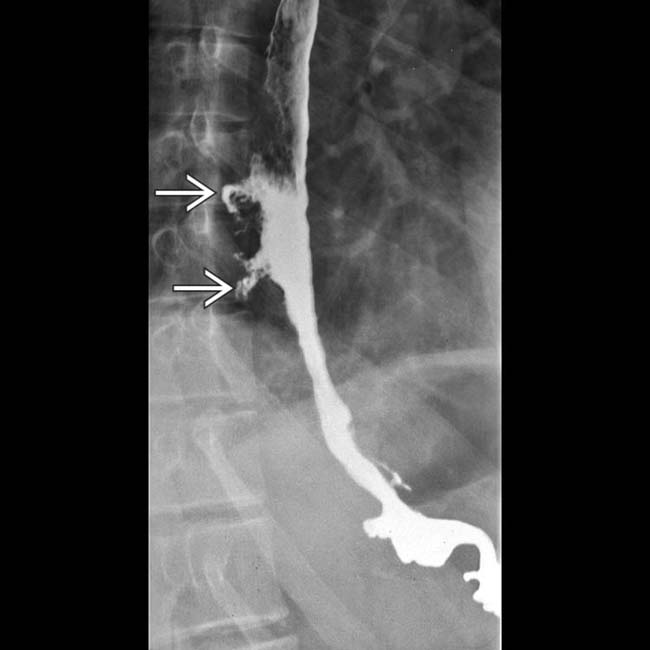
 .
.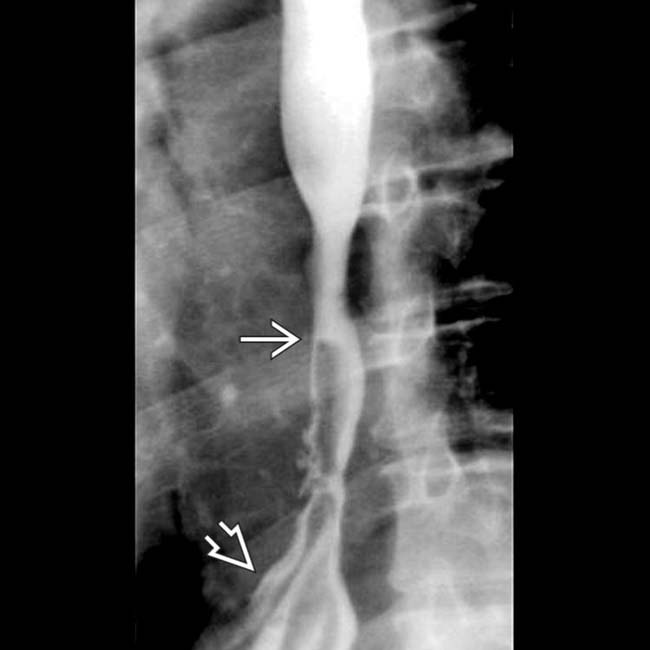
 , and a hiatal hernia
  . Reflux esophagitis may have a similar appearance.
[/level-membership-for-radiology-category][not-level-membership-for-radiology-category] Causes mild to severe injury to upper GI tract
from caustic ingestion shows a shortened and strictured esophagus, with the proximal stomach pulled into the chest. This stricture has been treated repeatedly by balloon dilation, and the patient has not required surgery. and bilateral aspiration pneumonitis., indicating corrosive gastritis.IMAGING
General Features
Radiographic Findings
• Fluoroscopic: Esophagram
 Stage 1: Acute severe phase (1-4 days)
Stage 1: Acute severe phase (1-4 days)
–
Buy Membership for Radiology Category to continue reading. Learn more here
[/not-level-membership-for-radiology-category]
