

[level-membership-for-radiology-category] Undifferentiated embryonal sarcoma


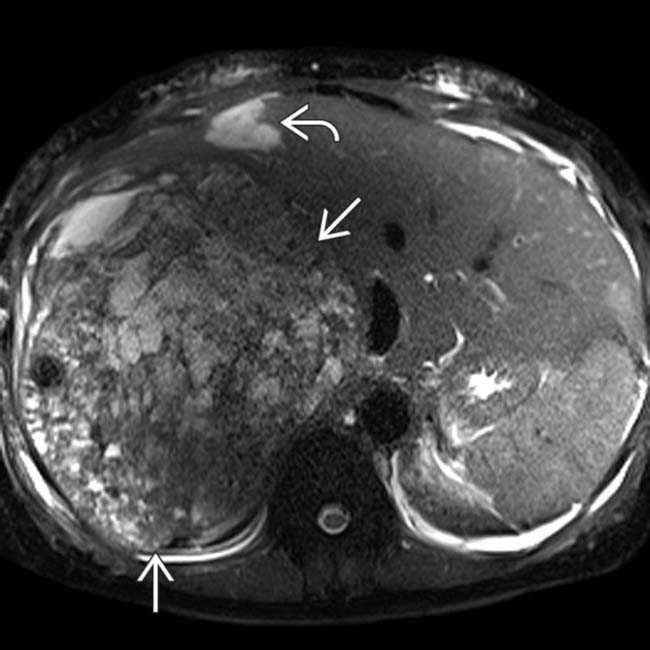
 that replaces most of the right lobe. The mass is heterogeneously hyperintense, though not as bright as another lesion
  that proved to be a cavernous hemangioma.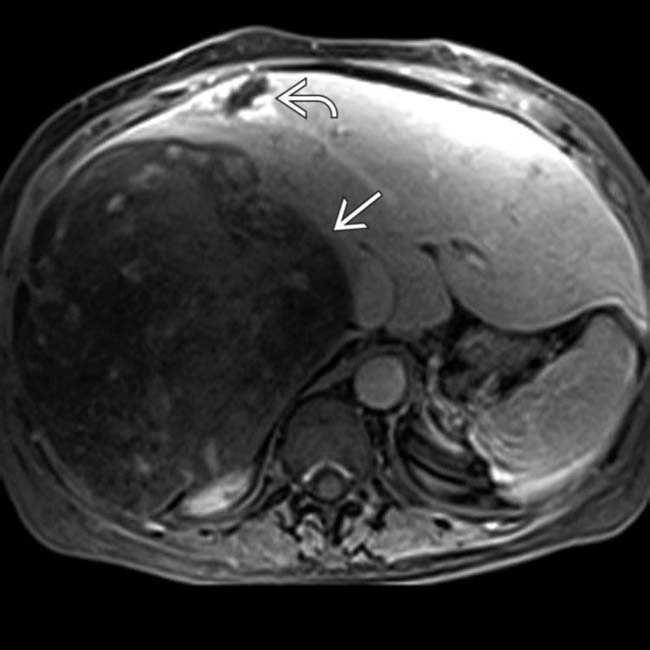
 , whereas most of the sarcoma
  shows no enhancement. The tumor is an undifferentiated sarcoma, which is largely necrotic and hemorrhagic as suggested by MR.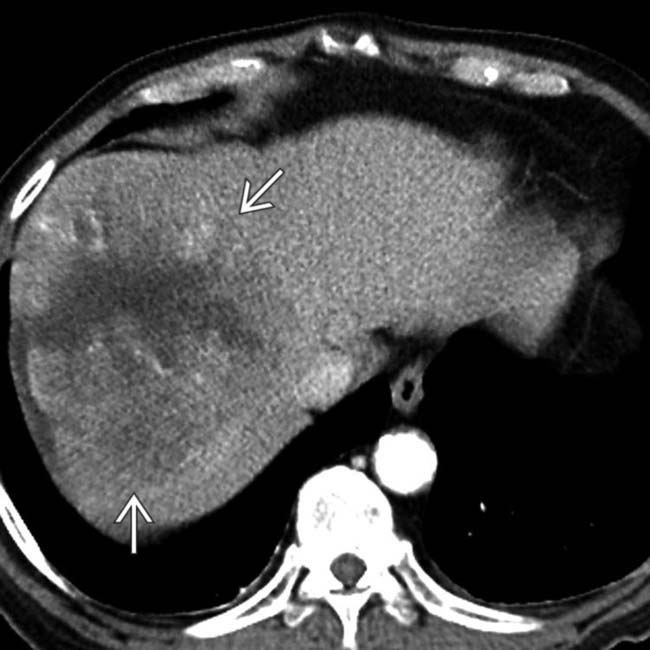
 that has central necrosis and a periphery of hypervascular solid tumor, a common feature of sarcomas in general, though not specific for a primary hepatic sarcoma.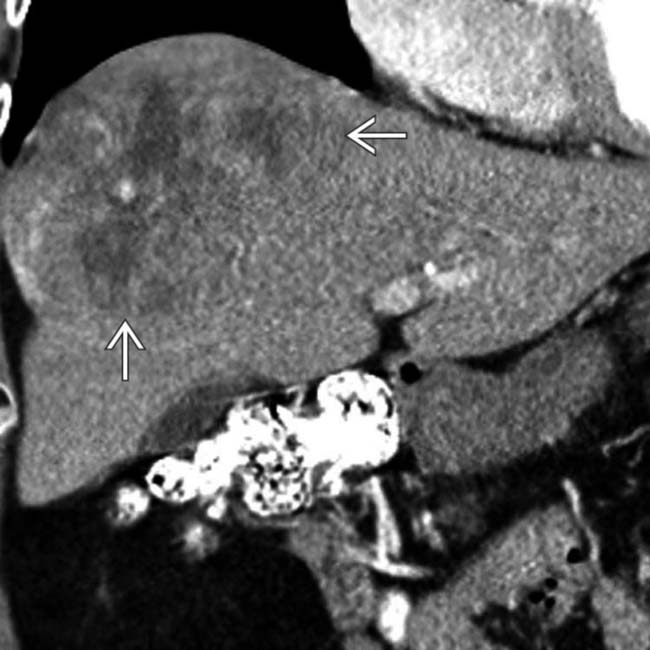
 . Absence of immunohistochemical evidence of muscle, epithelial, or vascular differentiation led to the final diagnosis of undifferentiated sarcoma.


[/level-membership-for-radiology-category][not-level-membership-for-radiology-category] Undifferentiated embryonal sarcoma
that replaces most of the right lobe. The mass is heterogeneously hyperintense, though not as bright as another lesion that proved to be a cavernous hemangioma., whereas most of the sarcoma shows no enhancement. The tumor is an undifferentiated sarcoma, which is largely necrotic and hemorrhagic as suggested by MR. that has central necrosis and a periphery of hypervascular solid tumor, a common feature of sarcomas in general, though not specific for a primary hepatic sarcoma.. Absence of immunohistochemical evidence of muscle, epithelial, or vascular differentiation led to the final diagnosis of undifferentiated sarcoma.IMAGING
General Features
• Best diagnostic clue

Buy Membership for Radiology Category to continue reading. Learn more here
[/not-level-membership-for-radiology-category]
